
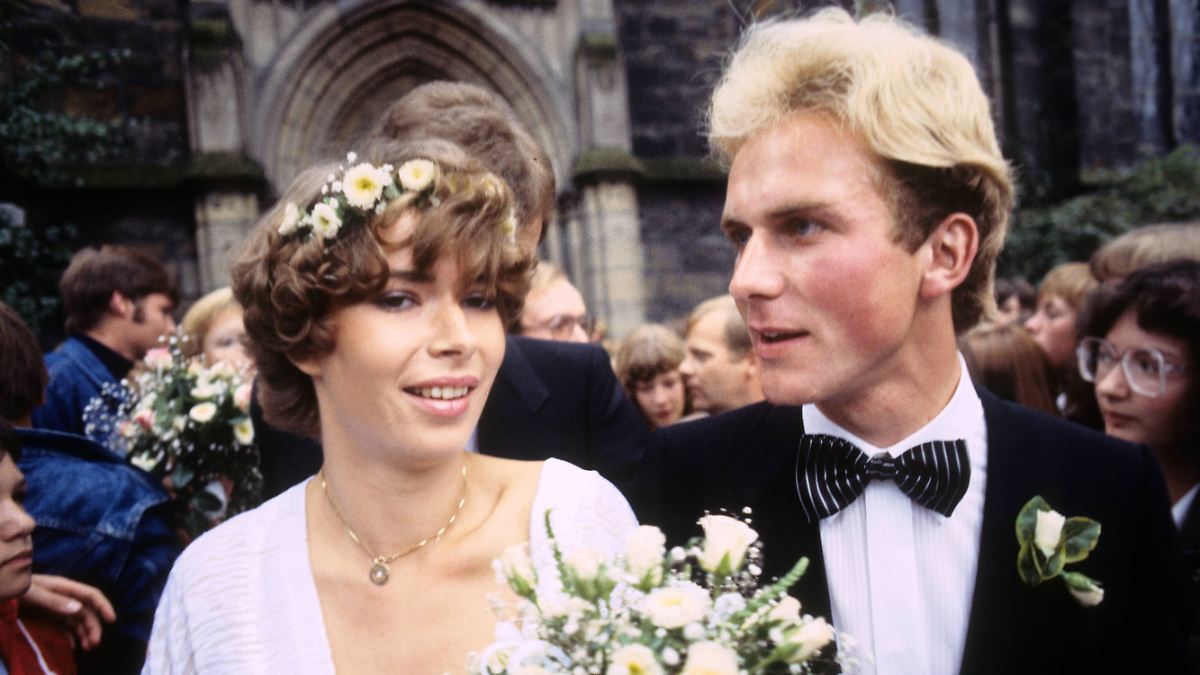
“You, Karl-Heinz, say!”: The Unfiltered Voice of Kalle Rummenigge
Karl-Heinz Rummenigge, celebrating his 70th birthday, has always been a man who spoke his mind. From playful evasion of the press too sharp commentary on the pitch and in the boardroom, his directness has been a defining characteristic throughout a remarkable career.
Even his arrival at the bus after training drew attention.As L’équipe noted, his best dribbling wasn’t on the field, but navigating the hallway to the team bus, deftly maneuvering through dozens of journalists without uttering a word.
This penchant for unfiltered observation extended to his playing days. After three years with Milan,Rummenigge played for Servette Geneva until 1989,before instantly transitioning to television commentary for the 1990 World Cup in Italy.He’d always possessed a talent for vocalizing his opinions on the pitch, and this translated seamlessly to the broadcast booth. During a game in Hamburg, frustrated with a referee’s decisions, he famously exclaimed, “Either they are too small or the lawn is too high, she is blind!”
That temperament proved a hit with viewers. As a co-commentator,his swift wit shone. When Wolf-Dieter Poschmann began to introduce michel Platini, Rummenigge interjected with, “Above all, we see that he urgently needs a hairdresser!”
His reactions during the infamous world Cup round of 16 match between the Netherlands and Germany were equally memorable. Alongside Heribert Faßbender, he didn’t hold back on Argentine referee Juan Carlos Loustau. “The referee, you should send it back to the pampas!” Rummenigge declared. He continued, “I hope we can no longer see this referee at this World Cup,” to which Faßbender quipped, “At most as a card injurer.”
Rummenigge’s forward-thinking vision extended beyond the game itself. In 1991, he returned to Bayern Munich alongside Franz Beckenbauer, brought in by President Fritz Scherer to support Uli Hoeneß as “emergency columns” (Kicker). He impressed with his innovative ideas, even during disputes over the new arena, pointedly remarking to rivals 1860 Munich, “Do you know when 1860 Munich was first mentioned here? In the Old Testament.” He also offered a striking analogy when discussing Arjen Robben’s World Cup injury: “If I rent a car, I have to give it back in decent condition – if I may say that, I was expropriated and then demolished again in the garage.”
The initial dynamic with Hoeneß wasn’t seamless, as Scherer’s move wasn’t initially welcomed by the long-standing Bayern figure. beckenbauer’s early assessment – “the Uli was alone, nobody told him what he did wrong. And an Uli Hoeneß also makes mistakes” – reflected the initial tension. However, despite the early disagreements, Rummenigge, Hoeneß, and Beckenbauer formed a powerful and successful leadership trio for years, later becoming an unbeatable duo.
Rummenigge’s leadership also demonstrated a keen understanding of football’s evolving potential. In a 1989 interview with Spiegel, he posed the question, “Why couldn’t you install a Siemens center or a Karstadt shopping center in a stadium?” His vision of stadiums as more than just sporting venues – as potential “adventure parks” – has become a reality today.
Today, as Karl-Heinz “Kalle” Rummenigge celebrates his 70th birthday, he and Uli Hoeneß remain committed to the well-being of FC Bayern.A commitment Munich will undoubtedly hold them to.
