
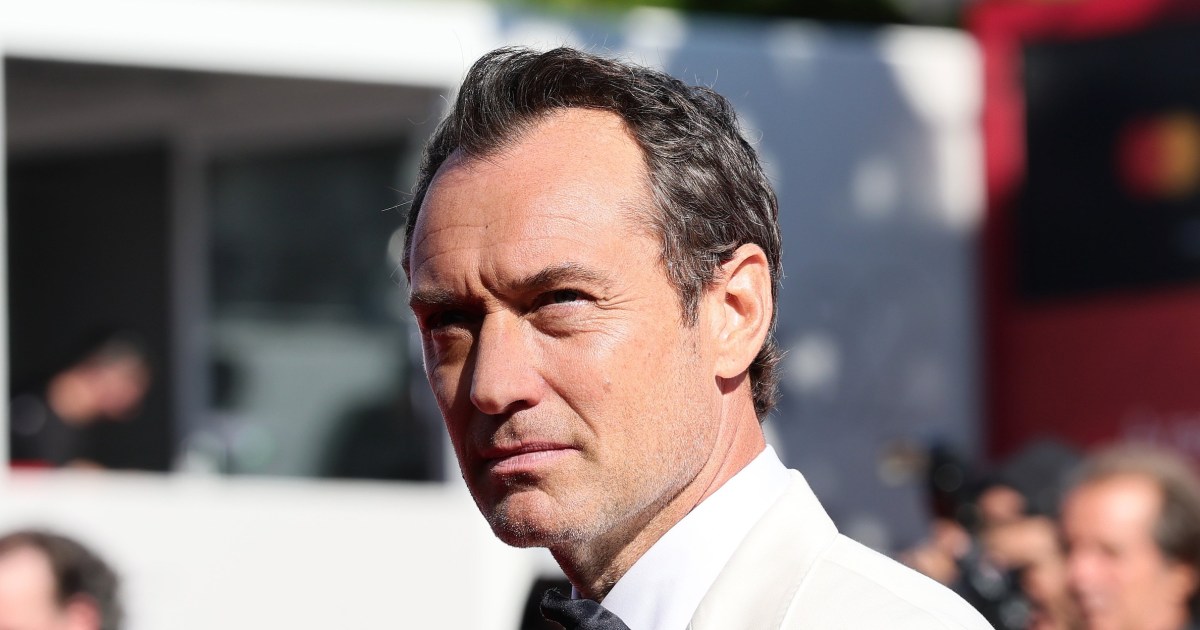
Jude law Transforms into Vladimir Putin in Venice Film Festival Premiere of ‘The Wizard of the Kremlin‘
VENICE, Italy – Jude Law delivers a striking portrayal of Vladimir Putin in “The Wizard of the Kremlin,” which premiered at the Venice Film Festival this week. The film, marking french director Olivier Assayas’s English-language debut, offers a chilling look at the inner workings of power and the political landscape leading up to Russia’s current geopolitical position.
Based on a French novel, “The Wizard of the Kremlin” doesn’t focus on Putin’s rise to power or Russia’s reinvention, but rather, Assayas explains, it’s “a reflection on modern politics-or rather, the smoke screens behind which it now hides: cynical, deceptive, and toxic.” The film explores the mechanisms of modern politics through the lens of those surrounding Putin, as recounted by journalist Vadim Baranov, played by Jeffrey Wright.
Tho the film was conceived before Russia’s full-scale invasion of Ukraine, Assayas stated the themes remain “right” and “still relevant today, three years later, under different circumstances.” Production took place in Latvia due to the inability to film within Russia.Alicia vikander co-stars as Vadim Baranov’s girlfriend, a character intended to represent “freedom,” according to Assayas. vikander emphasized the importance of portraying the women within this male-dominated world, stating, “Olivier told me that we need a world that shows the women who inhabit it also. A female counterpart but a very moral one as well.”
Assayas’s director’s statement clarifies the film’s intent: “‘The Wizard of the Kremlin’ is not so much a political film as it is indeed a film about politics-and the perversity of its methods, which now hold us all hostage.”
The film is competing for the festival’s top prizes alongside titles like “Frankenstein,” “Bugonia,” “The Voice of Hind Rajab,” “La Grazia,” and “No Other Choice.” Winners will be announced on Saturday.
Currently, “The Wizard of the Kremlin” does not have a North American release date. Jeffrey Wright urged audiences, especially in America, to see the film, warning that losing the aspiration for “utopian perfectibility,” as he put it, risks a descent into the realities depicted onscreen. “Even within the time frame of the original sins of America…we had an idea that we could be better,” Wright said. “If that is lost, as it is now, than we become what we see in this film.”
