
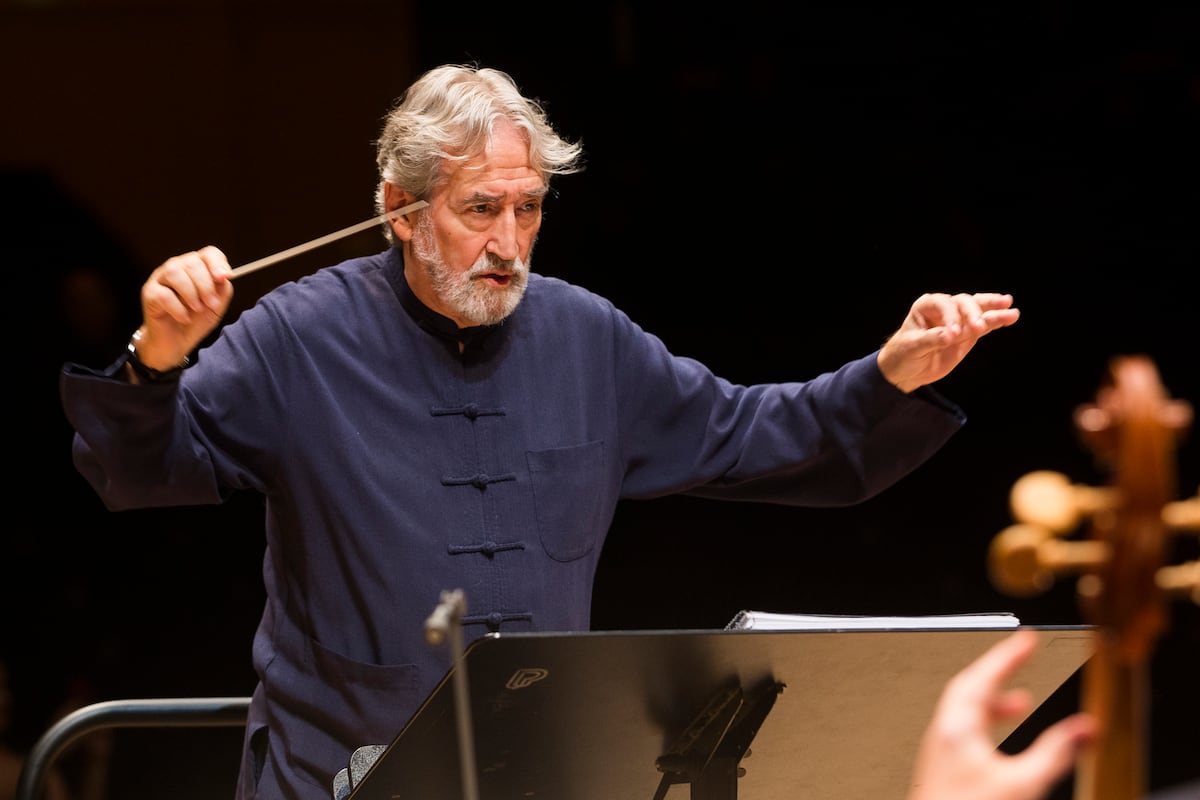
Renowned Catalan Director Jordi Savall Criticizes Spanish Government‘s Lack of Support for Musicians
Madrid – Jordi Savall, the internationally acclaimed conductor and viol player, has sharply criticized the Spanish government’s insufficient financial support for its musicians, contrasting it with the robust backing enjoyed by institutions like the Berlin philharmonic. In a recent interview, Savall lamented the “total abandonment” by the Spanish government, stating that subsidies cover less than 1% of expenses – a situation he deems “inconceivable” compared to the rest of Europe.
Savall, who moved to Switzerland in 1968 to further his studies, noted the past scarcity of Spanish musicians in leading European ensembles, a situation now improving with four Spanish string players in the Berlin philharmonic. He passionately asserted that Spain possesses a rich musical heritage, citing the influence evident in works like Cervantes’ Don Quixote and the depth of traditions including Andalusian, Sephardic, and Mozarabic repertoire, the polyphony of Las Huelgas, and the legacies of composers like Falla, Granados, and Albéniz, alongside performers such as Casals, Sarasate, and Victoria de los Ángeles.
The director also praised contemporary artist Rosalía, describing her latest album as “splendid” and noting her sophisticated musical training, evidenced by her incorporation of elements of the Italian baroque style, specifically stubborn, similar to the Beatles’ approach to arrangement. Though, savall’s concerns extend beyond recognition of talent to the practical realities of sustaining a musical career in Spain.
Savall previously rejected the National Music Award in 2014 due to disagreements with the cultural policies of then-Minister José Ignacio Wert. He revealed a recent meeting with Prime Minister Pedro Sánchez three years ago to advocate for greater protection and promotion of spanish musical heritage, but has yet to receive a response. He also expressed disappointment at his absence from the Teatro Real’s programming since his production of Orpheus in 1999, questioning if it stemmed from “simple disinterest.”
Savall emphasized the crucial role of the Generalitat, the French Ministry of Culture, and the European Commission in sustaining his ensembles – La capella Reial, Hespèrion XXI, and Le Concert des Nations – stating they ”would not exist” without their support. He concluded by expressing his envy of the Berlin Philharmonic’s national support, which ensures the preservation of its legacy for future generations.
