Jonas Vingegaard Lights up Giro d’Italia but Silva Seizes Stage
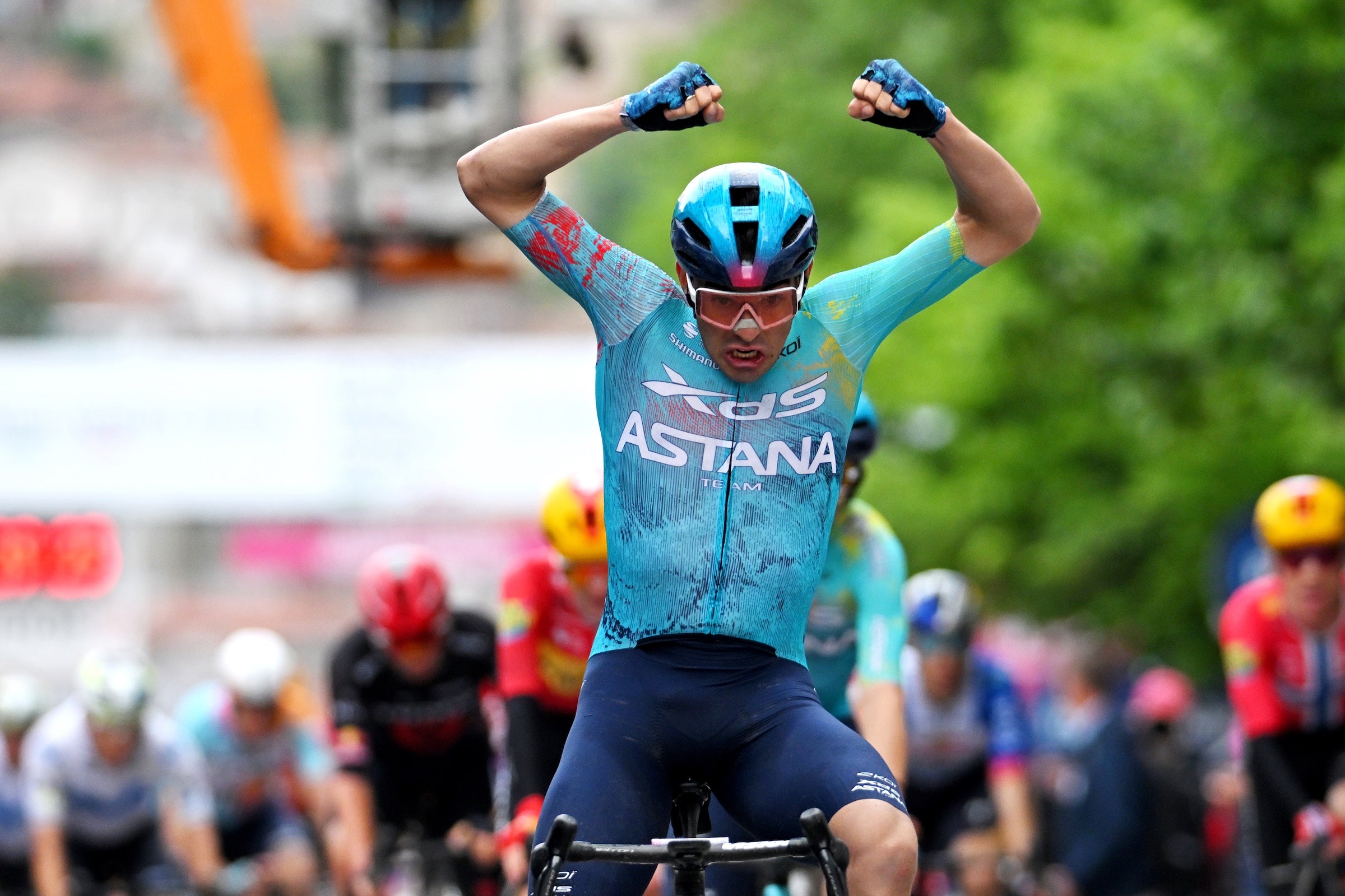
Uruguayan Thomas Silva (XDS-Astana) claimed a historic victory in Stage 2 of the 2026 Giro d’Italia in Veliko Tarnovo, Bulgaria. Silva won a reduced bunch sprint after a late attack by Jonas Vingegaard was neutralized, marking the first Grand Tour stage win for a rider from Uruguay.
The tactical failure of the Vingegaard-led breakaway illustrates the razor-thin margin between a career-defining solo victory and a tactical collapse. When elite riders play “cat and mouse” in the final kilometers, they aren’t just fighting the clock; they are fighting the collective intelligence of a chasing peloton. This hesitation on the Lyaskovets Monastery Pass didn’t just cost Vingegaard the stage; it opened a vacuum that allowed a wildcard like Silva to rewrite Uruguayan cycling history.
Tactical Breakdown: The Lyaskovets Monastery Collapse
The race reached its critical inflection point with approximately 12km remaining. Jonas Vingegaard (Visma-Lease a Bike) ignited the race on the Lyaskovets Monastery Pass, showcasing the raw power-to-weight ratio that has defined his career. He was quickly joined by Giulio Pellizzarri (Red Bull-Bora-Hansgrohe) and Lennert van Eetvelt (Lotto-Intermarché). On paper, this was a dream breakaway: three high-wattage engines capable of maintaining a punishing anaerobic threshold to hold off the pack.
However, the trio devolved into a tactical stalemate after the summit. Rather than establishing a rhythmic rotation to maximize their gap, the leaders engaged in hesitant, cagey racing. This lack of cohesion allowed Jan Christen (UAE Team Emirates-XRG) and the wider peloton to bridge the gap in the final few hundred metres. The failure here was not physical, but psychological. In Grand Tour racing, a breakaway that stops collaborating becomes a target for the bunch.
“When a breakaway loses its collective rhythm, the peloton doesn’t just catch them; they devour them. The moment the leaders start looking at each other instead of the road, the stage is effectively lost to the sprinters.”
Thomas Silva capitalized on this chaos with surgical precision. Positioned perfectly thanks to the lead-out work of Christian Scaroni, the 24-year-old launched his sprint in the final 200 metres. While he appeared to be tying up under the pressure of the finish, he held off Florian Stork (Tudor Pro Cycling) and Giulio Ciccone (Lidl-Trek) to secure the win. Silva’s victory is a masterclass in energy conservation and opportunistic timing, proving that in a reduced bunch sprint, positioning is more valuable than raw peak power.
The Medical Fallout: Crisis on the Damp Curve
Beyond the tactical drama, Stage 2 was defined by a catastrophic crash 23km from the finish. A damp curve triggered a pile-up involving two dozen riders, forcing race organizers to temporarily neutralize the event. The physical toll was severe, with Jay Vine (UAE Team Emirates-XRG), Marc Soler (UAE Team Emirates-XRG), and Santiago Buitrago (Bahrain-Victorious) all forced to abandon the race. Other heavy hitters, including Adam Yates and Derek Gee-West (Lidl-Trek), survived the fall but lost significant time, fundamentally altering their General Classification (GC) trajectories.

For riders like Vine and Buitrago, the problem extends beyond the immediate race abandonment. High-velocity road crashes often result in complex soft-tissue trauma and concussions that require precise, phased recovery. While professional teams have in-house medical staff, the long-term rehabilitation of joint stability and neuromuscular coordination is where the real battle for a comeback happens. For amateur cyclists or regional athletes facing similar traumatic injuries, the priority must be securing vetted local orthopedic specialists and rehab centers to ensure a return to peak performance without permanent mobility loss.
Looking at the raw data of the crash, the “damp curve” variable highlights the critical importance of tire compound selection and braking modulation on mixed surfaces. The loss of three top-tier riders in a single incident creates a massive void in the competitive landscape of the 2026 Giro, shifting the pressure onto the remaining GC contenders.
Local Economic Impact and Logistical Strain
Hosting a Grand Tour stage in Veliko Tarnovo, Bulgaria, brings an immense surge of global visibility, but it also places a staggering burden on local infrastructure. The influx of thousands of fans, team buses, and international media creates a logistical vacuum that the city must fill in real-time. The “halo effect” of such an event typically drives a massive spike in regional hospitality and short-term rental revenues, but it requires a level of security and event management that often exceeds local capacity.
The coordination of a neutralized race—where the peloton is halted due to a crash—requires seamless communication between race officials and local law enforcement to manage crowd control and safety. This logistical complexity is why professional sporting events are increasingly sourcing regional event security and premium hospitality vendors to handle the overflow and ensure that the spectacle doesn’t descend into chaos.
GC Implications: The Pink Jersey Shift
The results of Stage 2 have completely reshuffled the leaderboard. Paul Magnier (Soudal Quick-Step), the overnight leader, was dropped during the hilly finale, surrendering the pink jersey to Thomas Silva. This shift is more than symbolic; it places the burden of defense on XDS-Astana, a team now thrust into the spotlight of the Union Cycliste Internationale (UCI) world stage.

Meanwhile, Egan Bernal (Netcompany-Ineos) and Florian Stork have strategically harvested bonus seconds, positioning themselves as primary threats for the overall title. The current standings reflect a volatile race where the early “big name” exits have left the door open for opportunistic riders to seize control.
As the race moves forward, the focus shifts to whether Silva can maintain his composure in the jersey or if the established GC giants will systematically dismantle his lead. For those following the technical side of the sport, tracking the power data via ProCyclingStats will reveal whether Silva’s win was a fluke of positioning or a sign of a genuine breakthrough in form.
The 2026 Giro d’Italia has already proven that We see a race of attrition. Whether it is the tactical errors of Vingegaard or the physical brutality of the Bulgarian roads, the event is weeding out the fragile. For athletes and teams looking to optimize their own performance or recover from the types of injuries seen in Veliko Tarnovo, the World Today News Directory remains the premier resource for finding vetted sports medicine clinics and legal consultants specializing in athlete contracts and insurance.
Disclaimer: The insights provided in this article are for informational and entertainment purposes only and do not constitute medical advice or sports betting recommendations.