
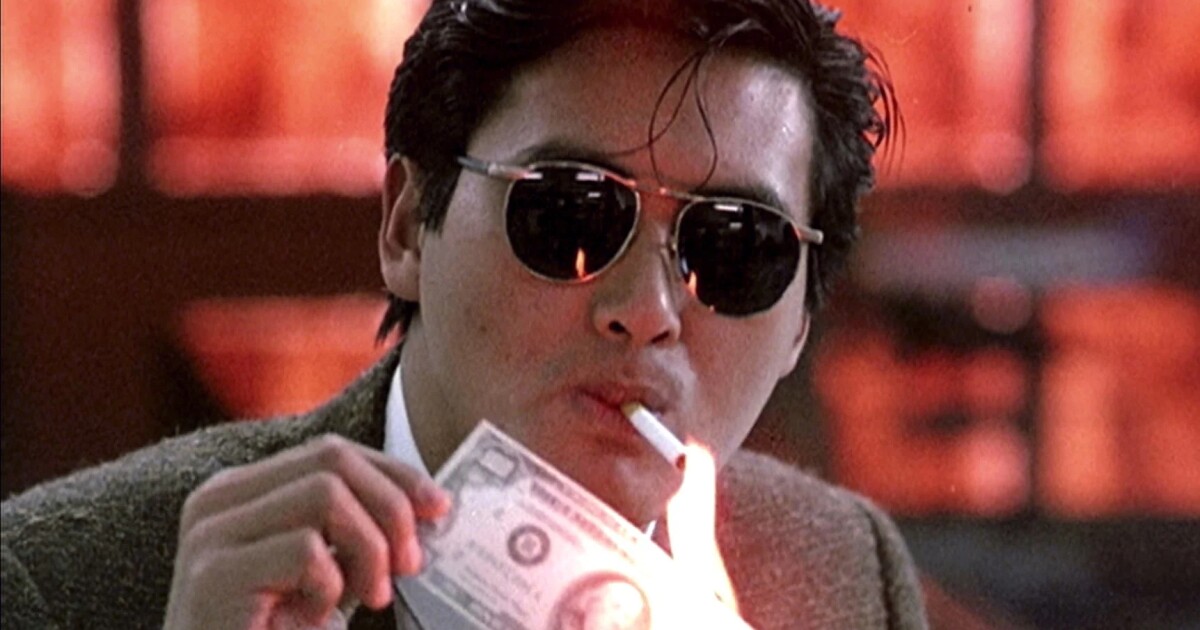
John Woo’s groundbreaking action films, including “A Better Tomorrow,” “The Killer,” and “Hard-Boiled,” are experiencing a resurgence with new 4K restorations released by Shout Studios, bringing them back to both home entertainment and the big screen. The films are being celebrated for their innovative style and influence on action cinema, as highlighted during a recent segment on KPBS’s “Midday Movies.”
Woo launched the Hong Kong New Wave in the 1980s, redefining action with a unique blend of violence, emotion, and cinematic flair. His films often feature protagonists—most notably portrayed by Chow Yun-Fat—who embody a romanticized, modern take on the traditional Chinese warrior archetype, navigating a world of honor, loyalty, and often, criminal life. According to those who have interviewed him, Woo possesses a quiet demeanor that sharply contrasts the explosive energy of his work.
Woo’s approach to filmmaking is characterized by a willingness to defy convention. He described his philosophy as a desire to “create something new, something unexpected, something unusual and to give the audience a big surprise,” rejecting the constraints of established rules. This ethos propelled him to international recognition, leading to his directorial debut in Hollywood with the Jean-Claude Van Damme film “Hard Target” in 1992.
He followed “Hard Target” with “Broken Arrow” (1996), starring John Travolta, and “Face/Off” (1997) with Nicolas Cage and John Travolta, demonstrating the broad appeal of his Hong Kong-influenced style to American audiences. “Face/Off” was released the same year Hong Kong reverted to Chinese rule, marking a significant moment in both Woo’s career and the region’s history.
A defining element of Woo’s films is his treatment of action sequences. He transforms them into visually stunning spectacles, often eliciting a paradoxical sense of enjoyment despite their inherent violence. One memorable scene from “A Better Tomorrow” (1986) involves characters moving in slow motion while strategically placing loaded guns in potted plants, subverting expectations and foreshadowing a violent confrontation. Quentin Tarantino famously praised Woo’s ability to direct action, comparing him favorably to Michelangelo.
“The Killer” (1991) showcases another signature Woo technique: a hitman’s graceful and inventive use of his surroundings to disarm opponents, exemplified by a scene where he kicks a table to send a gun flying into his hand. This scene likewise underscores the emotional depth often present in Woo’s work, as the character grapples with the consequences of his actions. His film “Bullet in the Head” drew inspiration from Jean-Pierre Melville’s “La Samourai,” and featured Chow Yun-Fat sporting Alain Delon sunglasses, which subsequently saw a surge in sales.
“Hard-Boiled” (1992) features a cop sliding down a banister while firing guns, and a dramatic dive through a kitchen, showcasing Woo’s hyper-kinetic energy and innovative camerawork. Woo has described himself as an action director who “cares about people,” despite confessing a fascination with the artistry of action sequences. He has stated he has never fired a gun and harbors a dislike for violence and war.
Woo’s films were initially difficult to access in the U.S., often relegated to Asian film theaters or film festivals. Early releases, such as the Fox Video version of “Hard Boiled,” were often of poor quality, lacking proper dubbing or widescreen formatting. Despite his success, Woo emigrated to the U.S. In 1992, concerned about potential repercussions from the Chinese government regarding the content of his films.
Woo likened choreographing action to choreographing a dance, emphasizing the importance of rhythm and body movement. He noted this influence stemmed from his childhood fascination with MGM musicals. The films “A Better Tomorrow” and “The Killer” are currently available for viewing in theaters, with “The Killer” scheduled for release in April.
