
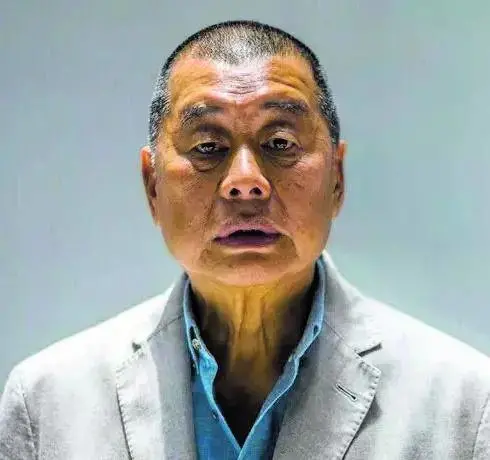
Hong Kong media mogul Jimmy Lai has been sentenced to 20 years in prison for national security offenses, a penalty his family and international observers have condemned as politically motivated and draconian. The sentence, delivered Monday, marks the longest term handed down under the sweeping national security law imposed by Beijing in 2020.
Lai, 78, was convicted in December of conspiring to collude with foreign forces and sedition. The charges stemmed from his pro-democracy advocacy and the operation of his now-defunct Apple Daily newspaper, a vocal critic of the Chinese Communist Party. Eight co-defendants, former employees of Apple Daily and activists, received prison terms ranging from six years and three months to ten years on related charges.
The sentencing has drawn sharp criticism from Western governments and human rights organizations. Lai’s son, Sebastien Lai, described the sentence as “life-threatening” for his father, given his age and the conditions of his detention. “Twenty years, it’s a farce. It’s essentially tantamount to a life sentence, or as Human Rights Watch calls it a death sentence,” he said, according to reports.
The case has develop into a focal point in the debate over the erosion of freedoms in Hong Kong following the imposition of the national security law. The law, enacted in response to the 2019 pro-democracy protests, criminalizes acts of secession, subversion, terrorism, and collusion with foreign forces. Critics argue it has been used to suppress dissent and stifle press freedom.
Jimmy Lai’s journey from a poor immigrant to a successful media entrepreneur is a remarkable one. He arrived in Hong Kong at age 13, having stowed away on a boat from mainland China. He began working in a garment factory and eventually built a business empire encompassing clothing retail, technology, and media. He founded Apple Daily in 1995, which quickly became a popular tabloid known for its pro-democracy stance and investigative journalism.
The Hong Kong government maintains that the case against Lai is not about suppressing free speech, but about prosecuting individuals who used their media platform to endanger national security. However, observers point to a pattern of increasing restrictions on press freedom and political dissent in the city since the implementation of the security law.
The sentencing comes as concerns grow over the future of Hong Kong’s autonomy. The 1997 handover agreement between the United Kingdom and China guaranteed Hong Kong a high degree of autonomy for 50 years, but critics argue that Beijing has been steadily eroding those freedoms. The Institute for Strategic Studies (ISPI) noted the sentence confirms a strongly assertive Chinese authority over Hong Kong, representing a “fresh normal” in the city’s political landscape.
Former U.S. President Donald Trump had previously vowed to secure Lai’s release and is expected to travel to China in the coming months to meet with President Xi Jinping. Lai’s supporters are reportedly lobbying Trump to raise the case during his visit.
Lai, a Catholic, reportedly expressed a sense of peace and acceptance before his sentencing, stating his faith gave him strength to face any hardship. Amnesty International’s Asia Deputy Director, Sarah Brooks, called the sentence “a further milestone in the transformation of Hong Kong from a city governed by the rule of law into one dominated by fear.” The Committee to Protect Journalists similarly condemned the sentence as “cruel and unjust,” stating Lai’s only crime was defending fundamental rights.
As of February 9, 2026, the Hong Kong government has not responded to requests for comment regarding potential appeals or clemency for Lai. The case remains a significant point of contention between Hong Kong, China, and the international community.
