
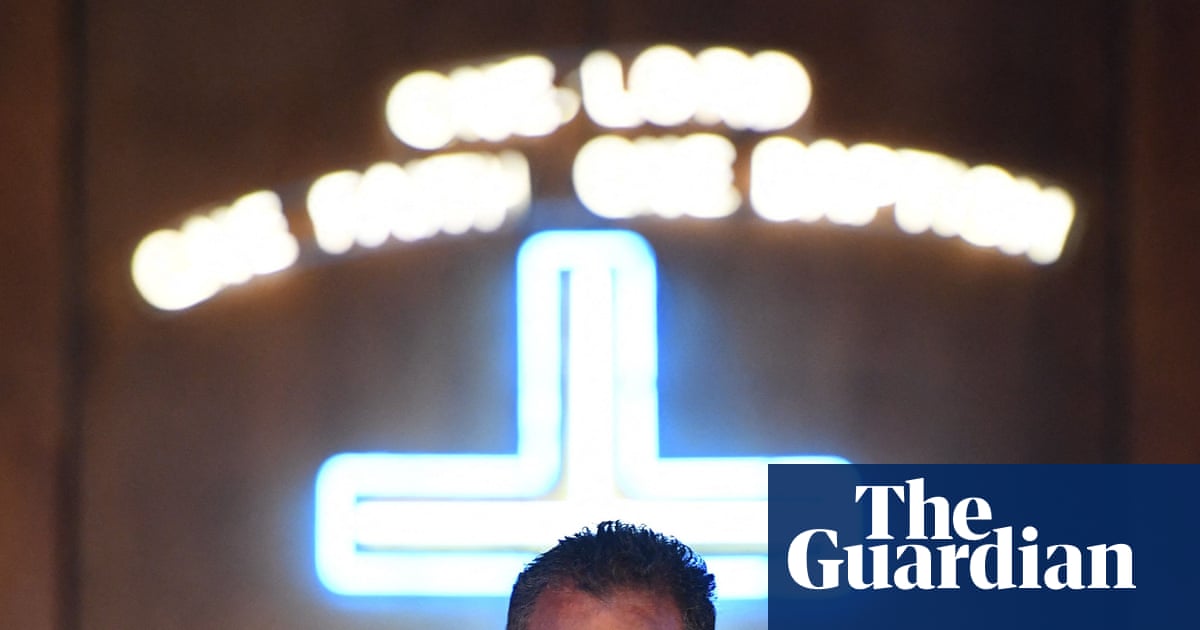
The Rev. Jesse Jackson Sr., a towering figure in the American civil rights movement and a two-time presidential candidate, died Monday at the age of 84, his family announced. Jackson had been diagnosed with progressive supranuclear palsy (PSP) more than a decade ago, after initially being diagnosed with Parkinson’s disease, and was also twice hospitalized with Covid-19 in recent years.
“Our father was a servant leader – not only to our family, but to the oppressed, the voiceless, and the overlooked around the world,” the Jackson family said in a statement. “We shared him with the world, and in return, the world became part of our extended family. His unwavering belief in justice, equality, and love uplifted millions, and we ask you to honor his memory by continuing the fight for the values he lived by.” No cause of death was given.
Jackson’s death marks the end of an era for a man who profoundly shaped American politics and the struggle for racial equality. He rose to prominence as a close confidant of Martin Luther King Jr., and continued King’s work after the civil rights leader’s assassination in 1968. He witnessed the assassination from the balcony of the Lorraine Motel in Memphis, Tennessee, an experience he described as “hurtful, painful” in a 2018 interview with the Guardian.
Born on October 8, 1941, in Greenville, South Carolina, Jackson’s early life was defined by the realities of segregation. He became involved in activism as a student, participating in a protest at the Greenville Public Library in 1960, alongside seven other Black high school students, known as the Greenville Eight. They were arrested for disorderly conduct after peacefully integrating the library, but a subsequent federal lawsuit affirmed their right to access the publicly funded institution.
Jackson’s leadership skills were honed both on the football field and in student government. He received a football scholarship to the University of Illinois in 1959, and later transferred to North Carolina Agricultural and Technical College, where he continued to play football and served as student body president. He was also a national officer for the Omega Psi Phi fraternity.
Following King’s death, Jackson founded People United to Save Humanity (PUSH) in 1971, an organization dedicated to improving the economic conditions of Black Americans. PUSH focused on job creation, educational opportunities, and corporate accountability. He later merged PUSH with the National Rainbow Coalition, forming the Rainbow Push Coalition, which has awarded over $6 million in college scholarships and provided financial assistance to families facing foreclosure, according to the organization’s website.
Jackson launched his first presidential campaign in 1984, becoming only the second Black person to mount a nationwide bid for the presidency, following Shirley Chisholm. At the 1984 Democratic National Convention, he articulated a vision of a “perfect mission” to address poverty, inequality, and injustice. He lost the nomination to Walter Mondale.
His 1988 campaign proved even more impactful. Jackson secured a second-place finish in delegates behind Massachusetts Governor Michael Dukakis, exceeding expectations and galvanizing a diverse coalition of voters. He won the Michigan Democratic caucuses, prompting a reassessment of his viability within the Democratic Party. As CNN reported in October 2025, Jackson’s campaigns challenged the party to be more inclusive and responsive to the needs of marginalized communities. He appealed to Black voters in the South while simultaneously expanding his support among white voters.
In a 1988 rally in Kenosha, Wisconsin, Jackson spoke out against Chrysler’s decision to close a local plant, framing the workers’ struggle as akin to the civil rights movement in Selma, Alabama. His stance led to an endorsement from the UAW Local 72 union, despite internal rules.
President Bill Clinton awarded Jackson the Presidential Medal of Freedom in 2000, recognizing his decades of advocacy for civil rights and social justice. During the Covid-19 pandemic, Jackson continued to advocate for equitable healthcare access and outcomes, highlighting the disproportionate impact of the virus on African American communities. He criticized past presidents for failing to address systemic racism, stating they had failed to “end the virus of white superiority.”
Barack Obama, the first Black president of the United States, acknowledged Jackson’s pivotal role in paving the way for his own historic election. Obama celebrated his victory in Chicago, a city deeply connected to Jackson’s legacy.
Jackson’s passing leaves a void in the landscape of American activism and politics. The Rainbow Push Coalition has not yet announced plans for a successor or future direction following his death.
