Taliban Arrest Afghan Women Over Hijab to Silence Critics
On November 6, 2026, Inter Press Service reported that Taliban authorities in Afghanistan are detaining women across Kabul even when they wear compliant hijabs, with activists warning that dress code enforcement serves as a pretext to silence political critics and suppress dissent.
The New Turn in Kabul
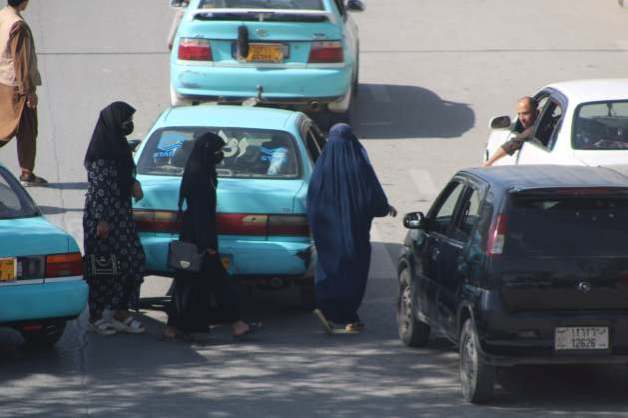
For women living in the Afghan capital, daily movement has transformed into a high-stakes calculation. Reaching a doctor’s office, running local errands, or visiting relatives now carries the constant threat of interception by checkpoints and morality police. Inter Press Service reported that these detentions frequently target women regardless of their attire, turning ordinary public transit into an ordeal marked by checkpoints.
Activists argue that the strict enforcement of garments functions primarily as a mechanism for rooting out regime critics. When security forces make an arrest, searching personal mobile phones for any sign of suspicious content is standard procedure. Affected families are often left with no information regarding when or if a detained relative will be released.
Why This Matters Now
The intensifying crackdown has altered the fundamental structure of daily life and family dynamics across Kabul. Women face agonizing decisions before stepping outside their doors, weighing the necessity of an errand against the risk of arbitrary detention, physical abuse, and the potential social stigma attached to being taken into custody.

Financial penalties imposed by authorities compound the crisis. Securing the release of a detained relative frequently requires paying steep fines or posting bail through community backing.
Earlier Moments on the Ground
In 2024, the Taliban published formal legislation mandating that women completely cover their faces and bodies while prohibiting thin, short, or tight-fitting garments.
On June 9, a Kabul resident identified by the pseudonym Marzia was detained in the Pul-e-Surkh area while walking to a local shop. Accused of being out illegally without proper attire, she was forced into a police vehicle despite wearing a long coat, headscarf, and face mask, and was released only after her father paid a fine of 15,000 afghanis—roughly 200 euros—following a six-hour detention.
In September, the Taliban morality police detained at least twenty women and girls in Kabul’s Taimani neighborhood, according to data from the United States-based Afghan outlet Amu TV. Detainees reported that officers tore their clothing during the altercation and released them only after families and local communities pooled money for bail.
By October 2026, the United Nations Assistance Mission in Afghanistan (UNAMA) reported that it had documented the punishment of at least 52 women in Kabul and Herat between July and September. These penalties stemmed from infractions such as wearing colorful headscarves, leaving hair uncovered, appearing without a concealing chador, or traveling without a mandatory male escort.
Saifuddin Khyber, a representative for the Taliban’s Ministry for the Promotion of Virtue and the Prevention of Vice, defended the detentions to Amu TV, stating that the complete covering of women from hair to toenails is a strict legal and religious obligation under Article 13 of the regime’s laws.
Restrictions Block Tracking of Detained Women
With the Taliban severely restricting independent statistical data and public access to official records, tracking the exact number of detained women remains nearly impossible. Fear persists among residents throughout Kabul as morality patrols continue their sweeps. Every time a woman steps outside, she must deal with a system where compliance with dress codes offers no guarantee of safety, and where families must remain prepared for sudden financial and legal crises.