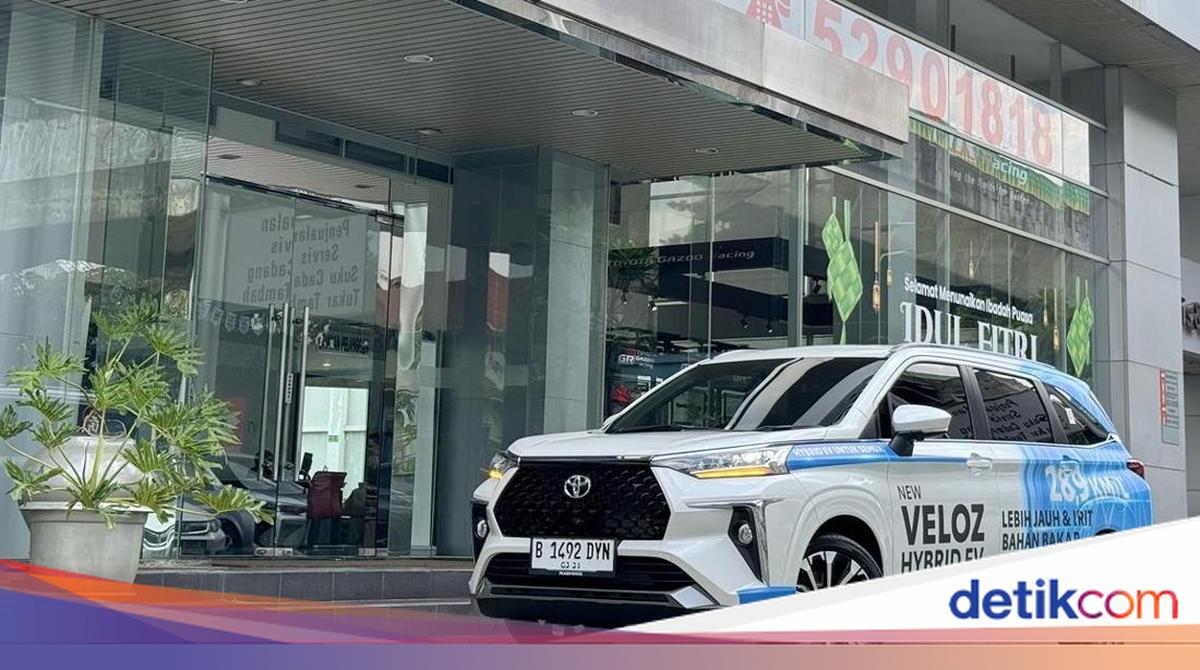
Japanese Car Dealers Struggle in Indonesia Amid Chinese EV Surge
Japanese automotive dealerships in Indonesia are facing a systemic collapse as Chinese EV manufacturers aggressively seize market share. Toyota, Honda, and Daihatsu are now deploying emergency strategies to prevent dealer churn and brand erosion, while the Indonesian government mandates a rapid shift toward electric vehicle (EV) adoption to avoid total obsolescence.
This is not a mere dip in quarterly sales; it is a fundamental liquidity crisis hitting the franchise network. When dealerships “fall,” the capital structure of the entire distribution chain fractures. The resulting instability creates an immediate requirement for corporate restructuring firms to manage insolvency and strategic consultancy services to redesign go-to-market models for the EV era.
The Chinese Displacement and the Entry-Level Vacuum
For decades, the Japanese hegemony in Southeast Asia was built on the reliability of internal combustion engines and a dominant grip on the entry-level compact segment. Daihatsu, a subsidiary of Toyota Motor Corporation, epitomized this strategy. According to company records, Daihatsu reported revenue of ¥1,493 billion in FY2022, driven largely by its focus on kei cars, trucks, and vans. However, the value proposition of the “reliable compact” is being dismantled by Chinese OEMs offering high-tech EVs at price points that Japanese legacy brands are struggling to match.

The disruption is surgical. Chinese brands are not just competing on price; they are capturing the digital-native consumer who views the traditional dealership model as an archaic friction point. As these new entrants scale, the traditional Japanese dealer—burdened by high overhead and aging inventory—becomes a liability rather than an asset.
The market is shifting faster than the supply chain can pivot.
Toyota is attempting to hedge this risk by diversifying its 2026 and 2027 roadmap. Official corporate roadmaps indicate a heavy push into hybrid and EV variations across their fleet, including the 2026 Corolla, 2026 Prius, and the upcoming 2027 Land Cruiser. While these models maintain brand prestige, they do not solve the immediate problem of dealer insolvency in emerging markets where the “entry-level” buyer is migrating toward Chinese alternatives.
The Franchise Fragility: Preventing the Brand Flip
The most acute fiscal danger is the “brand flip.” In a desperate bid for survival, struggling Japanese dealers are eyeing the exit, with some considering transitioning their showrooms to Chinese brands. Daihatsu is currently in a high-stakes race to incentivize its dealer network to remain loyal, fearing that a mass exodus would abandon the brand without a physical footprint in Indonesia.
Honda (HPM) is similarly navigating these dynamics, implementing strategies to stabilize its network against the volatility of the current market. The problem is that dealer loyalty is tied to margins, and margins are evaporating. When a dealer’s cost of capital exceeds their return on vehicle sales, the brand badge becomes irrelevant.
“The Japanese automotive industry is facing a pivot-or-perish moment. The dominance of the last half-century was built on a specific type of mechanical reliability that is now being superseded by software-defined vehicles and aggressive Chinese pricing.”
This instability forces dealers to seek external capital or lean on specialized debt financing providers to keep the lights on while they wait for the next generation of EV models to hit the showroom floor. The risk of a domino effect is real: one major dealer group failing can trigger a credit squeeze across the rest of the regional network.
Macro Industry Shifts: Three Pillars of the Japanese Retreat
The current crisis is the result of a perfect storm where regulatory pressure meets technological disruption. To understand why these dealerships are “falling,” one must look at the three primary catalysts driving the industry toward a tipping point:
- The Regulatory Mandate: The Indonesian Minister of Industry (Menperin) has been explicit: Japanese manufacturers must align with the EV trajectory or be sidelined. This government-led push for electrification removes the safety net that previously allowed Japanese brands to delay the transition to full EVs in favor of hybrids.
- The Erosion of the ‘Entry-Level’ Moat: Daihatsu’s strength was its dominance in the compact and kei car space. As Chinese brands flood this specific segment with affordable EVs, the primary volume driver for Japanese dealers has vanished, leaving them with high-end models that have lower turnover rates.
- Infrastructure Lag: While Toyota’s 2026 lineup—including the GR86 and GR Corolla—continues to appeal to enthusiasts, the mass market requires a charging infrastructure and a price-to-performance ratio that Japanese OEMs have been slower to deploy compared to their Chinese rivals.
The financial fallout is a matter of capitalization. Japanese firms are fighting a war of attrition against competitors who are often backed by massive state subsidies and a vertically integrated battery supply chain.
The Fiscal Bottom Line
Looking toward the next few fiscal quarters, the narrative will not be about vehicle specs, but about network viability. Toyota’s ability to maintain its dominance depends less on the 2026 Sienna or the 2026 Crown Signia and more on whether it can prevent its distribution network from collapsing under the weight of Chinese competition.
The “doomsday” scenario described by market analysts is not an inevitability, but it is a mathematical possibility if the transition to EVs is not accelerated. For the B2B sector, this volatility opens a window for asset management firms to acquire distressed dealership portfolios at a discount, betting on an eventual recovery once the EV product gap closes.
The automotive landscape is being rewritten in real-time. For corporate leaders and investors navigating this instability, the only hedge is precise, vetted intelligence. Those seeking to mitigate risk or capitalize on this industry shift should utilize the World Today News Directory to connect with proven B2B partners and strategic advisors capable of navigating the complexities of the global EV transition.