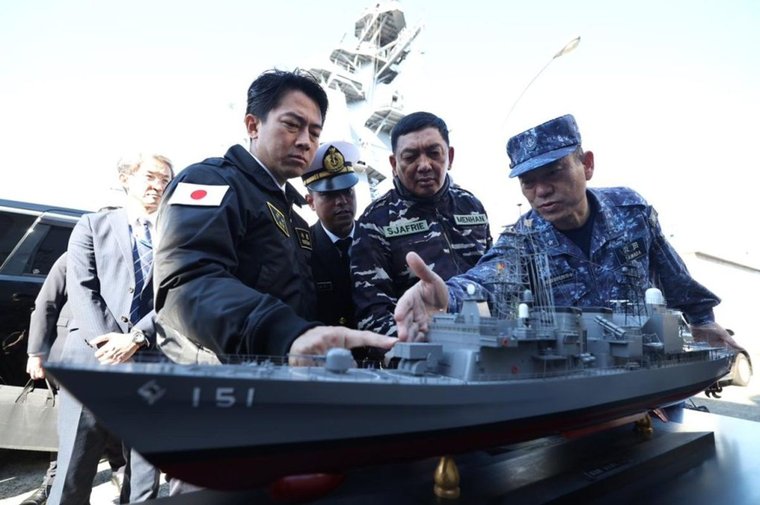
Japan Expands Naval Exports: Southeast Asia & New Zealand Deals Boost Strategic Influence
Japan’s push to export naval defense technology—particularly its advanced Mogami-class frigates and surveillance systems—to Southeast Asia has quietly evolved from a niche diplomatic tool into a cornerstone of its regional security strategy. By May 2026, Tokyo has accelerated these transfers to counter China’s military expansion in the South China Sea, while also hedging against potential U.S. Strategic retreat. The latest deals, including a potential sale to New Zealand, mark a pivot from traditional Overseas Development Assistance (ODA)-backed transfers to commercial arms exports, reshaping Southeast Asia’s defense calculus and forcing regional powers to recalibrate their alliances.
The stakes are high. Southeast Asia’s maritime disputes—where China’s assertive patrols clash with ASEAN claimants—now face a new variable: Japanese-made warships and radar systems. For countries like Vietnam and the Philippines, these exports aren’t just weapons; they’re a lifeline to modernize navies stretched thin by territorial skirmishes. But the move also risks escalating tensions, as China has already warned that any arms sales to disputed-region states could provoke retaliation.
Why This Matters: The Geopolitical Chessboard
Japan’s naval export drive isn’t just about selling ships. It’s a three-pronged strategy:
- Deterrence by Proxy: Equipping ASEAN allies with Japanese technology raises the cost for China to challenge maritime sovereignty claims. A Mogami-class frigate, for instance, boasts advanced anti-submarine warfare capabilities—critical for patrolling the Spratly Islands.
- Alliance Reinforcement: By exporting to non-traditional partners like New Zealand, Tokyo signals to Washington that it’s willing to lead in defense cooperation, even as U.S. Commitments in Asia fluctuate.
- Economic Leverage: The defense sector now accounts for 1.2% of Japan’s GDP, with exports projected to grow 20% annually through 2030. For cash-strapped Southeast Asian militaries, these deals offer a path to avoid Chinese dominance in defense procurement.
Regional Fallout: Who Wins, Who Loses?
Vietnam’s Navy, already operating Japanese-built patrol boats, is eyeing the Mogami-class as a stopgap until its domestically produced Lý Thái Tổ-class frigates enter service. But the real test will be Indonesia’s response. As the region’s largest economy and military power, Jakarta has historically avoided aligning with either Beijing or Tokyo. A potential Japanese frigate sale to Indonesia—rumored to be in early discussions—could force Jakarta to choose sides, risking economic retaliation from China.
“This isn’t just about ships. It’s about who controls the narrative in the Indo-Pacific. If Japan sells these frigates to Vietnam and the Philippines, China will see it as an encirclement strategy—and respond in kind.”
For New Zealand, the Mogami-class export represents a rare opportunity to upgrade its aging fleet without relying on U.S. Or European suppliers. But the deal faces domestic hurdles: Anti-nuclear sentiment and historical skepticism toward Japanese defense expansion could derail negotiations. Meanwhile, in the Philippines, President Bongbong Marcos has framed the potential acquisition as a “game-changer” for Manila’s 2026-2030 defense modernization plan, though critics warn of over-reliance on foreign hardware.
The Legal and Economic Landmine: Compliance and Costs
Japan’s export push isn’t without risks. The 2014 Arms Export Guidelines restrict sales to countries involved in armed conflicts—a clause that could complicate deals with Vietnam, which has clashed with China in the Paracel Islands. Southeast Asian militaries often lack the infrastructure to maintain advanced Japanese systems, creating a secondary market for specialized defense contractors.
| Country | Potential Japanese Acquisition | Estimated Cost (USD) | Key Challenge |
|---|---|---|---|
| Vietnam | 2x Mogami-class frigates | $1.8 billion | Port infrastructure upgrades needed |
| Philippines | 1x Mogami-class frigate | $900 million | Congressional approval delays |
| Indonesia | 3x Mogami-class frigates (rumored) | $2.7 billion | Political resistance from pro-China factions |
| New Zealand | 1x Mogami-class frigate (modified) | $1.1 billion | Domestic anti-nuclear lobby |
Expert Voices: The View from the Ground
“The Philippines’ Navy is stretched thin. We’ve been relying on second-hand U.S. Ships for years. If Japan offers us a Mogami-class, it’s not just about capability—it’s about signaling to Beijing that we won’t back down. But we need help with training crews to operate these systems. That’s where specialized naval academies come in.”
In Tokyo, the push for exports has reignited debates over Japan’s 2025 Defense White Paper, which explicitly ties arms sales to “peaceful purposes.” Legal experts warn that the Mogami-class deals could test this framework, particularly if recipient navies deploy the ships near disputed waters. “Japan is walking a tightrope,” says Dr. Mei-chu Chiu, a defense law professor at Waseda University. “The law allows exports for ‘self-defense,’ but if these ships are used in a conflict, Tokyo could face international backlash.”
The Directory Bridge: Who Solves the Problems This Creates?
Japan’s export drive isn’t just reshaping military balances—it’s creating a cascade of operational, legal, and economic challenges across Southeast Asia. Here’s how professionals in our directory are stepping in:

- Naval Infrastructure Upgrades: Ports in Vietnam and the Philippines lack the dry docks and fuel storage to support Mogami-class frigates. Municipalities are partnering with specialized port engineers to retrofit facilities, often requiring environmental impact assessments to comply with ASEAN maritime laws.
- Legal Compliance: The Arms Export Guidelines require due diligence on end-users. Law firms specializing in arms control law are advising Southeast Asian governments on how to navigate Japan’s restrictions while avoiding Chinese retaliation under the UN Arms Trade Treaty.
- Defense Logistics: Sustaining these ships demands a regional supply chain. Defense logistics firms are expanding hubs in Singapore and Manila to stockpile Japanese-made spare parts, reducing dependency on U.S. Or European suppliers.
The Long Game: What Comes Next?
China’s response will determine the trajectory of these exports. Beijing has already warned that any arms sales to “disputed-region states” will be met with “firm countermeasures.” Yet, the damage may already be done. Japan’s move signals a permanent shift: Southeast Asia’s defense markets are no longer a Chinese monopoly.
The real question is whether this strategy will deter China—or merely accelerate the arms race. For now, the answer lies in the shipyards of Yokohama and the war rooms of Hanoi. But one thing is certain: the Indo-Pacific’s security architecture is being rewritten in real time.
To navigate these waters, governments and businesses need more than just ships. They need geopolitical risk analysts to assess retaliation scenarios, diplomatic liaisons to smooth cross-border negotiations, and defense data firms to model the long-term impact of these acquisitions. The World Today News Directory is your compass in this storm.