Italy’s Cheese Bank: How Blockchain and Climate Risk Shape Parmesan Loans
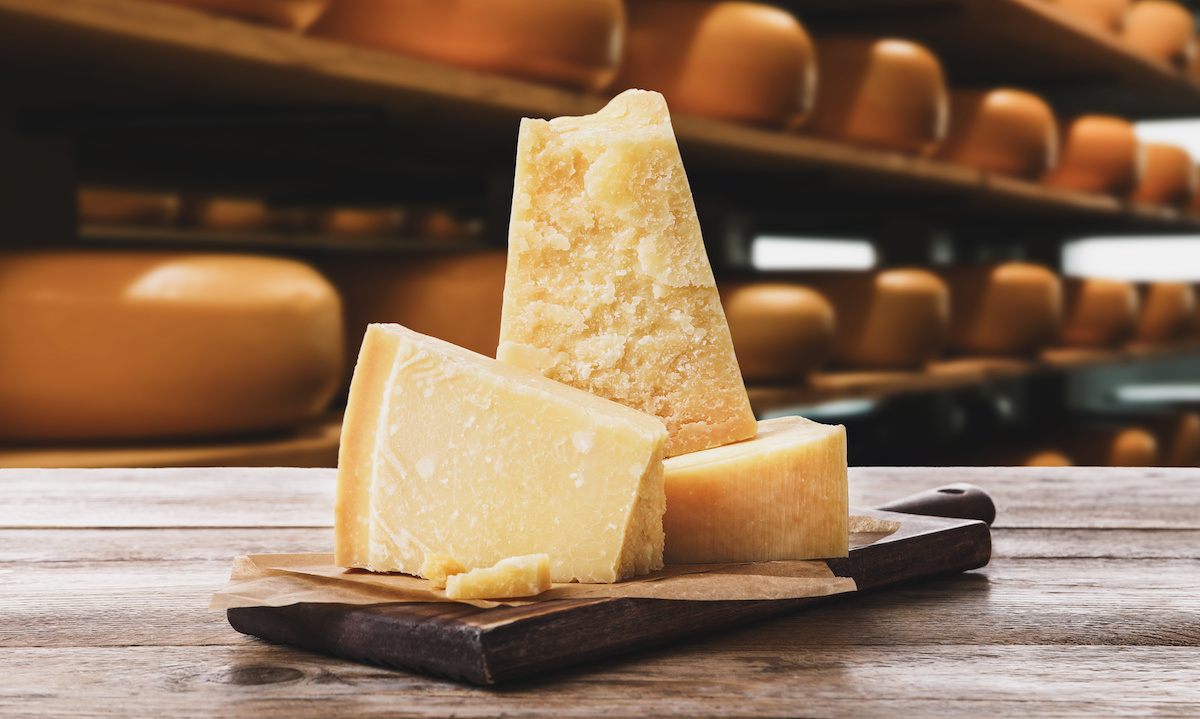
As reported by Fortune on Aug. 10, masses of Parmigiano-Reggiano wheels rest on shelves inside climate-controlled facilities in Emilia-Romagna while backing working capital loans issued by Credito Emiliano. This centuries-old regional financing model has evolved into an intricate intersection of digital asset tracking, embedded finance, and climate vulnerability.
The Balance Sheet Mechanics of Edible Collateral
For decades, traditional commercial borrowers have relied on office furniture, real estate, or accounts receivable to back their debt. Credem takes a different approach. The bank has accepted Parmigiano-Reggiano as collateral since 1953 through its subsidiary, Magazzini Generali delle Tagliate. Operating in Reggio Emilia and Modena, these facilities collectively hold more than 500,000 wheels valued at over 300 million euros, equivalent to approximately $347 million, per Fortune’s reporting.
The operational reality of dairy production forces this financial structure. Official consortium rules dictate that Parmigiano-Reggiano must mature for at least 12 months, with much of the inventory aging between 24 and 36 months. Producers face immediate cash flow demands to cover cows, feed, and labor long before their finished inventory hits the market.
To bridge that liquidity gap, Credem extends loans generally valued at 60% to 80% of a wheel’s expected mature value, according to Fortune. A Harvard Business School case study previously characterized the structure as financing built specifically around the operational reality of a highly specialized industry.
Blockchain Architecture and the Digital Rind
The physical warehouse model now incorporates software integration. Credem introduced a blockchain platform designed to record pledged wheels, allowing lenders to monitor their condition and location in real time. According to Fortune, this technological layer expands the collateral pool by enabling certain cheese inventories to remain at producers’ facilities rather than moving immediately to bank-owned warehouses.
This implementation treats blockchain as a ledger rather than a speculative asset class. In its 2023 sustainability report, Credem disclosed more than 291 million euros, or roughly $336 million, in operational credit lines tied to the cheese program. This figure included more than 93 million euros managed directly through its blockchain platform across 137 participating businesses.
Monitoring physical inventory distributed across multiple sites requires rigorous oversight.
Extreme Weather Enters the Credit Department
Climate patterns are altering the operational overhead required to preserve this collateral. During peak heat waves this summer, daily energy use at Credem’s cheese warehouses climbed approximately 30% as cooling systems strained to maintain precise temperatures, Reuters reported on July 13.

The disruption begins long before the warehouse floor. On nearby dairy farms, extreme heat caused cows to eat less and drop milk production by as much as 10%. In response, agricultural producers have installed fans and water-misting equipment, while Credem has upgraded cooling systems, insulation, and renewable-energy capacity.

Broader macroeconomic indicators align with these localized pressures. Data from the European Union’s Copernicus Climate Change Service highlighted that 2026 brought western Europe its hottest June ever documented, featuring mean temperatures that exceeded the 1991–2020 baseline by 3.06 degrees Celsius. Furthermore, an analysis published by the European Central Bank detailed how extreme weather events interrupt production, reduce labor supply, and inject persistent costs into the broader economy.
The economic transmission channel is direct. Heat affects cows, cows affect milk, milk affects cheese, and cheese secures loans. When environmental volatility threatens physical assets, lenders must reassess their risk parameters.
The cheese may still stand alone on its wooden shelf, but its risk profile no longer does. Credito Emiliano’s vault demonstrates that good collateral requires more than a strong market price; it depends on energy stability, logistical integrity, and the physical conditions necessary to preserve value over time.