
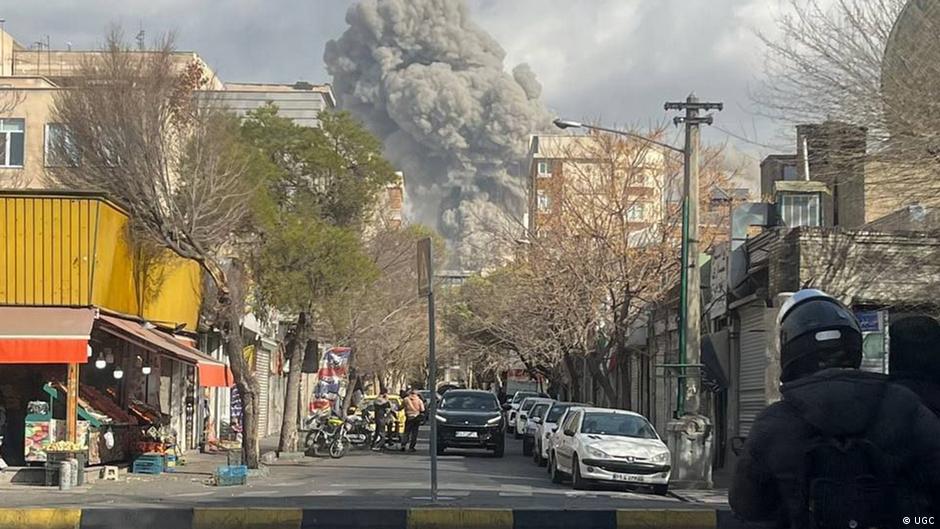
A major joint military operation launched by the United States and Israel against targets in Iran is underway, prompting a wave of condemnation and escalating tensions across the Middle East. The attacks, described by the U.S. Department of War as “Operation Fury Epic,” began Saturday and have targeted locations in Tehran, Isfahan, Tabriz, and Karaj, according to reports.
The Israeli military confirmed it had struck multiple meetings of high-ranking Iranian officials in Tehran. “The attack this morning took place simultaneously in several locations in Tehran, where senior political and security officials were meeting,” the Israeli military stated in a communique. The military is currently assessing the results of the attack and remains “in a state of readiness on several fronts” in case the campaign “extends to other theaters” of operations.
According to Israeli public radio and television, Ayatollah Ali Khamenei, Iran’s supreme leader, and President Masoud Pezeshkian were among the targets of the U.S.-Israeli offensive. Prime Minister Benjamin Netanyahu affirmed the operation aimed to “eliminate the existential threat” posed by the Iranian regime, and thanked President Donald Trump for his “historic leadership.”
Iran has responded with retaliatory strikes, targeting bases housing U.S. Forces in multiple countries across the region, including Qatar, the United Arab Emirates, Bahrain, Kuwait, and Saudi Arabia. Iranian state media reported attacks on a U.S. Naval base in Bahrain, with images circulating of smoke rising near the coastline. Qatar’s authorities stated they had “successfully thwarted” attacks against Doha, home to the largest U.S. Base in the region.
Simultaneously, Israel has detected multiple waves of missile launches from Iran targeting its territory, triggering air raid sirens in Jerusalem and Tel Aviv. The Israeli military confirmed its defense systems were intercepting the incoming threats. A sixth wave of missiles was reported by the Israeli Defense Forces on Saturday.
The attacks have drawn international condemnation and calls for de-escalation. UN High Commissioner for Human Rights Volker Türk condemned the attacks and urged all parties to return to the negotiating table, stating that the violence would only result in “death, destruction, and human suffering.” He emphasized that civilians are bearing the brunt of the conflict.
European leaders have also voiced concern. Spanish Prime Minister Pedro Sánchez rejected the unilateral military action by the U.S. And Israel, arguing it contributes to a more uncertain and hostile international order, and called for “de-escalation and dialogue.” French President Emmanuel Macron described the escalating situation as “dangerous for all” and demanded an urgent meeting of the UN Security Council. He stated that the escalation risked grave consequences for international peace and security.
Amidst the escalating conflict, Iran has reportedly cut off internet access across the country, according to Netblocks, an organization that monitors internet traffic and censorship. Connectivity has fallen to 4% of normal levels.
Several airlines, including Air France, Lufthansa, Turkish Airlines, SWISS, and Air India, have announced the suspension of flights to and over the Middle East. The European Union has begun withdrawing non-essential personnel from the region, citing the dangerous situation.
In a statement posted on social media, former U.S. President Donald Trump offered Iranian military forces a choice of “immunity or certain death,” and asserted that “Iran will never have a nuclear weapon.”
Reports from Iran indicate at least 57 people were killed in an Israeli attack on the city of Minab in the Hormozgan province, with a direct hit on a primary school. Local officials confirmed that rescue teams are working to assist students and clear debris.
