
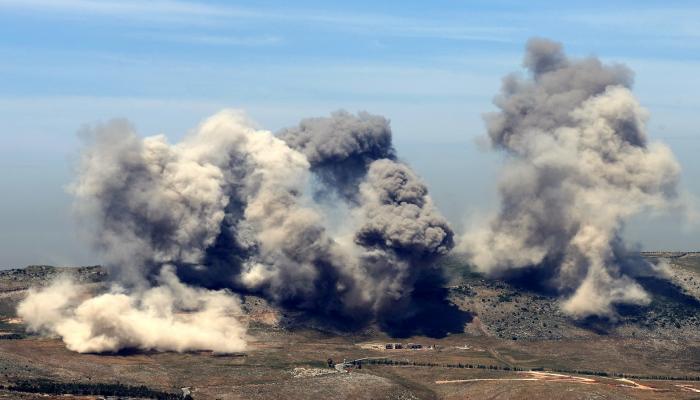
Israel Targets Hezbollah in Southern Lebanon Amid Rising Tensions
Abu Dhabi – In a series of strikes on Thursday,the Israeli military targeted what it described as Hezbollah assets in southern Lebanon,triggering significant explosions and widespread concern among local residents. The attacks come amid heightened tensions following recent events, including the death of a Hamas commander in a separate Israeli operation.
Israeli Military Statement
According to a statement released by the Israeli army, the strikes focused on disrupting Hezbollah’s operational capabilities. Air Force planes attacked a site to manage the Hezbollah fire and defense system in the Jabal Al -Boufour (Al -Shaqif) area in southern Lebanon, which was used to manage the party’s fire and defense system,
the statement read.
- The targeted site allegedly managed Hezbollah’s fire and defense systems.
- Israeli forces claim to have targeted saboteurs, combat resources, and underground facilities.
- The army asserts the site was part of a strategic underground project and is now out of service.
The israeli military further stated that the existence of this site and the terrorist activity in it is a flagrant violation of the understandings between the State of Israel and Lebanon.
Lebanese Media Reports
The Lebanese News Agency reported a wide air aggression against the Nabatiyeh area
carried out by Israeli warplanes. The agency detailed a violent series of raids and in two batches
targeting areas that extend between the towns of Kafrbinit, Nabatiyeh al -Fawqa, Kfarman.
The strikes reportedly began at approximately 9:15 a.m. Greenwich Mean Time.
Impact on Local Population
The Lebanese News Agency also noted that the raids caused huge explosions that echoed in most of the Nabatiyeh and southern regions,
leading to terror and panic
among residents. Many parents reportedly rushed to schools to evacuate their children, causing significant traffic congestion.
Dr. Jamal Sabbagh, who was conducting health visits at a school near Nabatieh, recounted the scene:
We heard a strong worm, about ten consecutive strikes. Some children were afraid and a panic that prevailed and the professors were also afraid.
Dr. Jamal Sabbagh, France press
He added, There was a state of confusion and tension,
noting that the strikes targeted the mountains in the vicinity of Nabatieh.
Ceasefire Violations and Recent Events
Despite an existing ceasefire agreement that came into effect on Nov. 27, Israeli forces have continued to conduct strikes against Hezbollah targets in southern Lebanon. This agreement followed a period of heightened conflict linked to the war between Israel and Hamas in the Gaza Strip.
the recent strikes occurred a day after the killing of Khaled Ahmed Al -Ahmad, a commander in the military wing of Hamas, in an Israeli raid in Sidon, southern Lebanon. The Israeli army confirmed the operation, stating that Al-Ahmad held the position of Hamas operations official in the western sector in Lebanon
and that his activities posed a threat to the State of Israel and its citizens.
Lebanese Government Stance
The Lebanese government has recently reiterated its commitment to limit weapons in the hands of the state,
amid increasing pressure from the United States to disarm Hezbollah. This pressure follows significant losses in Hezbollah’s military and leadership structure during its conflict with Israel.
Ceasefire Agreement Details
The ceasefire agreement, brokered by the United States and France, stipulated the withdrawal of Hezbollah forces from the border region south of the Litani River, approximately 30 kilometers from the Israeli border. It also called for the dismantling of Hezbollah’s military infrastructure in exchange for increased deployment of the Lebanese army and the United nations Interim Force in Lebanon (UNIFIL) near the border.
The agreement also required Israel to withdraw from areas it had entered in southern Lebanon during the war, with the exception of five strategic high points that allow for surveillance of the border region.
