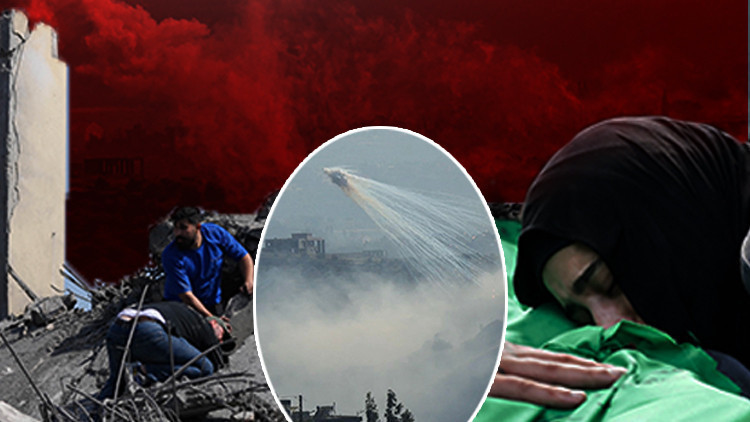
Israel-Lebanon Conflict: Escalating Attacks and Rising Death Toll
Israeli Prime Minister Benjamin Netanyahu has signaled a commitment to continued military operations in Lebanon, maintaining that a full-scale military offensive remains a viable option. Following a surge in intense airstrikes and retaliatory drone and rocket attacks by Hezbollah, the region is witnessing a critical escalation that threatens to destabilize the Eastern Mediterranean and disrupt international maritime corridors.
This is no longer a localized border conflict; It’s a calculated demonstration of power dynamics in a volatile region. When the leadership of a nuclear-armed state explicitly places a ground invasion “on the table” while simultaneously conducting high-intensity aerial campaigns, the global market reacts. We are seeing a shift from “managed tension” to “active attrition.” For the global corporate community, this transition translates into immediate volatility: soaring insurance premiums for cargo traversing the Levant, the sudden freezing of foreign direct investment (FDI) in Lebanese infrastructure, and a heightened threat profile for any multinational entity with assets in the Middle East.
The Netanyahu Doctrine: Military Necessity vs. Diplomatic Stasis
The current posture of the Israeli government suggests a strategic pivot. By signaling that the war will continue despite previous ceasefire attempts, Netanyahu is effectively redefining the security perimeter of the state. The intensity of the recent strikes on Lebanon indicates a desire to degrade Hezbollah’s operational capacity before any potential ground movement. This “maximum pressure” approach is designed to force a structural change in the Lebanese security apparatus, but it carries the inherent risk of a systemic regional collapse.
The human cost of this strategy is mounting rapidly. Data indicates that the death toll from Israeli attacks in Lebanon has now climbed to 2,846. This scale of loss creates a vacuum of stability that often invites further radicalization and complicates any future diplomatic exit strategy. When the cost of conflict reaches this threshold, the “off-ramp” for political leaders becomes narrower and more perilous.
The volatility of the situation is further compounded by the asymmetric nature of the fighting. While Israel utilizes superior air power, Hezbollah has maintained a consistent response using drones and rocket fire. The recent confirmation that an Israeli soldier was killed in a UAV attack underscores the vulnerability of conventional forces to low-cost, high-impact autonomous weaponry. This “gray zone” warfare is a blueprint for future conflicts, where state militaries are challenged by non-state actors utilizing off-the-shelf technology to achieve strategic parity.
“The escalation in the Levant is not merely a bilateral dispute but a proxy barometer for the broader struggle between regional hegemons. The inability to maintain a ceasefire suggests that the traditional diplomatic levers—mediated by Western powers—are losing their efficacy in the face of hard-power imperatives.”
The Macro-Economic Ripple Effect
The geopolitical instability is creating a tangible “risk tax” on global trade. The Eastern Mediterranean is a critical artery for energy, and goods. As the threat of a wider war looms, the global energy markets remain on edge, anticipating potential disruptions to gas pipelines and shipping lanes. Any escalation that involves the blockade of ports or the targeting of energy infrastructure would send shockwaves through the European energy grid, which is already struggling with long-term transitions away from Russian dependence.

For corporations, the uncertainty is the primary enemy. Multinational firms are now forced to account for “sudden-stop” scenarios where assets become unreachable or uninsurable overnight. This environment has led to a surge in demand for geopolitical risk consultants who can provide real-time intelligence and contingency planning. Companies are no longer relying on static annual reports; they require dynamic, live-feed analysis to decide whether to evacuate personnel or divert supply chains.
the legal complexities of operating in a conflict zone are intensifying. The intersection of international humanitarian law and corporate liability means that firms must be incredibly precise in their dealings. Many are now onboarding international trade lawyers to restructure contracts and ensure that “force majeure” clauses are robust enough to cover state-led military interventions and regional airspace closures.
Asymmetric Responses and the Failure of Deterrence
The cycle of violence—Israeli airstrikes followed by Hezbollah drone responses—reveals a fundamental failure in the theory of deterrence. Traditionally, superior firepower was thought to compel an adversary to cease hostilities. However, the current conflict demonstrates that when an actor perceives an existential threat or is driven by a broader ideological mandate, conventional deterrence fails.
- Aerial Dominance: Israel’s ability to strike deep within Lebanese territory with precision.
- Asymmetric Retaliation: Hezbollah’s use of UAVs to bypass traditional air defenses and target military personnel.
- Ceasefire Erosion: The ability of both parties to violate agreements without immediate, prohibitive costs, leading to a “death by a thousand cuts” scenario.
This attrition is not just military; it is logistical. The displacement of populations and the destruction of urban centers in Lebanon create a long-term humanitarian crisis that will require billions in reconstruction. This future “rebuilding phase” will eventually create a market for global logistics strategists and infrastructure firms, but only after a stable political settlement is reached—a prospect that currently seems distant.
The Global Chessboard: A Shift in Alliances
The international community’s response to the current escalation is fragmented. While some nations call for an immediate cessation of hostilities, others view the Israeli operation as a necessary security measure against Iranian-backed proxies. This divide is mirrored in the diplomatic corridors of the UN and NATO, where the tension between supporting an ally and upholding international law is reaching a breaking point.

The role of the United States remains pivotal. Washington’s attempt to balance its strategic partnership with Israel against its desire to avoid a total regional war with Iran is the primary axis upon which the conflict turns. If the US fails to provide a credible diplomatic alternative to Netanyahu’s military options, the region may slide into a protracted war of attrition that could last for years, fundamentally altering the geopolitical architecture of the Middle East.
We are witnessing the birth of a new era of “perpetual conflict” in the Levant, where ceasefires are merely tactical pauses used to rearm and regroup. In this environment, the only constant is instability.
The shifting global chessboard demands more than just news; it requires a roadmap for survival and growth. As state-sponsored conflicts redefine the boundaries of risk, the ability to find vetted, professional partners—from crisis management specialists to financial advisors specializing in emerging market volatility—is the difference between corporate resilience and total loss. The World Today News Directory remains the definitive resource for those navigating the intersection of global geopolitics and institutional stability.