
President Donald Trump announced Saturday that U.S. And Israeli forces had launched a major attack on Iran, resulting in the death of Supreme Leader Ayatollah Ali Khamenei. The operation, described as “major combat operations” by Trump, aims to eliminate what he called “imminent threats from the Iranian regime” and dismantle Tehran’s ballistic missile program.
In a video statement released from Mar-a-Lago, Trump accused Iran of supporting terrorist groups across the Middle East. “From Lebanon to Yemen and Syria to Iraq, the regime has armed, trained and funded terrorist militias that have soaked the earth with blood and guts,” he said, vowing to ensure these proxies “can no longer destabilize the region or the world and attack our forces.”
Iran maintains a network of allied groups throughout the region, often referred to as “the Axis of Resistance.” These groups, while diverse in their specific ideologies, share a common opposition to U.S. And Israeli influence and often coordinate activities.
Hamas, the militant group controlling the Gaza Strip, was the only proxy specifically named by Trump. Founded in 1987, Hamas received increased support from Iran in the 1990s, despite the two organizations adhering to different branches of Islam. Hamas initiated the October 7, 2023, attacks on Israel, which led to the deaths of approximately 1,200 people and the abduction of 251 hostages. The ensuing conflict has resulted in over 70,000 Palestinian deaths, according to the Gaza Health Ministry, a figure considered reliable by the United Nations and independent observers. The recent Israeli offensive has significantly weakened Hamas, with Israel claiming to have killed thousands of its fighters and numerous commanders.
Hezbollah, a predominantly Shiite Islamist group based in Lebanon, is considered Iran’s most significant regional ally. Emerging from the Lebanese Civil War, Hezbollah has grown into a powerful military and political force, receiving consistent patronage from Tehran. The group has engaged in frequent conflicts with Israel, including a 34-day war in 2006 and a more recent campaign in 2024 that resulted in the death of its longtime leader, Hassan Nasrallah. Nasrallah received religious training in Qom, Iran.
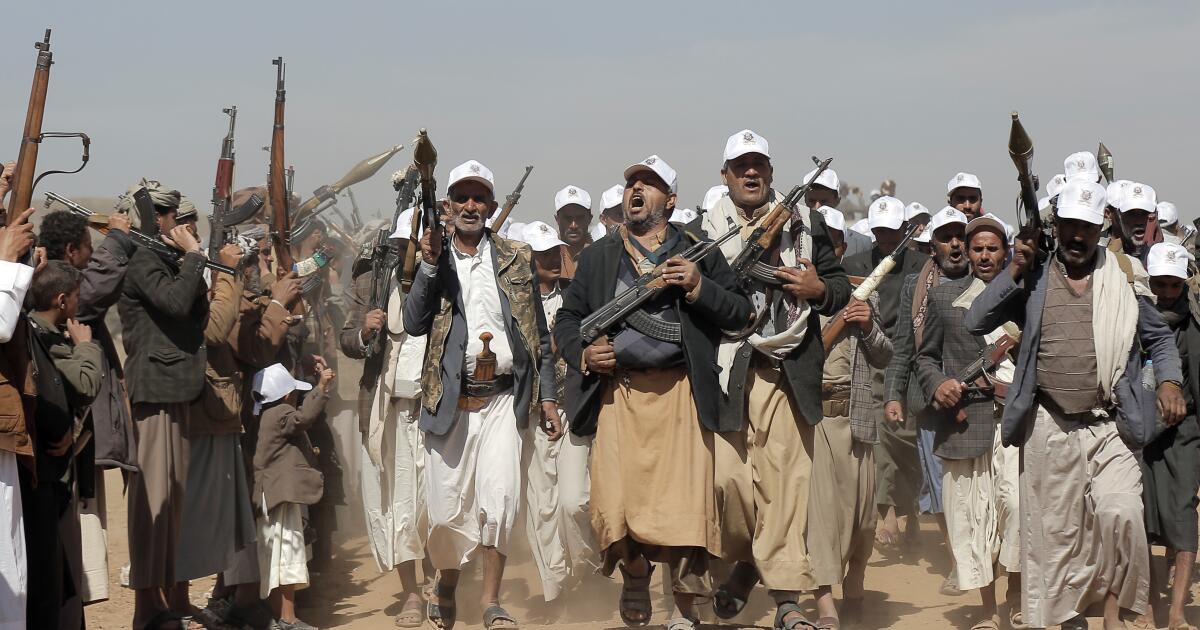
In Yemen, the Houthi movement, officially known as Ansar Allah, has received support from Iran since seizing control of the capital, Sanaa, in 2014. The Houthis have launched drone and missile attacks against Israel and vessels in the Red Sea since the start of the Gaza war, claiming connections to Israel, though these claims are often inaccurate. Trump stated last year that he halted a bombing campaign targeting the Houthis after they agreed to cease attacks.
Iraq has also become a key arena for Iranian influence following the 2003 U.S.-led invasion that toppled Saddam Hussein. A number of Iran-aligned Iraqi militias have emerged, operating under the umbrella of the Popular Mobilization Forces. These militias, largely Shiite, receive aid and training from Iran’s Islamic Revolutionary Guard Corps, according to the Pentagon. In 2020, a U.S. Drone strike ordered by Trump killed Qasem Suleimani, a high-ranking Iranian general and commander of the Quds Force, along with several militia leaders. Suleimani played a central role in establishing and supporting Iran’s network of proxies.
The United States and Israel launched the attack on Iran with strikes near the offices of Supreme Leader Ayatollah Ali Khamenei, with Iranian media reporting strikes nationwide. The extent of the damage and the full scope of the military operation remain unclear.
