
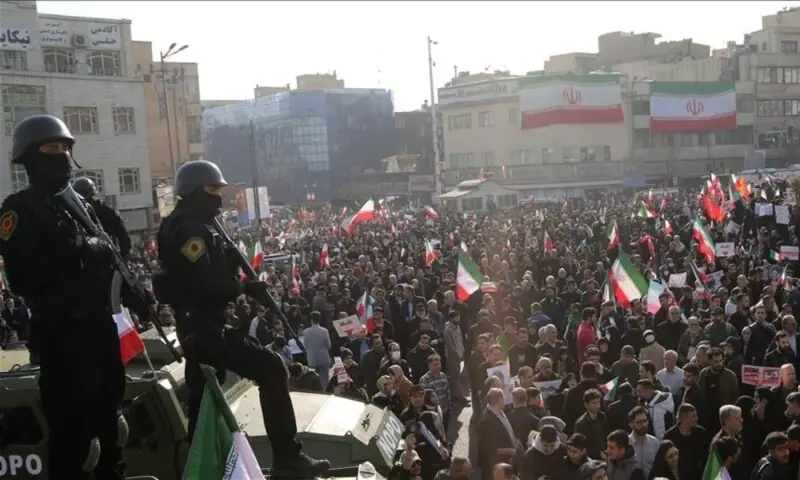
Iran’s Economic Crisis Fuels Protests and Deepens Instability
January 20, 2026 – Iran is grappling with a severe economic crisis, marked by a collapsing currency, soaring inflation, and crippling international sanctions. These pressures have triggered widespread protests across the nation, escalating from localized demonstrations by merchants to nationwide expressions of discontent involving diverse segments of the population. The situation poses a meaningful challenge to the government of President Masoud Pezeshkian, who has acknowledged the economic shortcomings and pledged to address public concerns.
Currency Collapse at the Center of Crisis
The Iranian rial has been in freefall for years, but 2025 witnessed an unprecedented acceleration in its decline. starting the year at approximately 817,000 rials per US dollar, the currency plummeted to between 1.42 and 1.47 million rials on the parallel market by the end of the year [[1]].As of January 2026, the rial trades around 1.5 million to the dollar, representing a nearly 800% devaluation since 2020. this dramatic loss of value has severely eroded the purchasing power of ordinary Iranians.
The rial’s depreciation has a cascading effect on the economy. Import costs surge, driving up prices for essential goods and services. Businesses struggle to afford supplies, and consumers find their savings dwindling. This creates a climate of economic insecurity and fuels social unrest.The currency’s weakness is not a new phenomenon; it has steadily declined from 34,000 rials per dollar in 2016 to 270,000 in 2021 and 430,000 in 2022, highlighting a long-term trend of economic deterioration.
Inflation Eroding living Standards
Compounding the currency crisis is persistently high inflation. Consumer price inflation has remained above 40% annually, with food and housing costs rising at an even faster pace. Wages have failed to keep pace with rising prices, squeezing household budgets and forcing families to cut back on essential expenses [[2]].
While inflation eased slightly to 32.5% in 2024, the International Monetary fund (IMF) projects it will accelerate again, reaching 42.4% in 2025 and remaining above 40% in 2026. Food inflation is especially acute, with prices soaring 58% in september 2025 – more than double the rate of the previous year. Fruit prices jumped 75% during the same period,and bread and grains,staples of the Iranian diet,nearly doubled in price. Despite government subsidies and cash handouts,these measures have proven insufficient to offset the impact of rising prices,especially as the value of these benefits diminishes with the declining rial.
Sanctions and Restricted Oil Revenues
A primary driver of Iran’s economic woes is the impact of international sanctions, particularly those imposed by the United states. These sanctions restrict Iran’s access to the global financial system, limit banking transactions, and impede oil exports [[3]]. Even when iran manages to export oil, it often faces difficulties accessing the proceeds due to restrictions and delays.
Oil production has suffered as a direct consequence of the sanctions. A Reuters survey indicated a decline of 100,000 barrels per day in late 2025. The IMF forecasts a 16% decrease in total exports (oil and non-oil) to $100 billion in 2025, with imports also expected to fall by roughly 10% to $98 billion. Independent energy analytics firms, including Kpler, Vortexa, and TankerTrackers, project even steeper declines in oil output and exports.This reduction in foreign exchange inflows has weakened the Central Bank’s ability to stabilize the currency and has hindered trade and foreign investment, forcing Iran to rely on unofficial routes that inflate prices and reduce clarity.
Oil revenues remain crucial to the Iranian economy, accounting for a significant portion of government revenue. While the Central bank of Iran estimated oil revenues at $67 billion in the fiscal year ending last March, figures from the US Energy Information Administration (EIA) vary. EIA data shows revenues plummeted to $5 billion in 2020 before rebounding to $43 billion in 2024. The government continues to run budget deficits, estimated at 4.1% of GDP in 2024, projected to widen to 6% in 2025 and 6.2% in 2026, reflecting constrained revenues and rising spending.
GDP and Unemployment Figures
Iran’s economic performance over the past five years has been volatile. Following a period of stagnation,GDP rebounded with growth rates of 4.1% in 2021 and 4.4% in 2022,driven by a recovery in oil exports and domestic services. Though, this momentum peaked in 2023 with 5.3% expansion,and growth has as slowed significantly. By 2024, growth slowed to 3.7%, and the IMF and World Bank estimate near-stagnant growth of just 0.3% to 0.6% for 2025. This deceleration is attributed to intensifying sanctions, persistent inflation, and energy shortages.
The labor market has also experienced challenges.While the official unemployment rate declined from 9.3% in 2021 to between 7.2% and 8.2% by late 2024, youth unemployment remains a significant concern, consistently hovering between 20% and 23% – nearly triple the national average.
Looking Ahead
Iran’s economic crisis is deeply intertwined with political and social factors. The ongoing protests demonstrate the growing public frustration with the economic situation and the government’s handling of it. Addressing the crisis will require a multifaceted approach, including economic reforms, efforts to mitigate the impact of sanctions, and a commitment to greater transparency and accountability. The path forward remains uncertain, but the current situation underscores the urgent need for enduring solutions to ensure the economic well-being of the Iranian people.
