
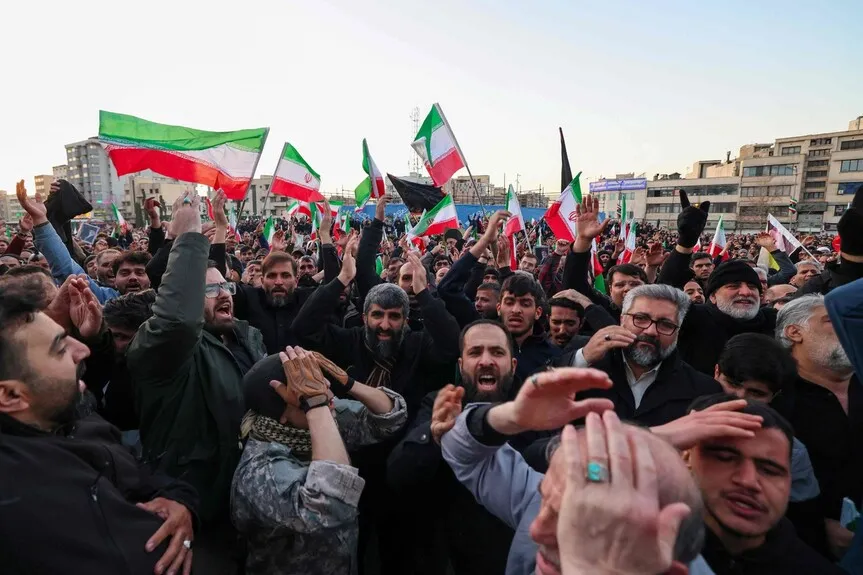
The Iranian regime confirmed the death of Ayatollah Ali Khamenei, its Supreme Leader, following a joint military operation conducted by the United States and Israel on February 28th. The strike marks a significant escalation in tensions between Washington and Tehran, culminating a period of increasing conflict since President Trump began his second term.
The Trump administration has consistently sought to curb Iran’s regional influence, focusing on its nuclear program, ballistic missile development, and support for proxy groups. Economic sanctions, including a comprehensive oil export ban imposed on February 4th, 2025, were central to this strategy, according to a memorandum signed by President Trump. Ayatollah Khamenei publicly denounced any prospect of negotiation with the United States on February 7th, stating that “no problem will be solved” through talks.
Despite months of intermittent negotiations, facilitated by various intermediaries, the two nations failed to bridge fundamental disagreements over the scope of acceptable constraints on Iran’s nuclear activities. The United States proposed dialogue with Iran on March 7th, with President Trump sending a letter directly to Khamenei, but the Supreme Leader dismissed the offer as “deceptive” on March 12th. Following the breakdown in talks, the Trump administration reportedly adopted a more hawkish stance, aligning more closely with Israel’s security concerns.
The joint U.S.-Israeli operation targeting Khamenei represents a dramatic shift in policy. Both governments have officially declared the Supreme Leader dead, though details surrounding the operation remain limited. The attack follows a pattern of escalating military actions, including a previous series of strikes in June 2026 that targeted Iranian nuclear facilities, including the Isfahan research complex and the uranium enrichment plants at Natanz and Fordow. President Trump claimed those facilities were “completely destroyed” following the earlier strikes.
The roots of the U.S.-Iran conflict extend back to 1953, when the U.S. And the United Kingdom orchestrated the overthrow of Iran’s democratically elected Prime Minister Mohammad Mosaddegh, motivated by concerns over the nationalization of Iranian oil. This intervention fostered deep-seated anti-American sentiment within Iran, contributing to the 1979 Islamic Revolution. The subsequent hostage crisis at the U.S. Embassy in Tehran, beginning in November 1979, led to a severing of diplomatic relations that has persisted for decades.
The nuclear issue has become a central point of contention in recent years. While Iran maintains its nuclear program is for peaceful purposes, the international community, including the International Atomic Energy Agency (IAEA), has expressed concerns about its potential for weapons development. The 2015 Joint Comprehensive Plan of Action (JCPOA), aimed at limiting Iran’s nuclear activities in exchange for sanctions relief, was a key diplomatic effort to address these concerns. However, the current administration has taken a firm stance against the JCPOA, seeking a more comprehensive agreement.
As of March 1st, 2026, the United States has not issued a statement regarding potential next steps following Khamenei’s death. The Iranian government has yet to announce a successor to the Supreme Leader, leaving the future trajectory of the nation’s nuclear program and regional policy uncertain.
