Iran Uranium to Russia: US Rules Out Potential Win-Win Deal
Russia’s claim that it can accept and process Iran’s enriched uranium for civilian use has ignited a geopolitical flashpoint, as U.S. Officials reject the proposal while some analysts argue it could stabilize regional tensions by removing fissile material from Iran’s stockpile under international supervision. On April 20, 2026, Russian Foreign Minister Sergei Lavrov reiterated Moscow’s readiness to host Iran’s uranium enrichment output for conversion into reactor fuel, a move Washington dismisses as a proliferation risk that circumvents sanctions and undermines the Joint Comprehensive Plan of Action (JCPOA) framework. The statement comes amid renewed diplomatic stalemate in Vienna talks, where Iran insists on sanctions relief before further nuclear concessions, and the U.S. Maintains that any transfer of Iranian uranium to Russia would require explicit IAEA verification and U.S. Approval—conditions Russia has not met. While the proposal remains theoretical, its resurgence highlights the fragility of non-proliferation architecture and the growing influence of bilateral deals outside multilateral frameworks, particularly as Iran advances its centrifuge capabilities and Russia seeks economic leverage amid Western isolation.
The problem this event creates is twofold: first, it risks accelerating regional arms races if perceived as a tacit endorsement of Iran’s nuclear ambitions by a major power; second, it complicates energy and commodity markets already strained by sanctions on Russian oil and gas, potentially disrupting global nuclear fuel supply chains. For businesses and professionals in sectors tied to energy security, commodities trading, or international compliance, this development demands immediate attention. Energy analysts, trade compliance officers, and international law firms specializing in sanctions and export controls are now consulting updated risk assessments to anticipate how such a transfer—even if hypothetical—could trigger secondary sanctions, affect freight insurance premiums for uranium shipments, or alter licensing requirements for nuclear technology exports under the U.S. Export Administration Regulations (EAR) and EU Dual-Use Regulation.
Historically, Russia has played a dual role in Iran’s nuclear program: building the Bushehr nuclear power plant while simultaneously supporting UN sanctions during periods of heightened tension. In 2010, Russia agreed to suspend fuel deliveries to Bushehr over Iran’s enrichment activities, only to resume shipments in 2011 after diplomatic concessions. This pattern suggests Moscow’s current offer may be less about genuine proliferation concerns and more about leveraging its position as a nuclear supplier to gain diplomatic concessions from Tehran—such as improved trade terms or political support in international forums. Meanwhile, Iran’s enriched uranium stockpile has grown significantly since the U.S. Withdrawal from the JCPOA in 2018, reaching an estimated 5.5 tons of uranium enriched up to 60% U-235 by early 2026, according to the latest IAEA report. Converting this material to reactor-grade fuel (below 5% enrichment) would require extensive re-processing, a capability Russia possesses but has not openly offered for Iranian material since the JCPOA era.
“Russia’s offer is not a benevolent gesture—it’s a strategic play to reassert influence in the Gulf while appearing constructive on non-proliferation. But without ironclad IAEA oversight and U.S. Buy-in, this risks becoming a backchannel that erodes trust in the entire verification regime.”
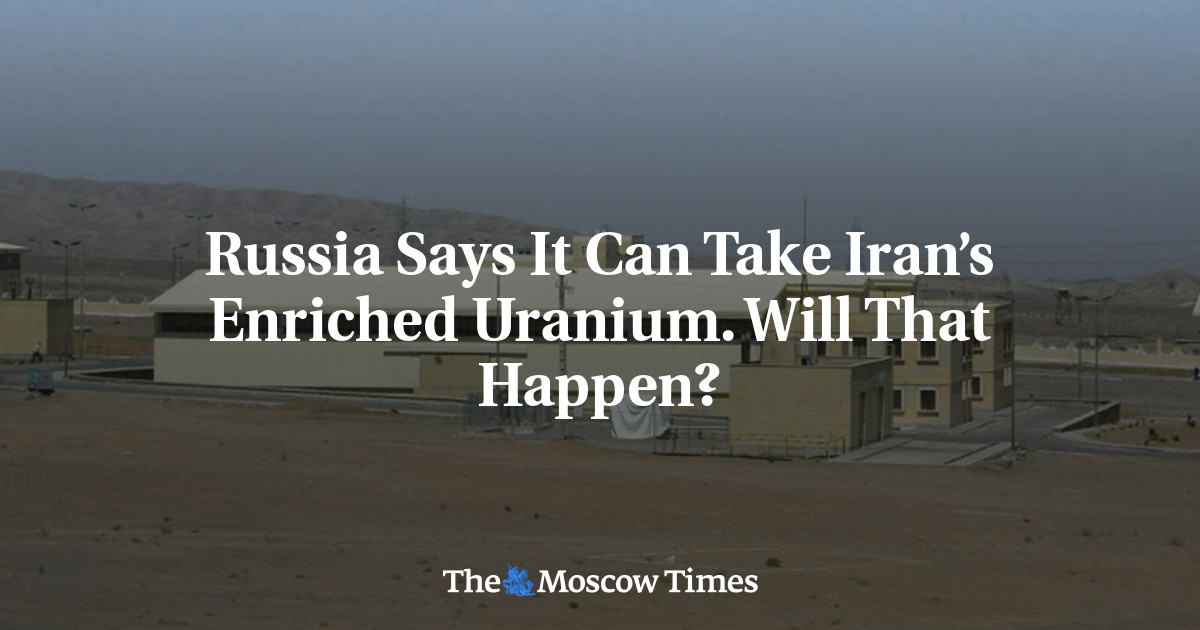
The geo-local anchoring of this issue extends beyond Moscow and Tehran to port cities and industrial zones that would handle any physical transfer of uranium. In Russia, the Siberian Chemical Combine (SCC) in Seversk and the Mayak Production Association in Ozersk are the primary facilities capable of converting enriched uranium hexafluoride (UF6) into fuel pellets. Both cities have seen increased security spending and infrastructure upgrades related to nuclear material handling since 2022, with Seversk allocating 12% of its municipal budget to emergency response training for radiological incidents in 2025. In Iran, the conversion would likely originate at the Fordow Fuel Enrichment Plant near Qom or the Natanz facility in Isfahan Province—both sites already under heightened IAEA surveillance. Any movement of material between these sites and Russian ports would involve overland transit through Central Asia, raising concerns among customs authorities in Kazakhstan and Uzbekistan about dual-use cargo monitoring under the Eurasian Economic Union’s (EAEU) customs code.
Experts warn that even speculative discussions of such transfers have tangible consequences for supply chain integrity. “When a nuclear-armed state like Russia openly discusses processing another nation’s enriched uranium—regardless of intent—it sends a signal to global fuel fabricators that the rules are negotiable,” said Marcus Chen, a senior analyst at the Nuclear Threat Initiative (NTI). “Utilities in Europe and Asia that rely on Russian enrichment services may face reputational risk or forced divestment if their supply chains become entangled in politically sensitive transactions, even if no physical transfer occurs.”
“The real danger isn’t the uranium itself—it’s the precedent. If we allow great powers to bypass multilateral checks through bilateral side deals, the non-proliferation treaty becomes a menu of options rather than a binding framework.”
For professionals tasked with navigating this complexity, the solution lies in accessing verified expertise. Companies involved in nuclear fuel logistics, commodity trading, or international energy investments must consult international sanctions attorneys who specialize in dual-use commodity controls and can interpret the implications of EAR Part 734 and the EU’s Regulation 2021/821 on uranium-related transactions. Simultaneously, risk assessment consultants with expertise in geopolitical exposure modeling can help investors stress-test portfolios against scenarios where secondary sanctions disrupt Russian nuclear exports or trigger retaliatory measures from Western governments. Finally, global trade compliance firms offer real-time screening tools and licensing support to ensure that any engagement with Russian nuclear entities does not inadvertently violate OFAC sanctions lists or EU restrictive measures, particularly as novel guidance emerges from the Bureau of Industry and Security (BIS) on enrichment-related transfers.
The narrative entropy of this story resists simple resolution. It is not merely about uranium—it is about the erosion of predictable rules in a multipolar world where great powers test the limits of institutional constraints. As diplomatic channels fray and regional actors seek alternative security arrangements, the infrastructure of verification—painstakingly built over decades—faces pressure not from blatant violations, but from the quiet normalization of workarounds. What begins as a technical discussion about fuel conversion ends as a referendum on whether the international community can still enforce norms when it suits powerful states to bend them.
The Editorial Keeper: In an era where headlines fade but consequences linger, the World Today News Directory remains your essential compass. When geopolitical shifts ripple through markets and regulations, turn to verified professionals—sanctions lawyers, compliance officers, and risk analysts—who understand not just the letter of the law, but the tectonic forces shaping it. Find them here, where expertise meets urgency.