Aamnah Arshad examines curiosity through the lens of Nobel Prizes
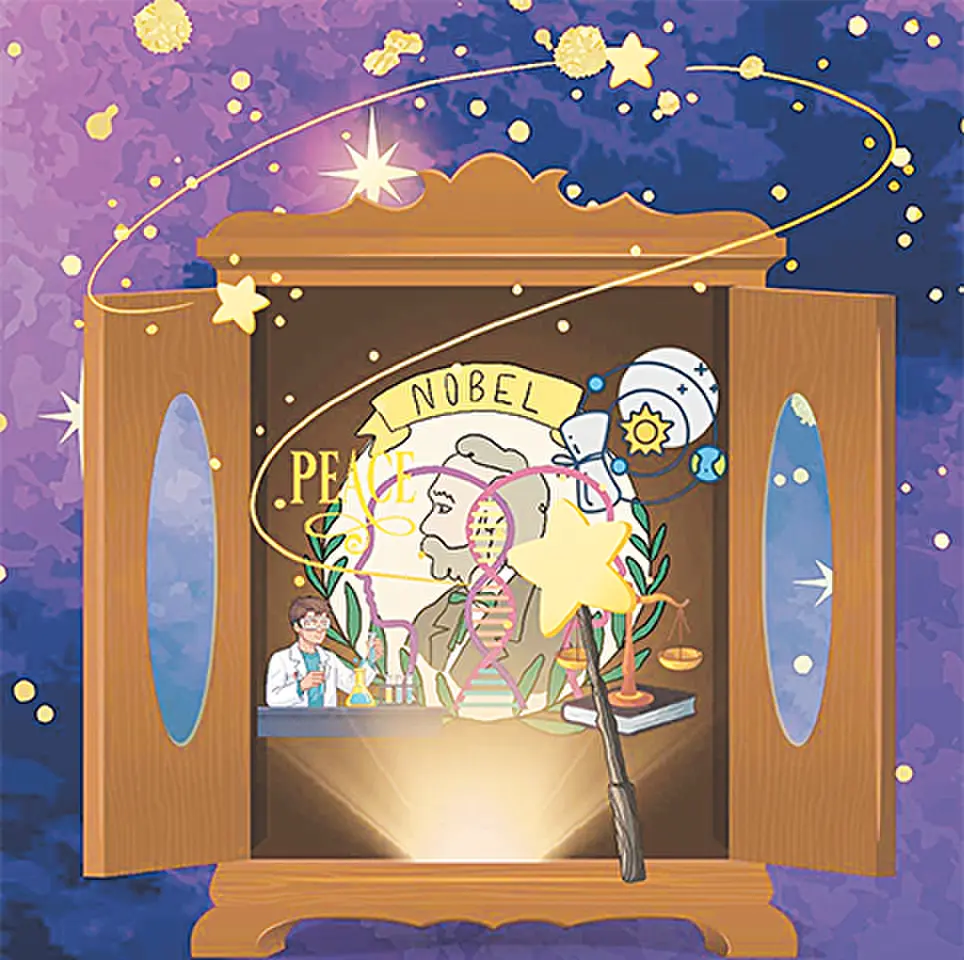
In a column published in Dawn on October 31, 2026, writer Aamnah Arshad examines how the world of scientific discovery, literature, peace advocacy, and economic study mirrors the curiosity of everyday life through the lens of the Nobel Prizes. Arshad describes exploring a creaking hallway cupboard containing six doors with medal-shaped doorknobs, each opening to a distinct field honored by the international prize framework founded by Swedish inventor Alfred Nobel.
The Physiology of Light and Brain Cells
Behind the first imaginary door, Arshad encounters green algae and details the scientific breakthroughs that earned the Nobel Prize in physiology or medicine. Peter Hegemann and Georg Nagel discovered an algal protein that responds to light, while Karl Deisseroth utilized it to switch specially prepared nerve cells on and off. Dawn reported that this method, known as optogenetics, provides researchers with a novel way to study memories, feelings, and actions. Scientists continue exploring whether the technique can restore sight, even though it cannot cure every illness.
Detecting Ghost Particles in Antarctic Ice
The second door opens onto Antarctic ice, marking the work recognized by the 2026 Nobel Prize in Physics. Francis Halzen secured the physics prize for decisive contributions to the IceCube Neutrino Observatory and the discovery of high-energy neutrinos of astrophysical origin. These tiny particles, commonly called ghost particles, pass through almost everything. IceCube relies on deep sensors in the ice to detect flashes when neutrinos interact with matter, helping scientists study distant galaxies and powerful space events.
Mirror-Image Molecules Help Chemists Plan Medication Production
Stepping through the third door brings focus to mirror-image molecules and the chemistry prize winners Henri B. Kagan and Kenso Soai. Arshad notes that their discoveries demonstrated how chemical reactions can produce much more of one molecular form than another. Soai also identified a reaction where a product helps generate more of itself. These findings help explain life’s molecular shapes and assist chemists in planning medication production.
Anne Carson Mixes Poetry and Prose in Inventive Forms
The fourth door reveals a book with words turning cartwheels, representing the literature prize awarded to Canadian writer Anne Carson. Arshad writes that Carson brings old stories and classical ideas into inventive new forms by mixing poetry, prose, and translation in surprising ways. Books help readers imagine other lives and name feelings they might otherwise struggle to understand.
Navi Pillay Defends Human Rights and International Law
On the fifth door, a sign emphasizes that smaller people cannot be pushed aside, pointing to the work of South African judge Navi Pillay. Pillay won the peace prize for promoting peace and international law, defending human rights, and helping bring individuals responsible for serious crimes to justice. Her record demonstrates that powerful figures must answer for their actions and that rules exist to protect everyone.
Economic Models Help Governments Respond to Rising Prices
The final door holds a shopping basket that wobbles with rising prices, reflecting the Economics Prize awarded to Robert E. Hall and Michael Woodford. Arshad explains that their economic models show how choices made by families and businesses affect the broader economy. Their work assists governments and central banks in responding to financial challenges and reducing harmful economic fluctuations to better support families facing rising costs.
The cupboard ultimately closes with a click, leaving behind individuals who continue asking questions to help others.