
A major U.S.-Israeli military operation targeting Iran commenced Saturday, with strikes hitting areas around the offices of Supreme Leader Ayatollah Ali Khamenei in Tehran, according to Iranian media reports and U.S. Officials. The attacks came hours after Iranian Foreign Minister Abbas Araghchi asserted that regime change in Iran is “mission impossible,” citing widespread public support for the government, and days after negotiations with U.S. Envoys Steve Witkoff and Jared Kushner appeared to be nearing a resolution.
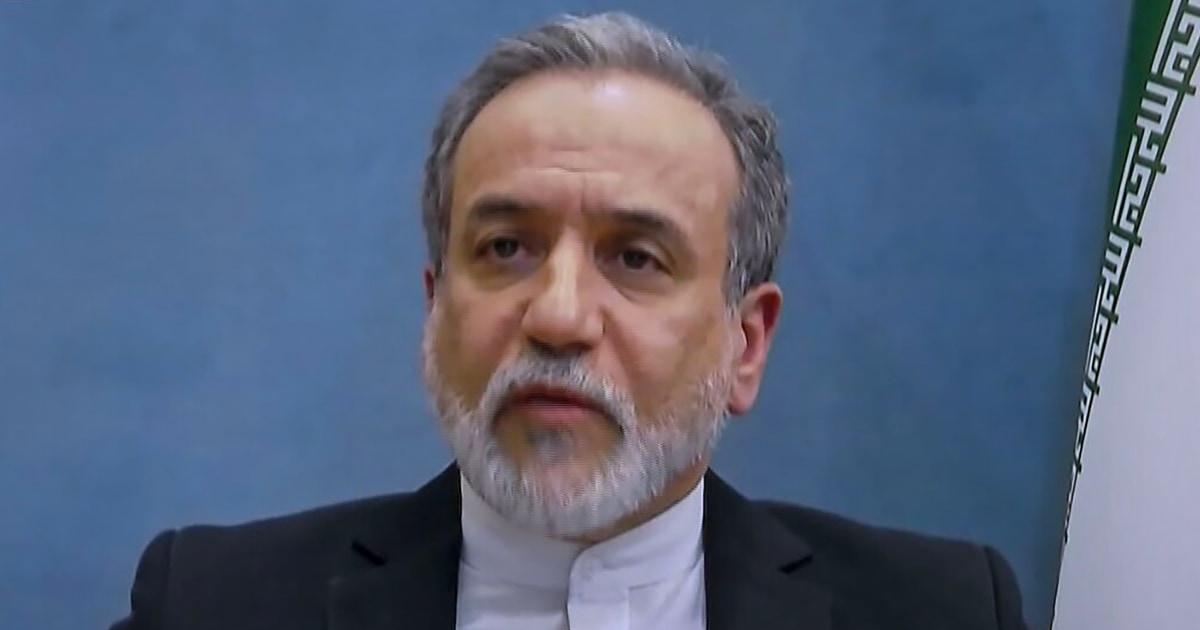
Araghchi, speaking from Tehran in an interview with NBC News, stated that, to his knowledge, Ayatollah Khamenei, 86, is alive, though his current location is unknown following the targeted strikes. He characterized the attacks as a “war of choice by the United States,” adding, “they have to pay for that,” but emphasized Iran’s unwillingness to escalate the conflict beyond self-defense. He indicated Iranian forces are targeting U.S. Military bases and installations in the region in response, and referenced a reported strike on a school in Minab, where dozens were allegedly killed.
The strikes represent the second instance of the Trump administration employing military force against Iran in eight months. President Trump, in a video statement, urged Iranians to “take over your government,” promising it would be “yours to take.” Israeli Prime Minister Benjamin Netanyahu echoed this sentiment, stating the operation aimed to “create the conditions” for Iranians to “take their fate into their own hands.”
Negotiations between Iranian and U.S. Representatives, held Thursday in Geneva, Switzerland, had reportedly made progress on addressing concerns regarding Iran’s nuclear program. Araghchi stated that “serious questions” had been resolved, and discussions were set to continue, but he expressed confusion over the timing of the attacks given the apparent progress. Ayatollah Ali Khamenei had previously rejected offers of talks from President Trump, according to Reuters.
While Araghchi claimed key Iranian officials, including President Masoud Pezeshkian, the head of the judiciary, and the parliament speaker, survived the strikes, he confirmed two commanders were killed. He also pointed to the recent anniversary of the 1979 revolution, noting the large turnout as evidence of continued public support for the government, despite recent widespread unrest that saw a deadly crackdown by authorities.
The U.S.-based Human Rights Activists News Agency has reported confirming over 7,000 deaths related to the unrest, with investigations ongoing into thousands more. Iran’s government has acknowledged over 3,000 deaths. Araghchi acknowledged public discontent but maintained a “strong supporters of the regime” remain.
Araghchi disputed Trump’s claims regarding Iran’s missile capabilities, stating the country has intentionally limited their range and has no intention of developing missiles capable of reaching the United States. He reiterated that Iran’s weapons program is solely for defensive purposes, responding to perceived threats from adversaries. The strikes reportedly targeted areas around Khamenei’s offices, as reported by the Independent.
Despite the current hostilities, Araghchi indicated Iran remains open to de-escalation and is prepared to resume talks with the U.S. Once the joint strikes conclude. “This is certainly interested for de-escalation,” he said, adding that American negotiators could contact him to restart discussions. Communication with the U.S. Is currently suspended.
