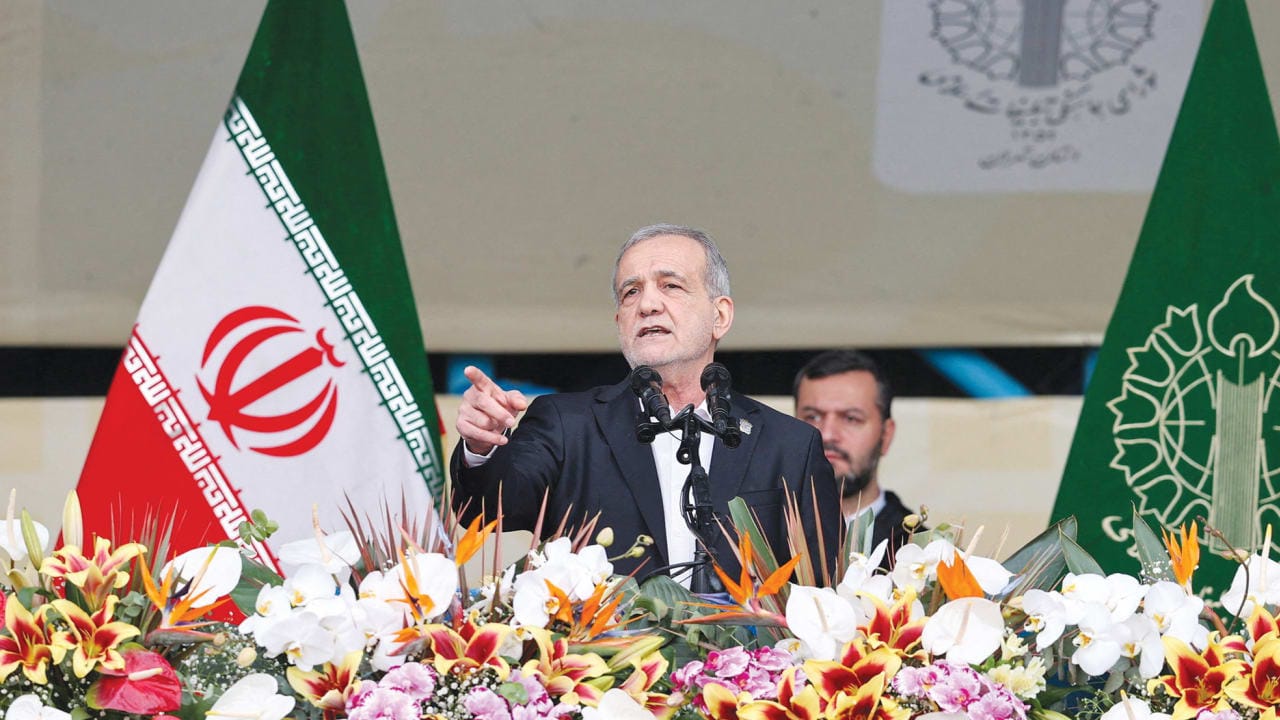
Iran President Masoud Pezeshkian Reportedly Resigns Over IRGC Overreach
President Masoud Pezeshkian has reportedly submitted his resignation to Mojtaba Khamenei, citing a “total takeover” by the Islamic Revolutionary Guard Corps (IRGC). This move signals a profound crisis within Iran’s power structure, as the presidency clashes with the military’s expanding influence over state governance and national policy.
This represents more than a simple political resignation. It is a public admission of the erosion of executive authority in Tehran. For months, the tension between the reformist leanings of the presidency and the hardline security apparatus of the IRGC has simmered beneath the surface. Now, it has boiled over into a constitutional standoff that threatens to destabilize not only the Iranian government but the broader economic landscape of the Middle East.
When the head of a state’s executive branch feels functionally obsolete, the result is systemic paralysis.
The Architecture of Overreach: IRGC vs. The Presidency
The core of this conflict lies in the IRGC’s transformation from a military force into a sprawling conglomerate with interests in everything from telecommunications to heavy industry. By infiltrating the administrative functions of the state, the IRGC has effectively created a “shadow government” that bypasses the president’s office. Pezeshkian’s reported resignation is a direct response to this encroachment, which he describes as a total takeover by IRGC commanders.
The relationship between the President and the Supreme Leader’s circle—specifically the influence of Mojtaba Khamenei—is the pivot point of this crisis. In the Iranian system, the president manages the day-to-day bureaucracy, but the Supreme Leader holds ultimate authority. The fact that the resignation was reportedly directed toward Mojtaba Khamenei suggests a shift in the internal hierarchy, highlighting the growing role of the Supreme Leader’s son in mediating state affairs.

This power struggle creates a volatile environment for anyone doing business in the region. With the executive branch sidelined, official government contracts and diplomatic assurances become unreliable. Companies operating in the region are increasingly relying on international law firms specializing in sanctions and geopolitical risk to protect their assets from arbitrary seizure or policy reversals.
“The Iranian presidency has long been a position of high visibility but limited actual power. However, the current situation represents a tipping point where the executive is no longer just limited—it is being actively dismantled by the security services.”
The Economic Ripple Effect
Political instability in Tehran does not stay within the borders of Iran. The Iranian Rial is notoriously sensitive to shifts in the power balance. When the market perceives a “total takeover” by the IRGC, it typically signals a move toward more aggressive foreign policy and a higher likelihood of renewed international sanctions. This volatility triggers immediate capital flight and spikes in inflation.

The IRGC’s control over key economic sectors means that state policy is often dictated by military necessity rather than economic rationality. This creates a “dual economy” where the official government channels are bypassed in favor of military-linked networks. For global investors and trade partners, this lack of transparency is a deal-breaker.
Navigating this landscape requires more than just a map; it requires deep intelligence. Many firms are now contracting global risk analysts to perform due diligence on Iranian partners, ensuring they are not inadvertently dealing with sanctioned IRGC fronts.
The impact is felt most acutely in the energy sector. As the IRGC tightens its grip on oil exports and infrastructure, the predictability of supply chains diminishes. This instability often forces regional neighbors to accelerate their own energy diversification strategies to avoid being dragged into Tehran’s internal chaos.
Constitutional Paralysis and the Path Forward
From a legal standpoint, the resignation of a president in Iran is a complex procedure. It requires the approval of the Supreme Leader and can lead to a period of interim governance that further empowers the hardliners. If Pezeshkian’s departure is finalized, it may signal the end of the “moderate” experiment in Iranian politics for the foreseeable future.
To understand the gravity of this shift, one must look at the historical precedent of the Council on Foreign Relations analysis on Iranian governance, which notes the recurring cycle of reformist hopes followed by security-led crackdowns. We are currently witnessing the closing of that cycle.
.jpg "Masoud Pezeshkian portrait")
The legal vacuum created by a resigning president often leads to a surge in administrative disputes. Local businesses and foreign entities frequently find themselves trapped in bureaucratic limbo, requiring the expertise of political risk consultants to negotiate a path forward through the shifting sands of Iranian law.
The following table outlines the primary points of friction leading to this crisis:
| Conflict Area | Presidential Objective | IRGC/Hardline Objective |
|---|---|---|
| Foreign Policy | Diplomatic engagement and sanctions relief | Strategic deterrence and regional hegemony |
| Economic Control | Transparent, market-based reforms | Closed-loop military-industrial complexes |
| Internal Security | Moderation of domestic unrest | Total suppression of dissent |
A Region on Edge
The implications extend far beyond the walls of the presidential palace in Tehran. The “Axis of Resistance”—the network of proxies including Hezbollah and various militias in Iraq and Yemen—responds to the signals coming from the IRGC. A total victory for the IRGC over the moderate wing of the government likely means a more aggressive posture across the Levant.
International bodies, including the United Nations and the Associated Press reporting on regional security, have highlighted that any shift toward a more militarized Iranian government increases the risk of miscalculation in the Persian Gulf.
The instability is not just political; it is existential for the Iranian middle class, who find themselves caught between a government that cannot protect them and a military that views them with suspicion.
The current trajectory suggests that Iran is moving toward a more consolidated, autocratic model where the facade of elective governance is discarded in favor of direct military rule. This transition is rarely smooth; it is usually marked by internal purges and external aggression.
As the world watches the outcome of Pezeshkian’s resignation letter, the primary question is no longer who will lead Iran, but whether the office of the presidency still exists in any meaningful sense. For those caught in the crossfire—businesses, diplomats, and citizens—the only certainty is uncertainty. In times of such systemic collapse, finding verified, expert guidance is the only way to mitigate the fallout. The World Today News Directory remains the essential resource for connecting with the legal and financial professionals equipped to handle the volatility of a world in flux.