
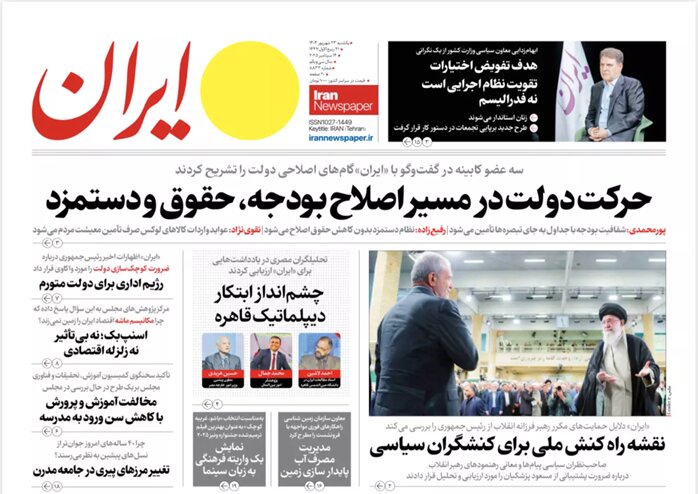
Analysis of Iranian Newspaper Perspectives on the Iran Nuclear Deal & Regional Security (November 2023)
This collection of editorials from Iranian newspapers reveals a consistent and cautious approach to the Iran nuclear deal (JCPOA), the International Atomic Energy Agency (IAEA), and regional security, especially concerning Israel. Here’s a breakdown of the key themes and perspectives:
1. Distrust of the IAEA & Demand for Reciprocity:
* Vatan-e-Emrooz is the most critical of the IAEA, explicitly linking it to US and Israeli agendas. It argues for limited IAEA access, especially after perceived “irresponsible behavior” (likely referencing alleged sabotage of Iranian nuclear facilities). Cooperation should be contingent on sanctions lifting and, crucially, the deactivation of the snapback mechanism. This demonstrates a strong desire for verifiable guarantees and a rejection of one-sided concessions.
* The opening paragraph highlights a broader sentiment: the IAEA must remain strictly technical. Any perceived political bias or alignment with adversarial powers undermines trust and hinders progress.
2. The NPT as Leverage – A Powerful Threat:
* Shargh focuses on Iran’s key leverage: the potential withdrawal from the Nuclear Non-Proliferation Treaty (NPT). It posits that Western powers understand this threat and are hesitant to invoke snapback sanctions becuase of it.The editorial frames NPT withdrawal not as a desire to build a bomb (Iran explicitly states it doesn’t want one), but as a powerful deterrent against punitive measures. This is a calculated threat, suggesting Iran is willing to escalate if pushed.
* The argument is that Iran has demonstrated its ability to inflict economic damage (specifically to Israel) without resorting to nuclear weapons. Therefore, the NPT withdrawal is a more potent tool than any potential benefit from snapback sanctions.
3. Snapback Sanctions as a Red Line:
* The snapback mechanism is consistently presented as unacceptable and a trigger for escalation.Both Shargh and Vatan-e-Emrooz emphasize that Iran must be prepared to use its leverage (NPT withdrawal or conditional cooperation with the IAEA) to prevent its reinstatement.
* The underlying message is that Iran views the snapback as a bad-faith tactic and a violation of the spirit of the JCPOA.
4. Warning Against Israeli Aggression & Call for Islamic Unity:
* Hamshahri shifts the focus to regional security, warning Islamic nations about Israel’s “evil intentions” and “dangerous passivity.” The recent attack (presumably referencing events in Qatar) is presented as further proof of Israel’s aggressive behavior.
* The editorial stresses that Iranian warnings about Israel have been consistently ignored, and calls for greater unity and a coordinated response from Arab and Islamic countries. This highlights Iran’s self-perception as a protector of the Muslim world and a voice of caution against Israeli expansionism.
Overall Themes & implications:
* Deep Distrust: A pervasive distrust of Western intentions, particularly regarding the US and Israel, is evident throughout these editorials.
* Leverage & Deterrence: Iran is actively seeking to maximize its leverage in negotiations and deter further pressure through credible threats (NPT withdrawal).
* Conditional Cooperation: Any cooperation with international bodies like the IAEA is framed as conditional and dependent on reciprocal concessions from the West.
* Regional Leadership: Iran positions itself as a leader and protector within the Islamic world, warning against the dangers of Israeli aggression and advocating for greater unity.
* Focus on Power Dynamics: The opening paragraph correctly identifies the issue as being about more than just technical details; it’s fundamentally about the balance of power in the region and globally.
These editorials paint a picture of a determined Iran, willing to defend its interests and prepared to escalate if necesary. They demonstrate a strategic approach to negotiations,prioritizing security and leverage over immediate economic gains. The consistent emphasis on the snapback mechanism and the NPT withdrawal suggests these are critical red lines for the Iranian goverment.
