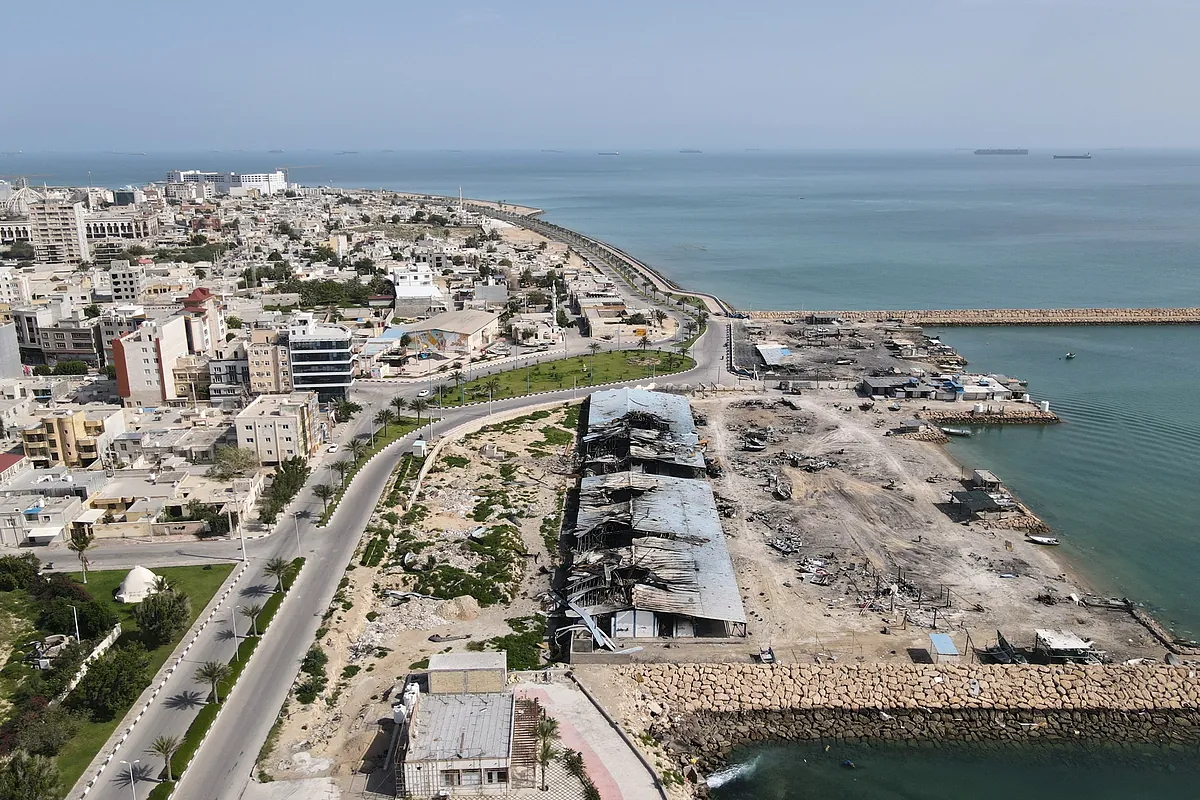
Iran Maintains Strait Control Despite US Optimism on Talks
On April 18, 2026, Iranian officials reaffirmed strict military control over the Strait of Hormuz, declaring access will remain under armed forces administration until the U.S. Restores “full freedom of navigation,” while the White House insists diplomatic talks with Tehran are progressing well—raising urgent questions about global energy security, shipping costs, and the risk of miscalculation in one of the world’s most vital maritime chokepoints.
The Strait of Hormuz: A Flashpoint with Global Consequences
The Strait of Hormuz, a 21-mile-wide passage between Oman and Iran, facilitates roughly 20% of the world’s petroleum supply and one-third of global liquefied natural gas trade. Any disruption here doesn’t just spike oil prices—it sends shockwaves through manufacturing hubs in Asia, strains European energy reserves, and forces rerouting of supertankers around Africa’s Cape of Good Hope, adding up to 15 days and millions in fuel costs per voyage. For coastal communities in Fujairah, UAE, and Muscat, Oman, where port logistics and bunkering services employ tens of thousands, prolonged instability threatens local economies built on maritime trade.
Iran’s latest statement, issued through its Islamic Revolutionary Guard Corps Navy, frames the strait’s closure as a defensive measure tied to ongoing U.S. Sanctions and frozen assets. This echoes past tensions: in 2019, Iran seized the British-flagged Stena Impero in the strait, and in 2022, naval drills near Qeshm Island simulated blocking commercial traffic. What’s different in 2026 is the convergence of renewed U.S.-Iran indirect talks—reportedly mediated by Oman—and Iran’s hardening stance that no vessel will pass without explicit military clearance, effectively turning the strait into a conditional tollgate.
Economic Ripple Effects Across Supply Chains
Energy analysts at the U.S. Energy Information Administration estimate that even a 10% reduction in Hormuz throughput could raise Brent crude prices by $8–12 per barrel within weeks. For import-dependent economies like India, China, and Japan, this translates to higher inflation, increased subsidy burdens, and pressure on central banks to tighten monetary policy. In Singapore, the world’s largest bunkering port, fuel traders are already hedging against volatility, while logistics firms in Rotterdam and Los Angeles report clients requesting alternative routing options despite longer transit times.
The human impact is often overlooked. Filipino and Indian seafarers, who comprise over 40% of Hormuz transit crews, face heightened war-risk insurance premiums and delayed wage payments when ships are detained. In Mumbai’s Seamen’s Union, officials report a 30% rise in distress calls from sailors stuck aboard vessels anchored off Bandar Abbas, citing poor communication and unclear detention timelines. “We’re not just talking about commodities,” said Captain Arvind Menon, a maritime lawyer based in Kochi. “These are workers whose livelihoods hinge on predictable passage—and when the strait becomes a bargaining chip, they pay the price.”
“We’re not just talking about commodities. These are workers whose livelihoods hinge on predictable passage—and when the strait becomes a bargaining chip, they pay the price.”
Diplomatic Pathways and the Role of Regional Mediators
Oman’s quiet diplomacy has historically served as a backchannel between Washington and Tehran, hosting indirect talks since 2013. In 2026, Muscat-based facilitators are reportedly working on a confidence-building measure: limited, UN-monitored humanitarian corridors for non-energy vessels in exchange for incremental sanctions relief. Yet Iran’s insistence on linking strait access to broader nuclear concessions complicates any quick fix. The U.S. Fifth Fleet, based in Bahrain, has increased patrols but avoids direct confrontation, relying instead on allied coordination through the International Maritime Security Construct.
Legal experts warn that unilateral closure claims challenge the United Nations Convention on the Law of the Sea (UNCLOS), which guarantees transit passage through international straits. “Iran can regulate safety and environmental standards,” noted Dr. Laila Al-Sayyad, professor of maritime law at Sultan Qaboos University in Muscat, “but it cannot suspend transit passage without violating customary international law. Any detention must be proportionate and non-discriminatory—standards that are hard to meet when military commanders issue blanket bans.”
“Iran can regulate safety and environmental standards,” noted Dr. Laila Al-Sayyad, professor of maritime law at Sultan Qaboos University in Muscat, “but it cannot suspend transit passage without violating customary international law. Any detention must be proportionate and non-discriminatory—standards that are hard to meet when military commanders issue blanket bans.”
The Directory Bridge: Who Steps In When the Strait Falters?
When Hormuz becomes unpredictable, the first ripple hits supply chain managers scrambling to secure alternatives. Companies reliant on just-in-time energy imports turn to global logistics coordinators who specialize in multimodal rerouting—shifting cargo to overland pipelines or alternative ports like Duqm in Oman or Rabigh in Saudi Arabia. Simultaneously, energy traders facing volatile benchmarks consult commodities litigation attorneys to assess force majeure clauses in long-term contracts, especially when demurrage charges accumulate during unexpected delays.
On the ground, port authorities in affected regions need real-time risk assessment and crisis communication support. Municipalities in Salalah, Oman, and Khasab, Iran, are increasingly turning to maritime safety consultants to update emergency response plans, train harbor masters on UNCLOS compliance, and liaise with international naval coalitions. These aren’t just technical fixes—they’re essential services that keep global trade flowing when geopolitics turns the world’s most critical waterway into a lever of pressure.
As of this writing, no major shipping company has announced a full suspension of Hormuz transits, but insurance premiums for war-risk coverage have risen 22% since January, according to Lloyd’s Market Association. The true cost of this standoff isn’t just in barrels or dollars—it’s measured in the anxiety of sailors off Kish Island, the delayed factory shifts in Chennai, and the quiet diplomacy unfolding in Oman’s back channels. For those tasked with navigating this uncertainty—whether in a boardroom, a bridge, or a bailiff’s office—the solution begins with access to verified, local expertise. Discover them in the World Today News Directory.