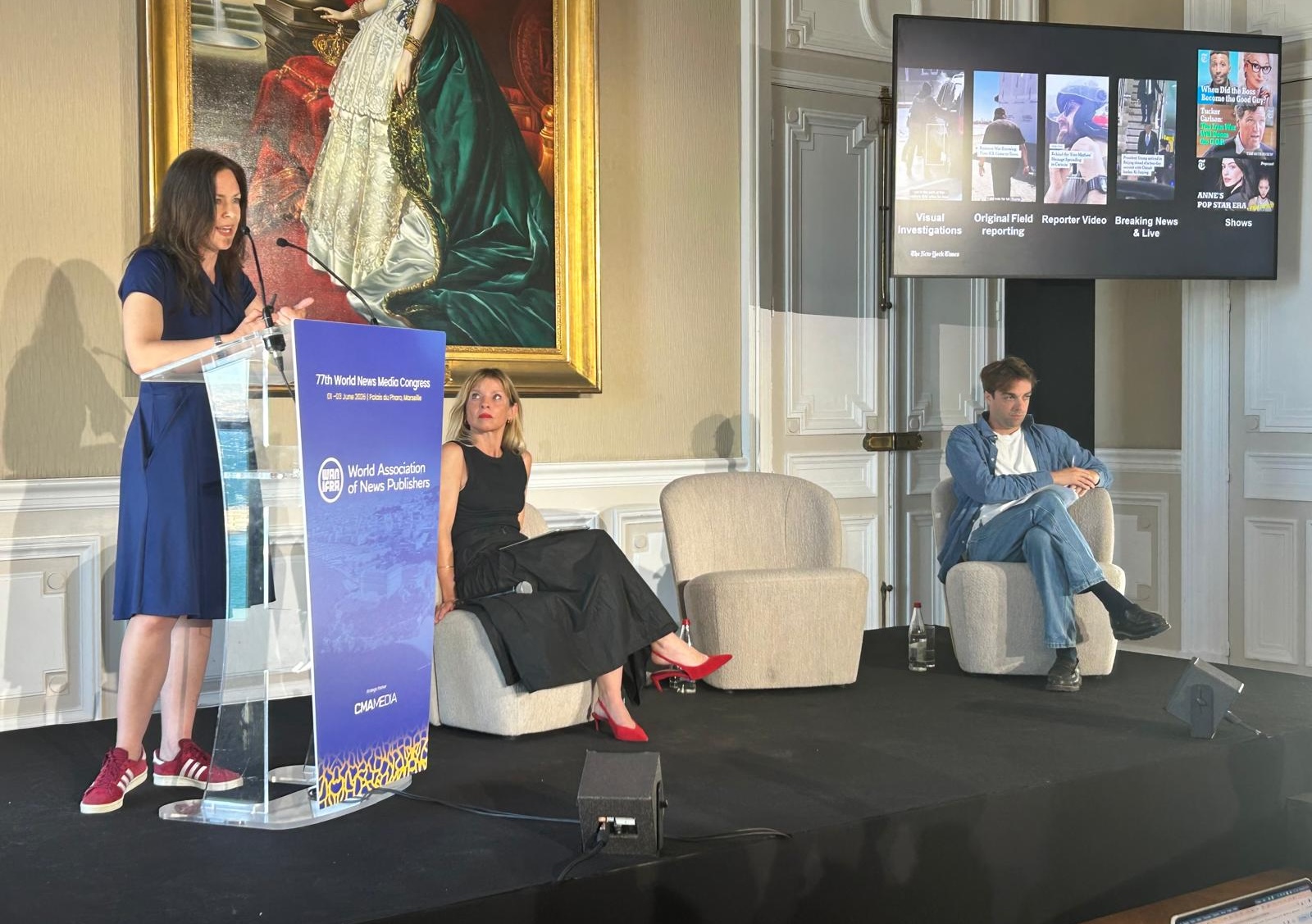
Inside The New York Times’ Video Strategy
Solana Pyne, Video Director at The New York Times, recently detailed a strategic shift toward “stories that must be watched” at the WAN-IFRA World News Media Congress in Marseille. By integrating diverse visual teams and a “Watch” tab in their app, the organization is capturing 250 million weekly US viewers.
The Evolution of the Audience Attention Span
The traditional distinction between readers, listeners and viewers is collapsing. For decades, legacy media operated on the assumption that news consumption was a compartmentalized activity. You picked up a newspaper for depth, turned on the radio for speed, or watched television for visual impact. That era has officially ended.
Today, the digital landscape demands a multi-modal approach. Data suggests that approximately three-quarters of the United States population now engages with news video on a weekly basis, a significant increase from just over half in 2021. This shift is not merely about format; We see about the integration of information into the daily habits of the modern citizen.
When the consumption of news becomes a fluid experience—moving between text, audio, and high-fidelity video—the challenge for newsrooms is no longer just reporting the facts. The challenge is editorial curation.
Structuring the Visual Newsroom
The New York Times has reorganized its internal machinery to meet this demand, moving away from a singular “video department” toward a multi-disciplinary visual ecosystem. This structure includes:
- Visual Investigations: A specialized unit that synthesizes satellite imagery, witness footage, and raw data to reconstruct complex events.
- On-the-Ground Reporters: Journalists who bridge the gap between reporting and presence, bringing the audience directly into the news cycle.
- Breaking News and Live Teams: Rapid-response units tasked with the immediate verification and synthesis of incoming footage from wire services and citizen sources.
- The Shows Department: An interview-centric division designed to distill long-form journalistic themes into accessible, distinctive series.
This organizational design acknowledges a fundamental truth: not every story requires a video, but every story must be evaluated for its visual potential. When a video simply recaps a text article, it fails to provide value. When it offers a new perspective—a “smart distillation”—it becomes essential.
Real-Time Accountability and the Minneapolis Case Study
The efficacy of this strategy was tested during the surge of anti-immigration troops into Minneapolis in early 2026, culminating in the shooting of Renée Quality. The event served as a crucible for the integration of disparate reporting streams. Within hours, the visual investigations team contrasted official government narratives with witness footage, providing a level of context that traditional text reporting could not achieve in isolation.
This form of visual accountability is essential for modern democratic discourse. As government agencies and private entities become increasingly sophisticated in their public relations, the ability to independently verify claims through visual forensic analysis is a critical civic service. For local communities navigating similar disruptions, the need for transparent, verified reporting is paramount.
In jurisdictions where local government transparency is under pressure, citizens often turn to Legal Aid and Advocacy Organizations to ensure their rights are documented and protected. Similarly, when civil unrest or policy shifts impact municipal infrastructure, local leaders frequently consult with Public Policy Consultants to mitigate community friction and ensure public safety protocols are clearly communicated.
“The role of the journalist today is to provide clarity amidst the noise. When we document a moment, we aren’t just recording events; we are establishing a historical record that must withstand the scrutiny of both time and the public,” notes a senior analyst in regional media policy.
The Distribution Challenge: Navigating the Platform Economy
The Times’ distribution strategy reflects a pragmatic understanding of the modern user: meet them where they are. By publishing off-platform, the organization reaches audiences who may not yet be core subscribers but are increasingly reliant on video-first social discovery. On-platform, however, the strategy is about retention.
The creation of the “Watch” tab within their app represents an attempt to replicate the addictive, “swipeable” vertical feed experience that has become the standard for digital video. By placing this in the hands of a dedicated programmer, the organization ensures that the flow of content is not just an algorithmically driven loop, but a curated experience that balances breaking news with long-form storytelling.
The Infrastructure of Trust
As media organizations shift their focus to video, the pressure on technical and ethical infrastructure grows. The verification of user-generated content—often filmed in chaotic or high-stakes environments—requires rigorous standards. For businesses and institutions looking to establish similar levels of credibility in their own communications, the path forward involves investing in human-centric editorial processes rather than automated content generation.
For those managing public-facing communication during times of crisis, the importance of verified, high-quality documentation cannot be overstated. Organizations seeking to improve their own digital footprint or crisis response documentation often engage with Communications Strategy Firms to ensure their narrative remains consistent and factual across all platforms.
The future of news is not a choice between text and video. It is the seamless, intelligent integration of both. As we observe these shifts, the lesson for the broader industry is clear: technology should never dictate the story; the story must dictate the technology. As audiences continue to demand more from their news providers, the gap between those who merely report the news and those who curate the truth will only widen. For those navigating the complexities of modern information, finding the right partners to ensure accuracy and reach is the defining challenge of the coming decade.