Indonesia Weighs Future of UN Peacekeeping Mission in Lebanon
Indonesia is currently evaluating a reduction of its peacekeeping presence in southern Lebanon after three Indonesian soldiers were killed in late March 2026. The deaths occurred during a month-long conflict between Israel and Hezbollah, sparking diplomatic tensions and large-scale public protests in Jakarta as the nation questions the safety of its UNIFIL personnel.
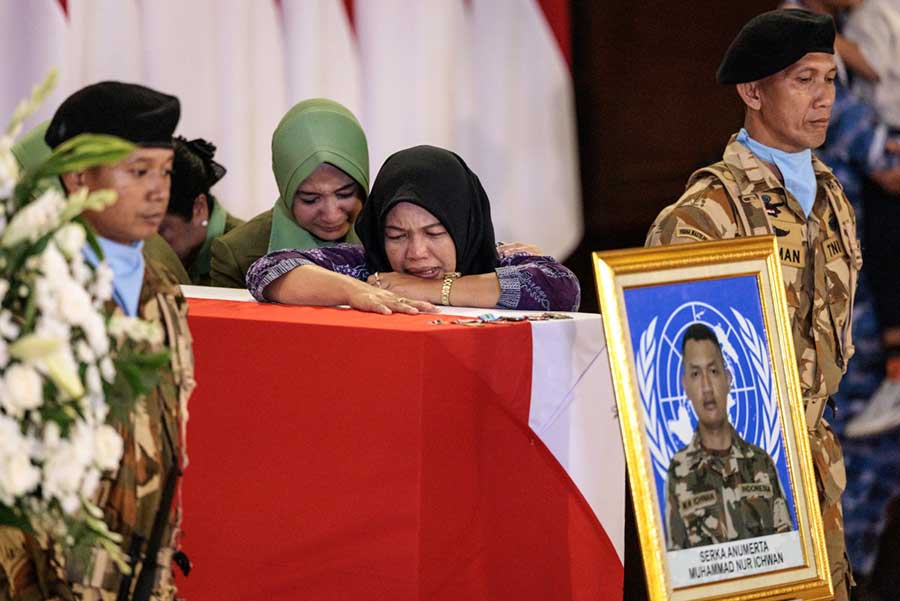
The loss of these three soldiers is not merely a statistic of war; it is a catalyst for a strategic pivot in Jakarta. When the coffins arrived at Soekarno-Hatta International Airport on Saturday, April 4, the atmosphere was one of profound mourning and simmering frustration. President Prabowo Subianto attended the ceremony, standing alongside uniformed officers who carried the fallen. The soldiers—Farizal Rhomadhon, 28, Zulmi Aditya Iskandar, 33, and Muhammad Nur Ichwan, 26—represented a generation of Indonesian youth dedicated to global stability, now caught in the crossfire of a regional explosion.
It was a brutal sequence of events.
On one day, Farizal Rhomadhon was killed when a projectile hit a UNIFIL base in Ett Taibe. A UN security source indicated that fire from an Israeli tank was responsible for that specific attack. Only hours later, the violence escalated. An explosion of unknown origin struck a UNIFIL logistics convoy near the Bani Haiyyan municipality, destroying a vehicle and killing Zulmi Aditya Iskandar and Muhammad Nur Ichwan. Two other peacekeepers were wounded in that blast, one of them severely.
This pattern of aggression extends beyond personnel. UN officials have reported that Israeli forces destroyed 17 UN peacekeeper cameras in south Lebanon, effectively blinding the mission’s ability to monitor the border. For a peacekeeping force, the loss of surveillance and the death of personnel are not isolated incidents; they are signs of a mission losing its protective shield.
“This is a peacekeeping mission. Incidents such as this should not happen. There must be a security guarantee for peacekeeping soldiers.” — Foreign Minister Sugiono
The geopolitical backdrop is a volatile cocktail. We are seeing the fallout of a month-long war between Israel and Hezbollah, nested within a broader, more dangerous conflict involving the United States, Israel, and Iran. This isn’t just a border skirmish; it is a regional war that has rendered the “Blue Helmet” status almost irrelevant. When peacekeepers are targeted—or treated as obstacles—the fundamental premise of the United Nations Interim Force in Lebanon (UNIFIL) begins to crumble.
In Jakarta, the anger has spilled into the streets. Thousands have rallied outside the US Embassy, linking the deaths of their soldiers to the broader influence of American foreign policy in the Middle East. The public demand is clear: protect the soldiers or bring them home.
While the Indonesian state has guaranteed all compensations for the fallen, the financial payout cannot replace the loss of life or resolve the legal complexities of deaths occurring in an international conflict zone. Families facing the aftermath of such tragedies often uncover themselves entangled in complex international bureaucracy, necessitating the help of specialized international law attorneys to navigate claims and diplomatic protocols.
The UN’s response has been one of condemnation, but perhaps not of action. Jean-Pierre Lacroix, the head of UN Peace Operations, has been vocal in Fresh York, insisting that peacekeepers must never be a target. However, the reality on the ground in south Lebanon suggests a different story.
“We strongly condemn these unacceptable incidents. Peacekeepers must never be a target,” Lacroix told journalists during a press briefing at UN Headquarters.
Despite these condemnations, the Indonesian military is now seriously considering a reduction of its troop levels. The dilemma is stark: maintaining a presence fulfills Indonesia’s commitment to global peace, but continuing under current conditions risks more coffins returning to Soekarno-Hatta. This strategic hesitation is mirrored in the concerns of local governments and diplomatic circles who must now manage the fallout of a potential withdrawal.
For the personnel remaining on the ground, the psychological toll is immense. The transition from “peacekeeper” to “combatant by circumstance” creates a profound mental health crisis. In such high-stress environments, the need for trauma-informed crisis intervention specialists becomes as critical as the physical armor the soldiers wear.
The situation remains fluid. While some voices urge Indonesia to maintain its role to preserve its international standing, the internal pressure from the military and the public is mounting. The destruction of cameras and the targeting of convoys suggest that the “security guarantees” demanded by Foreign Minister Sugiono are currently non-existent.
As the United States and Israel continue their operations against Iran, and Hezbollah continues its strikes, the thin blue line in Lebanon is fraying. The Indonesian experience is a warning to all contributing nations: the traditional rules of peacekeeping are being rewritten by a new, more aggressive era of regional warfare.
The question for Jakarta is no longer whether they should be there, but how much more they are willing to lose. For those tasked with managing the diplomatic and legal wreckage of these conflicts, finding verified diplomatic consultants and international mediators is the only way to navigate a path toward a secure exit or a renewed mandate. The cost of hesitation is measured in lives.