
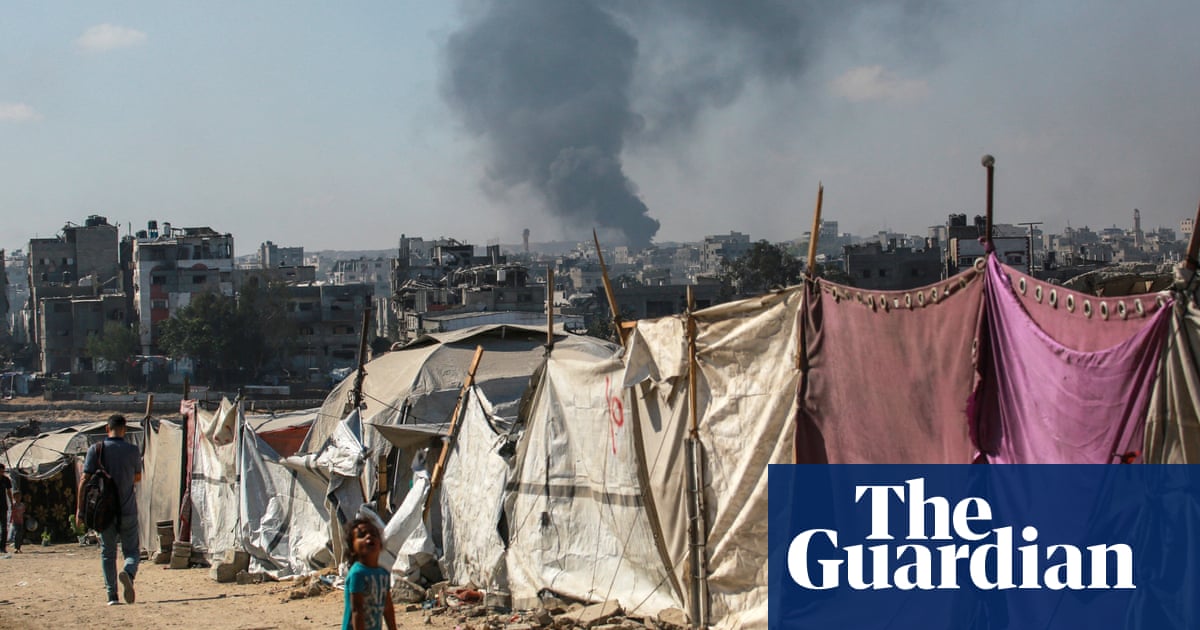
Gaza Ceasefire Talks Continue as Leaders Plan Meeting
Negotiations in Doha proceed amid pressure from the U.S. for a resolution to the conflict.
Indirect discussions between **Israel** and **Hamas** concerning a ceasefire and a deal to release hostages in **Gaza** are ongoing for a second day. These talks occur as **Benjamin Netanyahu** and **Donald Trump** prepare to meet in **Washington**.
Ambitious Project
**Avi Dichter**, an Israeli minister, anticipates the meeting between **Trump** and **Netanyahu** will broaden the agenda beyond **Gaza**. He expects they will discuss the possibility of normalizing relations with **Lebanon**, **Syria**, and **Saudi Arabia**. This initiative is central to the U.S. president’s Middle East policy.
“I think it will first of all be focused on a term we have often used but now has real meaning; a new Middle East,”
**Dichter** told Israel’s public broadcaster Kan on Monday.
**Trump** has recently intensified pressure for a **Gaza** agreement. He suggested a ceasefire might be imminent, potentially within hours or days.
Stumbling Blocks
Before departing for **Washington**, **Netanyahu** conveyed confidence that a deal was achievable. He stated that Israeli negotiators were instructed to secure a ceasefire, but only under pre-agreed conditions.
Sources within the prime minister’s delegation described the **Doha** talks as positive, according to Israel’s military radio station and **Reuters**. However, Palestinian officials presented a more pessimistic view, stating that initial meetings concluded without any resolution.
The proposal currently under consideration involves the phased release of around 28 hostages held by **Hamas** during an initial 60-day ceasefire. It also includes the release of hundreds of Palestinian prisoners in Israeli jails, the withdrawal of Israeli troops from parts of **Gaza**, a surge in humanitarian aid, and discussions about definitively ending the 21-month conflict.
**Hamas** officials now seek firm assurances that **Israel** will not initiate a new offensive after the 60-day period. A previous ceasefire in March faltered when **Israel** allegedly reneged on its commitment to further negotiations.
The organization also seeks UN and other international bodies to oversee humanitarian aid distribution in **Gaza**, excluding the **Gaza** Humanitarian Foundation (GHF), a U.S. and Israel-backed private organization that has faced controversy. Another point of contention is **Hamas**’s demand for a more extensive withdrawal of Israeli military forces.
**Israel** currently controls about two-thirds of **Gaza**, including strategic corridors and a significant portion of the southern territory. The Israeli military is reportedly reluctant to relinquish this area.
According to a recent report by the World Food Programme, approximately 1.1 million people in **Gaza** are facing catastrophic levels of hunger, the highest number ever recorded (WFP July 2025).
Expert Insight
“Hamas are eager for a ceasefire, there is no doubt at all … but they have their red lines too. Here in Israel, we have had an experiment with the idea that more and more pressure on Hamas means they will [eventually] give up. Well, how much more pressure can you imagine?”
said **Michael Milstein**, a **Hamas** expert at Tel Aviv University.
**Hamas** faces immense pressure due to significant casualties and a loss of authority. The group has also been weakened by Israel’s recent successes against **Hezbollah** and **Iran**. The US bombed Iranian nuclear facilities and then imposed a ceasefire.
“Hamas know they badly need a pause to regroup and take a breath … but they want to survive in the long run. That’s the only real goal … so they are not going to give up everything,”
said a source close to **Hamas**.
The source added that **Hamas** is refusing to give up its weapons or send its leadership into exile, two key Israeli demands.
**Israel** claims to have killed over 20,000 militants in **Gaza**, but has not provided evidence. Most of the senior leaders of the group in the territory at the beginning of the war are now reportedly dead.
Gaza’s ministry of health reports that more than 57,000 people have been killed by the Israeli offensive, mainly civilians. The UN and western governments consider the tally to be reliable.
The offensive has caused a severe humanitarian crisis in **Gaza**. Much of the population is threatened by famine, and vast areas have been reduced to rubble.
Gaza’s civil defence agency reported that Israeli forces killed at least 12 people on Monday. Six deaths occurred in a clinic sheltering displaced Palestinians. “We were surprised by missiles and explosions inside the building,”
said **Salman Qudum**, a witness.
**Mahmoud Bassal**, a civil defence spokesperson, stated that two people were killed and 20 injured by Israeli gunfire near a GHF distribution site in southern **Gaza**.
In recent weeks, hundreds have died seeking aid from the GHF’s distribution points, UN convoys, and looted aid trucks.
The Israeli military has not yet commented on the reported casualties. However, in a statement, it said it struck “dozens of terrorists, weapons depots, observation posts, military buildings and other terror infrastructures”
in the past day.
The conflict began with a **Hamas**-led attack on southern **Israel** in October 2023. Militants killed 1,200 people and abducted 250. Fifty hostages remain in **Gaza**, but less than half are believed to be alive.
Some of **Netanyahu’s** coalition partners oppose ending the fighting. However, with Israelis increasingly weary of the war and the military supporting a ceasefire to secure the return of hostages, his government is expected to support a ceasefire.
