
India Issues Flood Warning to Pakistan Despite Ongoing Tensions
Table of Contents
In a surprising move signaling a potential thaw amidst fraught relations, India has shared critical flood warnings with Pakistan as both nations grapple with devastating monsoon rains and increasingly deadly floodwaters. The information exchange, confirmed by officials in both countries, comes just months after new Delhi effectively suspended a long-standing water-sharing treaty with Islamabad.
The decision to put the 1960 Indus Waters Treaty “in abeyance” in April followed a deadly attack on Hindu tourists in Indian-administered Kashmir, an incident India linked to Pakistan – a claim Islamabad vehemently denies. Tensions escalated sharply in May, resulting in the most significant military clash between the nuclear-armed neighbors in decades,
according to reports from earlier this year.
Though, according to an Indian source familiar with the situation, the current warning was delivered on humanitarian grounds
and does not operate under the framework of the Indus Waters Treaty. The alert, shared through diplomatic channels with Pakistan’s foreign ministry, pertains to heavy rainfall in the jammu and Kashmir region bordering Pakistan.
The source, speaking under conditions of anonymity due to government protocol, explained that the warning specifically concerns a potential surge in the Tawi river, which transforms into the Sutlej as it enters Pakistani territory. India’s foreign ministry has yet to issue a public statement on the matter.
Pakistan’s foreign ministry acknowledged receiving the warning,but noted it was communicated outside the established protocols of the Indus Waters Treaty,specifically bypassing the Indus Waters Commission.
Mazhar hussain, a disaster management official in Pakistan’s Punjab province, detailed the specifics of the warning. The information shared by India included a warning about a possible surge in the Tawi river… It has not indicated the scale of water but has warned about high flooding in the river.
He further explained that filled Indian dams, due to persistent rainfall, are likely to necessitate water releases, exacerbating the flood risk.
Hussain warned that Heavy rains in Pakistan and the water released by India would cause high floods in Sutlej,Ravi and Chenab in Punjab.
The Indus Waters Treaty: A History of Cooperation and Current Strain
the 1960 Indus Waters Treaty is a landmark agreement designed to manage the allocation of water from the Indus River and its tributaries. It allocated the three western rivers – Indus, Jhelum, and Chenab – to Pakistan, and the three eastern rivers – Ravi, Beas, and Sutlej – to India.
Pakistan has long expressed concerns that India could potentially restrict its water supply, jeopardizing its agricultural sector and hydropower generation. This fear underscores the treaty’s importance to Pakistan’s national security.
In its official statement, Pakistan’s foreign ministry reiterated its call for India to fully adhere to the provisions of the indus Waters Treaty. The ministry characterized India’s unilateral suspension of the treaty as a serious violation of international law and could have significant negative consequences for peace and stability in South Asia.
A Region Under Water
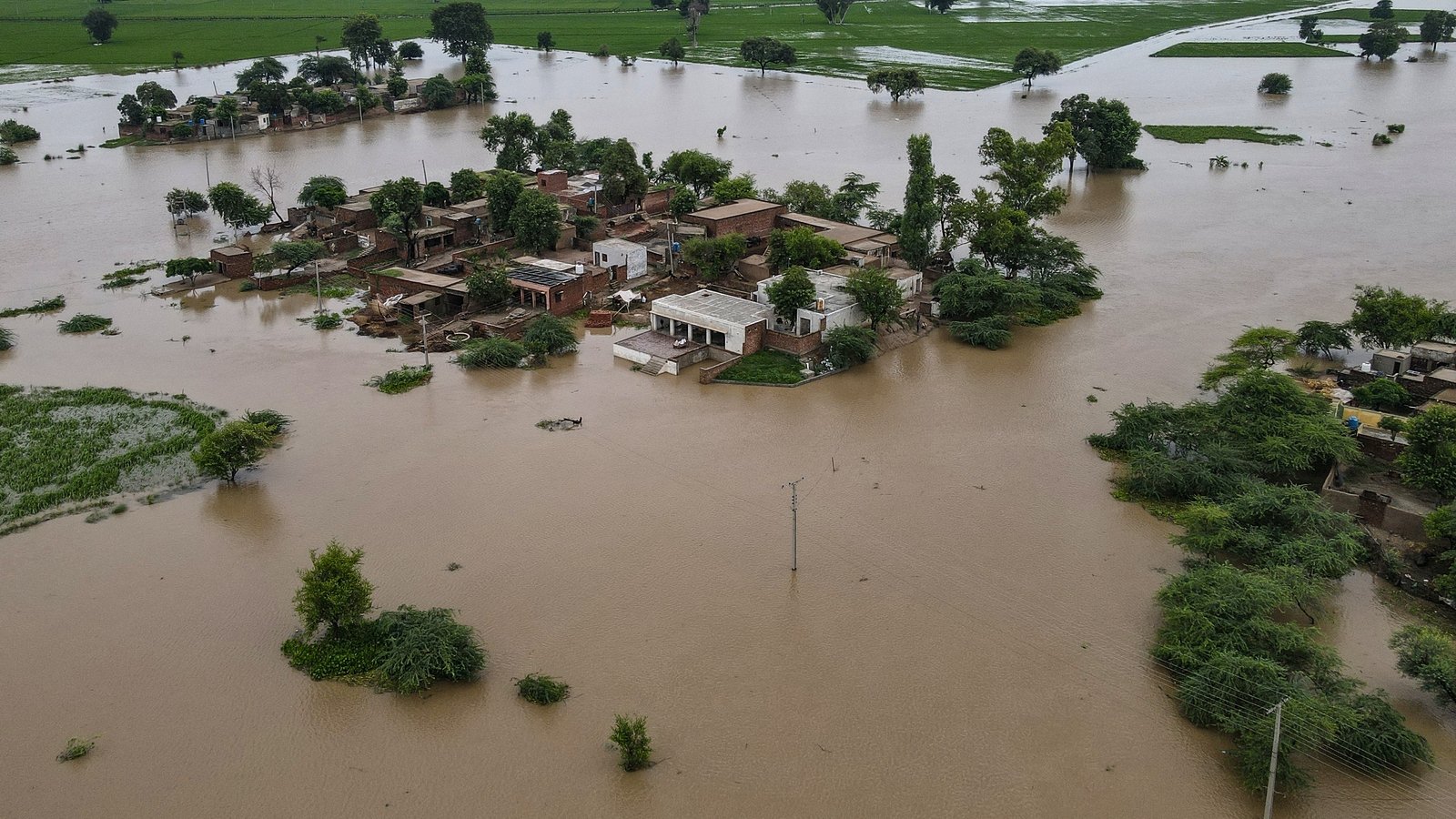
The current monsoon season has brought catastrophic flooding to both India and Pakistan. At least 60 people have perished in northern India, while the death toll in northwest Pakistan has reached nearly 400. Pakistan’s National Disaster Management Authority reports a total of 799 deaths nationwide since the monsoon began in late June, and warns of continued heavy rainfall through September 10th. The situation remains critical, and the shared warning, despite the political complexities, highlights the urgent need for cooperation in the face of a shared humanitarian crisis.
Reuters
