IEA Identifies Venezuela as Key to Offset Persian Gulf Oil Disruptions
Venezuela is positioned to capture increased global market share as the International Energy Agency identifies the nation as a key producer capable of offsetting crude supply disruptions stemming from the Persian Gulf.
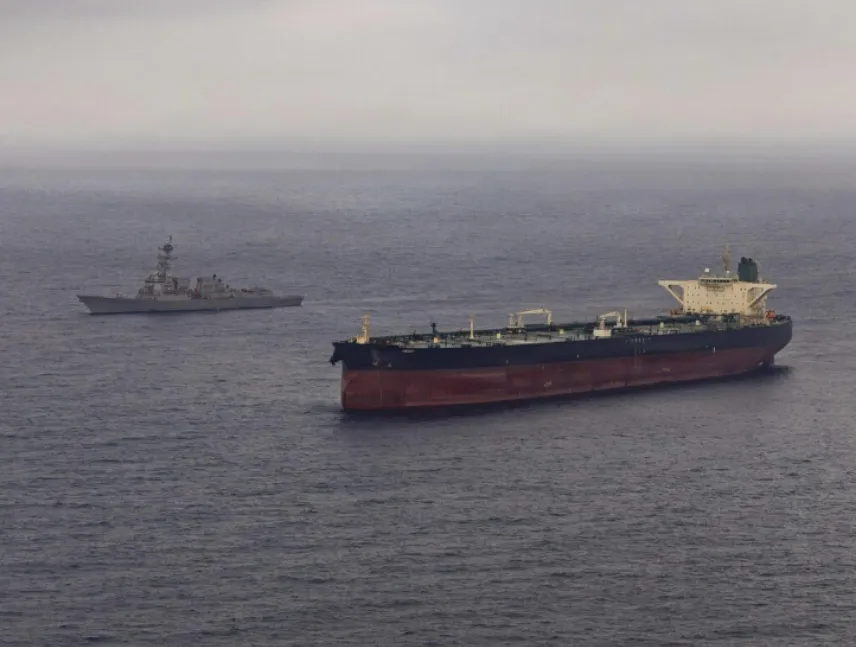
This shift follows persistent commercial difficulties in the Strait of Hormuz, where ongoing regional conflict continues to challenge traditional oil transit routes.
The International Energy Agency (IEA) highlighted in its annual energy outlook, published on November 19, 2026, that Venezuela, alongside Mexico and Canada, stands to play a critical role in stabilizing international supply. The agency estimates that global producers outside the Persian Gulf could contribute up to 1.9 million additional barrels per day to replace volumes currently hindered by the maritime crisis, according to Diario Primicia.
This supply realignment addresses the strategic vulnerability of the Strait of Hormuz, a conduit that handled approximately one-fifth of global oil consumption prior to the conflict between the United States and Iran. While producers in the Persian Gulf are exploring the expansion of pipeline capacities to bypass the strait, international markets are actively seeking alternative sources to ensure energy security, Diario Primicia reported.
IEA Projects Strait Oil Volume Could Drop to One-Tenth by 2035
The reliance on the Strait of Hormuz for global supply is undergoing a structural contraction. According to Banca y Negocios, the IEA projects that if current transit difficulties persist, the volume of oil requiring passage through the strait could drop to one-tenth of pre-conflict levels by 2035.
This transition is already visible in infrastructure utilization; pipeline exports from Gulf countries surged from 2 million barrels per day in 2025 to a peak in recent months.

“Ciertamente, parece que Irán no está dispuesto o no tiene la capacidad de impedir actualmente el flujo de petróleo crudo, dijo David Oxley, economista jefe de clima y materias primas de la consultora Capital Economics, a CNN en Español.”
IEA Forecasts Global Oil Demand Decline of 2.7 Million Barrels per Day
The crisis in the Middle East is simultaneously dampening global demand. The IEA forecasts a decline of 2.7 million barrels per day in worldwide oil consumption for this year, marking the first annual drop since 2020, as reported by Banca y Negocios. This demand destruction is compounded by an accelerating energy transition in major importing markets like China.
Analysis by the Centre for Research on Energy and Clean Air (CREA), published on November 5, indicates that the expansion of electric vehicles and clean energy generation has mitigated the impact of supply shocks in China. Between March and August, electric vehicle adoption avoided the consumption of approximately 38 million tonnes of oil, representing about 13% of China’s crude imports during the same period in 2025, according to MARCA.
| Metric | Impact/Data |
|---|---|
| Potential Non-Gulf Supply Increase | 1.9 million barrels/day (IEA) |
| US Contribution to Supply Offset | at least one million barrels/day (IEA) |
| Estimated Global Demand Decline | 2.7 million barrels/day (IEA) |
| Chinese EV-related Oil Savings (Mar-Aug) | 13% of 2025 import levels (CREA) |
Analysts Warn Escalation Risk Remains Despite Supply Diversification
Despite the market’s attempt to diversify supply, the risk of escalation remains a primary concern for energy analysts. While some market participants assume a gradual recovery of supplies, experts warn that the situation could deteriorate if tensions between the United States and Iran intensify.
Ahria Roushanbakhti, director of the fuels division at Axis Limited, noted to CNN en Español that Iran retains the capacity to inflict significant damage on regional energy infrastructure.
The uncertainty surrounding these maritime routes shows the need for strong corporate strategy. As Iran faces a weakening influence over the Strait of Hormuz, officials within the Iranian government have signaled an intent to increase the costs of the current blockade for the United States, according to CNN en Español.
The International Energy Agency was established in 1974 following the 1973 oil crisis to ensure reliable energy supplies and provide data on the global market. Headquartered in Paris, this autonomous intergovernmental organization operates under the framework of the Organisation for Economic Co-operation and Development.
It currently encompasses 32 member countries that represent 75% of global energy demand. Beyond its role in analyzing energy trends, the agency coordinates the use of mandatory emergency oil stocks held by its members, a mechanism activated six times to stabilize markets, including a record release of 400 million barrels in 2026.
Whether Venezuela and other producers can sustain their increased market share depends on both internal production efficiency and the evolution of the conflict in the Middle East. It remains unclear if the current reduction in oil consumption in China is an irreversible trend or a byproduct of temporary economic variables, as noted by MARCA.
The market trajectory rests on whether Tehran chooses to challenge naval forces directly or allows its position to deteriorate further, a question that remains unresolved as of November 19, 2026.