Oil Prices Set for Third Weekly Decline as Middle East Export Flows Outweigh Tensions
Oil prices are headed for a third weekly decline as strong export flows from the Middle East outweigh ongoing geopolitical tensions.
Brent crude futures fell $1.65 to $90.33 a barrel on Friday, while U.S. West Texas Intermediate (WTI) December contracts dropped $1.62 to $81.59 a barrel, according to data reported by CNA.
The market is recalibrating as crude shipments through the Strait of Hormuz have returned to levels seen before the recent conflict. This shift toward a perceived supply surplus has pressured benchmarks, with Brent on track for a 6 per cent weekly decline and December WTI set for an 8 per cent drop, CNA reported.
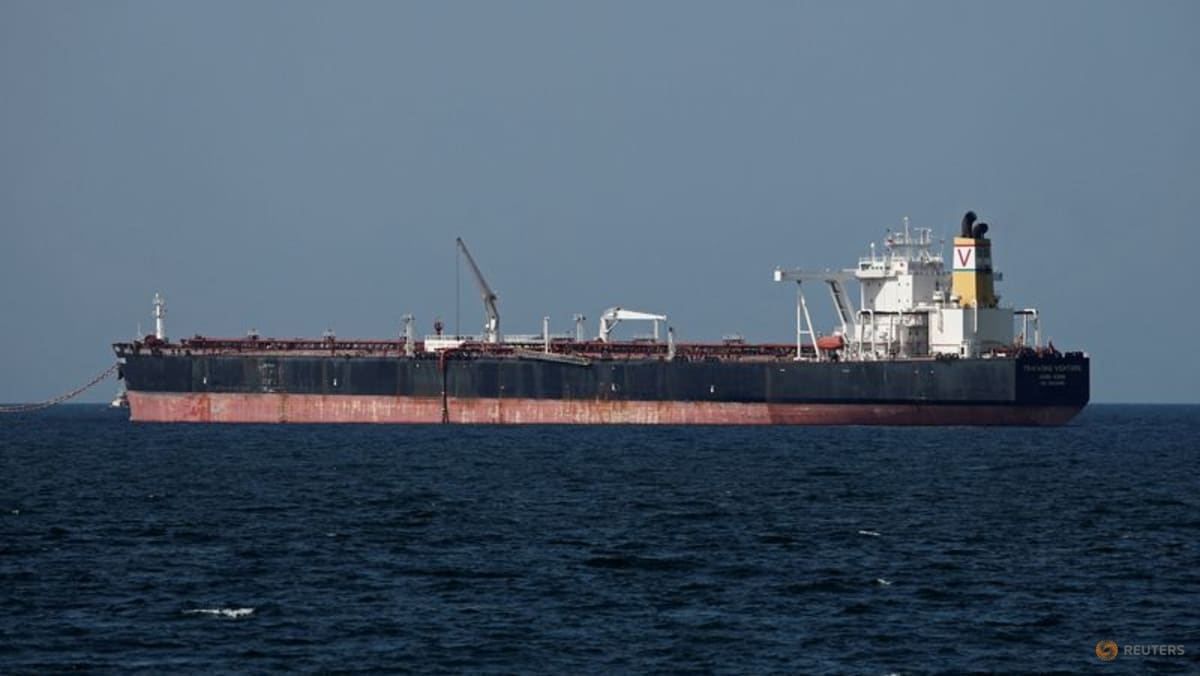
Geopolitical risks remain present despite the recent price softening. Iran’s Revolutionary Guards Navy reported on Thursday that two oil tankers were struck by naval mines in the Strait of Hormuz and were burning. The Houthi movement fired missiles at Riyadh, continuing their campaign against Saudi Arabia.
UOB Group analysts noted in a client communication that Iran’s intensifying attacks on tankers in the Strait of Hormuz, which have occurred at a rate of roughly one incident per day in November, continue to add a meaningful geopolitical risk premium to the market. Markets currently face a complex environment where immediate supply disruption risks compete with broader economic sentiment.
| Contract | Price Change | Percentage Change | Settlement Price |
|---|---|---|---|
| Brent Crude | -$1.65 | -1.79% | $90.33 |
| WTI (December) | -$1.62 | -1.95% | $81.59 |
| WTI (January) | -$1.22 | -1.48% | $81.22 |
Some analysts suggest that the current price levels reflect an assumption that the most acute phase of geopolitical volatility has subsided. “This week we keep having relatively strong export flows out of the Middle East. There is also a narrative ongoing that as long as people are talking, maybe there’s a deal in the making,” said Aldo Spanjer, commodity strategist at BNP Paribas.

Spanjer expressed caution regarding the durability of this downward trend. “The prices are correct if you believe that this geopolitical risk doesn’t come back. I’m not in that camp who thinks this is done… I probably see a rebound,” Spanjer told CNA.
Broader equity market weakness is also influencing oil valuations, with Asian shares heading for their worst week since 2020. Saxo analysts said that while supply disruptions remain a tangible threat, near-term demand concerns linked to the unwinding of trades related to artificial intelligence and general risk-off sentiment are weighing on current prices, according to coverage from finance.yahoo.com.
Energy firms and global shippers are increasingly engaging with specialized risk management and maritime security consultancies to manage the volatile transit conditions in the Strait of Hormuz.
Looking ahead, the International Energy Agency reported on Thursday that the Middle East conflict has caused the most significant disruption to global oil and gas trade to date. The agency suggested that if governments accelerate fuel-switching, efficiency, and electrification efforts in response, global oil demand could be reduced by more than 4 per cent by 2035.
The Strait of Hormuz serves as the sole sea passage connecting the Persian Gulf to the open ocean, acting as one of the world’s most critical maritime choke points. Stretching 104 miles in length, this vital waterway is flanked by Iran to the north and the Musandam Peninsula of Oman to the south.
Its strategic importance is underscored by the fact that, between 2023 and 2025, 25 per cent of global seaborne oil trade and 20 per cent of the world’s liquefied natural gas passed through these waters annually.
OPEC+ ministers are scheduled to hold a series of meetings on November 29 to determine their production policy for 2027.
Related reading
- Consumentenbond Demands End to Mandatory Banking Apps as 2.6 Million Risk Exclusion
- CNBC: Gap Names Ashley Kechter Athleta CEO, Lowers Full-Year Sales Outlook
- Carmel Middle School Warns Students Not to Skip Class for GTA 6 Launch (newsy-today.com)
- Tariffs Added 2.9 Points to Goods Inflation, About 0.6 to All Prices (daybreakwire.com)