
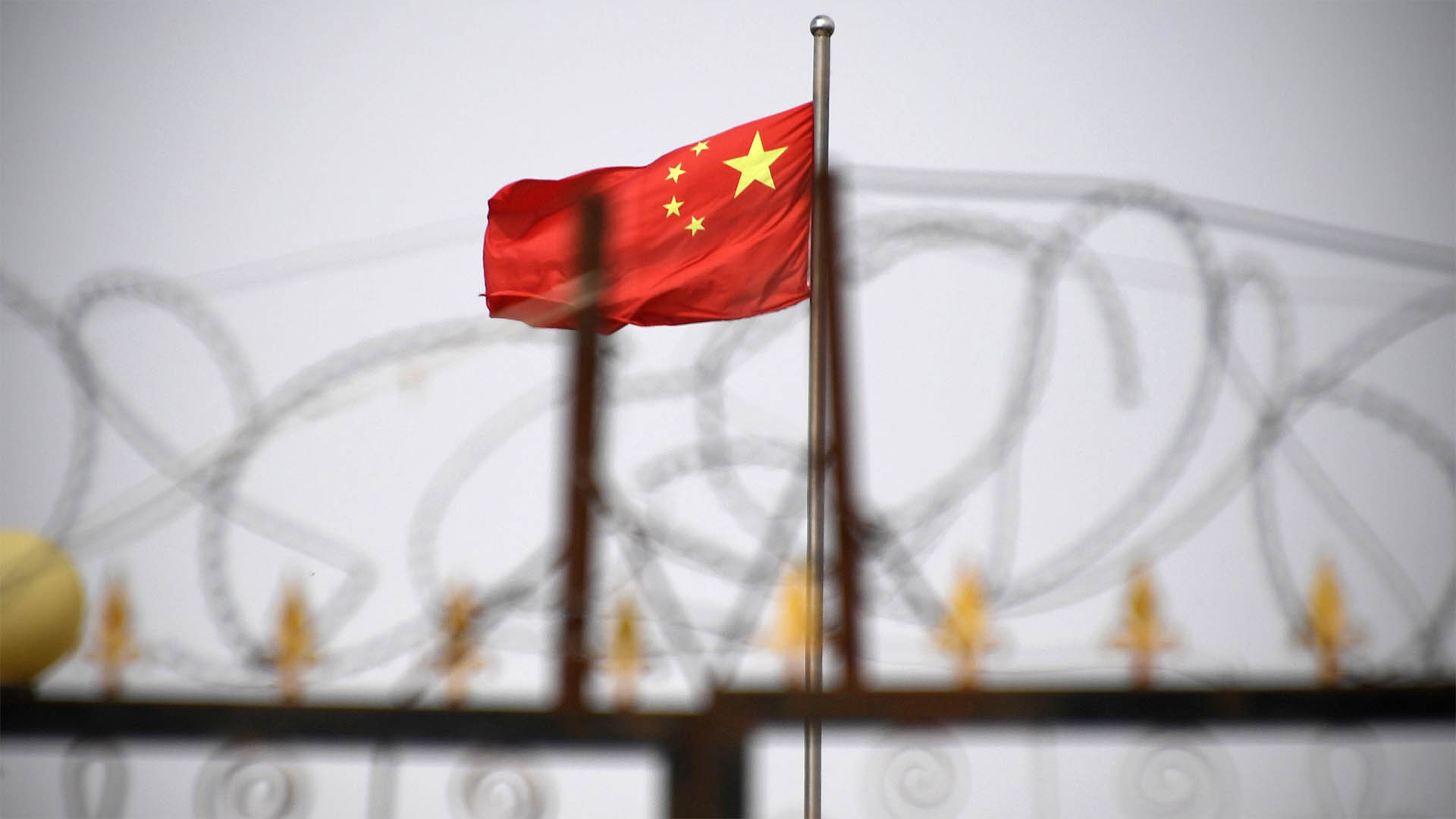
Beijing announced in late 2019 that all individuals had “graduated” from “re-education” camps in Xinjiang, a shift in policy that followed years of international scrutiny and a surge in reporting on the mass detention of Uyghurs and other Turkic Muslims. The abrupt announcement, detailed in new academic research by political scientist Jan Švec, was not an isolated event, but rather a turning point in a phased response by Chinese authorities to mounting global pressure.
Švec, based at the Institute of International Relations in Prague, analyzed official Chinese documents, state media, leaked files and international reporting to demonstrate how Beijing adjusted both its narrative and policies in Xinjiang between 2014 and 2022. His findings, published in the peer-reviewed journal Modern China, suggest that international exposure – particularly investigative journalism – played a decisive role in forcing these changes.
The initial response to ethnic rioting and a series of attacks, which Beijing attributed to Uyghur extremists, was the launch of a “Strike Hard Campaign against Violent Extremism” in 2014. This framed Uyghur identity as a security threat, leading to the establishment of “de-extremization” centers, openly promoted in regional media. At this stage, international awareness was limited, and there was little attempt to conceal the program’s existence.
By 2017, however, the scale of detentions had dramatically expanded. As arrests increased, Beijing imposed a strict information blackout, removing references to the camps from national media and softening coverage to emphasize development and stability. Outside of China, journalists, researchers, and Uyghur exile groups began to document evidence of mass incarceration.
A critical juncture, according to Švec, arrived in late 2019 with the imposition of U.S. Sanctions over the repression of Uyghurs and the publication of the China Cables by the International Consortium of Investigative Journalists (ICIJ). These leaked internal documents revealed detailed instructions on surveillance, discipline, and indefinite detention, confirming allegations that the camps were coercive, centrally coordinated, and part of a broader program of mass surveillance and population control.
China responded to the ICIJ investigation by dismissing the reporting as “pure fabrication and fake news.” However, the leaks had a measurable impact. Google searches for “Xinjiang” surged by 236 percent between September and December 2019, according to Švec’s analysis. State media launched aggressive attacks on critical reports, and diplomats worked to counter the damage, with one official media outlet asserting that Western media “cannot have any actual influence.”
Švec’s research identifies a pattern of responses from Beijing: initial denial, followed by partial acknowledgment, formal legalization of the camps, downsizing, and their abandonment as a visible policy. Physical facilities were dismantled or repurposed, and references to the camps disappeared from official discourse after 2020. This shift, he argues, occurred before the implementation of major sanctions, suggesting that exposure and “naming and shaming” were particularly influential.
“China explicitly reacted to investigative findings,” Švec wrote, adjusting its approach even whereas publicly maintaining its innocence. He also noted that the threat of sanctions, existing since at least 2018, likely contributed to the decision-making process. The retreat from mass internment, he concludes, was likely shaped by a combination of international pressure and a perceived reduction in security threats.
Švec’s findings challenge the notion that China is impervious to international criticism. He suggests that Beijing is deeply concerned about its global image, particularly when human rights abuses threaten diplomatic ties, economic ambitions, and initiatives like the Belt and Road Initiative.
Despite the closure of many camps, human rights activists and Uyghur groups continue to report ongoing imprisonment, forced labor, surveillance, and cultural erasure. Human Rights Watch estimates that as of mid-2022, nearly half a million Uyghurs and other Turkic peoples remained in prison. A 2024 report by the U.N. High commissioner for human rights found that many problematic laws and policies remain in place in Xinjiang.
Švec’s research indicates that sustained international scrutiny, and reporting efforts like those led by ICIJ – including their later China Targets investigation, which documented Beijing’s transnational repression tactics – were crucial in preventing the camp system from continuing indefinitely beyond 2020. China also employs a range of sham “NGOs” to mitigate the negative impacts of international pressure, according to Švec’s paper.
