
Colorectal Cancer’s Immunotherapy Shield Broken: New Targets Emerge
Table of Contents
Barcelona, Spain – November 8, 2025 07:16:30 CET – A groundbreaking study has unveiled a key mechanism by which metastatic colorectal cancer resists immunotherapy, paving the way for the development of more effective treatments.Researchers have discovered that the protein TGF-β effectively hides tumors from the immune system, and identified potential strategies to overcome this defense. This finding is particularly significant as immunotherapy currently benefits only a limited subset of patients with this aggressive disease.
Colorectal cancer is the third most common cancer diagnosed in both men and women in the United States, with an estimated 153,020 new cases expected in 2024, according to the American Cancer Society 1. Immunotherapy, which harnesses the body’s own immune system to fight cancer, has shown promise in treating various cancers, but its effectiveness in colorectal cancer has been limited. This new research explains why, and offers a roadmap for improving outcomes.
TGF-β: The “No Entry” Signal for Immune Cells
The research, a collaboration between the Institute for Research in Biomedicine (IRB Barcelona) and the National Center for Genomic Analysis (CNAG), utilized advanced single-cell sequencing technology to analyze the tumor microenvironment.By sequencing individual cells within the tumour microenvironment, we have been able to characterise the main players affected by TGF-β,
explains Dr. Holger Heyn, Single Cell genomics Group Leader at CNAG and ICREA Research Professor. The team found that TGF-β prevents T cells, the immune system’s primary cancer fighters, from reaching the tumor.
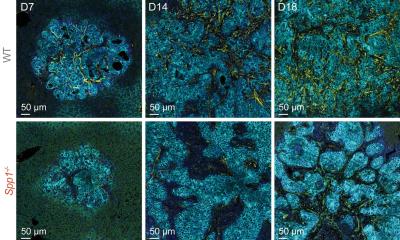
Simultaneously, TGF-β alters macrophages, a type of immune cell, causing them to produce a protein called osteopontin. This protein further suppresses the activity of any T cells that do manage to infiltrate the tumor,effectively rendering the cancer invisible to the immune system. In our experimental models, when we block the action of TGF-β, the immune cells were able to massively enter the tumour and regain their capacity to attack,
stated Dr. Ana Henriques, the paper’s first author.
Blocking TGF-β: A Potential Breakthrough
When researchers blocked TGF-β in experimental models, they observed a significant influx of immune cells into the tumor and a restoration of their ability to attack cancer cells. Furthermore, combining TGF-β blockade with existing immunotherapy resulted in very potent anti-tumour responses,
according to co-author Dr. Maria Salvany.
| Mechanism | Effect |
|---|---|
| TGF-β | Blocks T cell circulation |
| TGF-β & Macrophages | Increased Osteopontin production |
| Osteopontin | Suppresses T cell multiplication |
| TGF-β Blockade | Enhanced immune cell infiltration |
Did You Know?
Colorectal cancer is frequently enough preventable through regular screening, such as colonoscopies, which can detect and remove precancerous polyps.
While clinical trials for TGF-β inhibitors already exist, their use is currently limited by significant side effects. This study suggests that targeting the mechanisms activated *by* TGF-β – such as osteopontin production - could offer a safer and more selective approach.In any case, these alternatives will need to be evaluated in clinical trials, and always in combination with immunotherapy,
commented Dr. Eduard Batlle.
Pro Tip:
Staying informed about the latest cancer research and discussing treatment options with your healthcare provider is crucial for making informed decisions about your health.
The Path forward: Expanding Immunotherapy’s Reach
Understanding this circuit allows us to search for safer and more selective solutions. The ultimate goal for immunotherapies, which today only work in a small group of patients, to be able to also benefit the majority of those with metastatic colorectal cancer,
concludes Dr. prados, now a researcher at the University of Granada. The research team hopes their findings will accelerate the development of new therapies that can overcome immunotherapy resistance and improve outcomes for patients with this challenging disease.
The study was funded by the Olga Torres Foundation, “la Caixa” Foundation, World Wide Cancer Research, the European Research Council (ERC Advanced Grant), the Spanish Association against Cancer (AECC) through the Excellence Program and other grants for researchers, the Ministry of Science, Innovation and Universities, La Marató de TV3, and the Agency for Management of University and Research grants (AGAUR).
What are your thoughts on the potential of targeting TGF-β in colorectal cancer treatment? Share your viewpoint in the comments below!
If you found this article informative, please share it with your network to help raise awareness about this crucial research.
Evergreen Context: Immunotherapy and Colorectal cancer
Immunotherapy has revolutionized cancer treatment in recent years, but its success varies significantly depending on the type of cancer. While highly effective in cancers like melanoma and lung cancer, colorectal cancer has proven more resistant. this resistance is often attributed to the tumor microenvironment,which can suppress the immune system. The tumor microenvironment is a complex ecosystem surrounding the tumor, consisting of immune cells, blood vessels, and other supporting cells. Understanding how this habitat influences immunotherapy response is a major focus of current cancer research.
Frequently Asked Questions
What is TGF-β and why is it important in cancer?
TGF-β is a protein that plays a complex role in cancer. While it can initially suppress tumor growth,it often contributes to cancer progression by suppressing the immune system and promoting metastasis.
How does this research improve our understanding of immunotherapy resistance?
This research identifies a specific mechanism – TGF-β-mediated immune suppression – that contributes to immunotherapy resistance in colorectal cancer, providing a potential target for new therapies.
What are the next steps in translating this research into clinical practice?
The next steps involve evaluating alternative strategies to block TGF-β signaling, such as targeting osteopontin production, in clinical trials, always in combination with immunotherapy.
Are there any current treatments that target TGF-β?
Yes, clinical trials are ongoing for TGF-β inhibitors, but their use is currently limited by side effects. This research aims to identify safer and more selective approaches.
What is the tumor microenvironment?
The tumor microenvironment is the complex ecosystem surrounding a tumor, including immune cells, blood vessels, and other supporting cells. It plays a crucial role in cancer progression and response to treatment.
