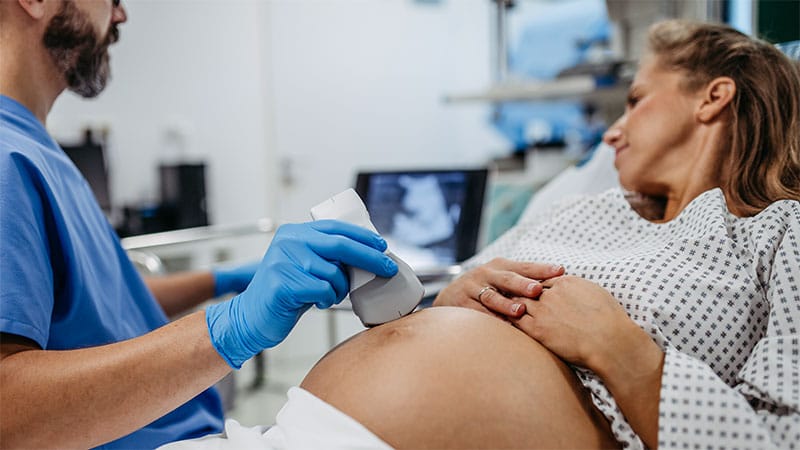
How OB Hospitalists Are Combating Maternal Health Deserts
One in three counties are considered maternity care deserts with 5.8 million women and 358,000 infants living in places without access to quality care, according to a report.
Key Clinical Takeaways:
- Maternity care deserts now encompass one-third of U.S. counties, threatening access for millions of women and infants.
- Hospitals increasingly employ ob hospitalists to manage labor, delivery, and emergencies, stabilizing rural units and supporting private practice physicians.
- Studies suggest that institutions staffed around the clock with ob hospitalists record lower rates of severe maternal morbidity.
The Growth of Maternity Care Deserts Across Rural Counties
The widening gap in maternal health stems from a long-standing deficit in the ob/gyn workforce. A study published in Obstetrics & Gynecology projects that all but six states will experience physician shortages over the next decade, with rural areas facing the most severe shortfalls. Brigid McCue, director of the ob hospitalist fellowship and an ob hospitalist at SouthShore University Hospital in New Jersey, noted that physicians predominantly train near urban centers, making the transition to isolated rural practice challenging for younger clinicians encountering complex caseloads without extensive institutional support systems.
Economic pressures compound these workforce strains. Rural hospitals typically handle lower patient volumes, and a high proportion of those patients rely on Medicaid, which provides lower reimbursements. When facilities seek to cut operating costs, labor and delivery units frequently face closure because they lack cost efficiency. Stricter state abortion laws introduce legal risks for routine obstetric care, deterring new practitioners from settling in those regions. McCue pointed out that physicians often experience moral conflict when operating under legal threats for standard obstetric procedures.
How Ob Hospitalists Stabilize Rural Labor and Delivery
To counteract these deficits, hospitals increasingly deploy ob hospitalists—physicians who specialize in inpatient obstetric care without maintaining private practices. Christina Adams, an ob hospitalist in St. Augustine, Florida, explained that these specialists provide singular care in rural facilities or act as a backstop for local private physicians. This arrangement allows community doctors to maintain the patient volumes necessary to keep their small practices financially viable. Without local access, patients face prolonged travel times for prenatal appointments, raising the risk of unattended deliveries on roadsides or at unequipped community facilities.
The hospitalist model also transforms clinician schedules. Wesley Davis, vice president of clinical operations at the Ob Hospitalist Group, contrasted the modern shift structure with traditional private practice demands, where physicians faced continuous office hours, hospital deliveries, and unpredictable on-call nights. Typical ob hospitalist shifts span five to seven 24-hour periods monthly, offering a predictable rotation that helps stem the exodus of burned-out clinicians from the specialty.
Ob Hospitalists Manage Obstetric Emergencies and Treat Complications
On duty, ob hospitalists manage all incoming obstetric emergencies, ensuring that patients receive immediate evaluation by a trained physician rather than relying solely on nurse triage. These specialists routinely partner with certified nurse midwives in rural areas, supplying the rapid backup required when patient conditions escalate. They also treat urgent complications such as ruptured ectopic pregnancies, wherein a fertilized egg implants in the fallopian tubes—a potentially fatal condition.
Fresh clinicians operating with adequate rest times demonstrate measurable clinical advantages. Research led by the Mayo Clinic indicates that hospitals maintaining round-the-clock ob/gyn coverage through dedicated ob hospitalists achieve lower rates of severe maternal morbidity. Davis emphasized that patients benefit directly from knowing a dedicated specialist stands ready in the hospital at all hours to address any emergent need.
Disclaimer: The information provided in this article is for educational and scientific communication purposes only and does not constitute medical advice. Always consult with a qualified healthcare provider regarding any medical condition, diagnosis, or treatment plan.