
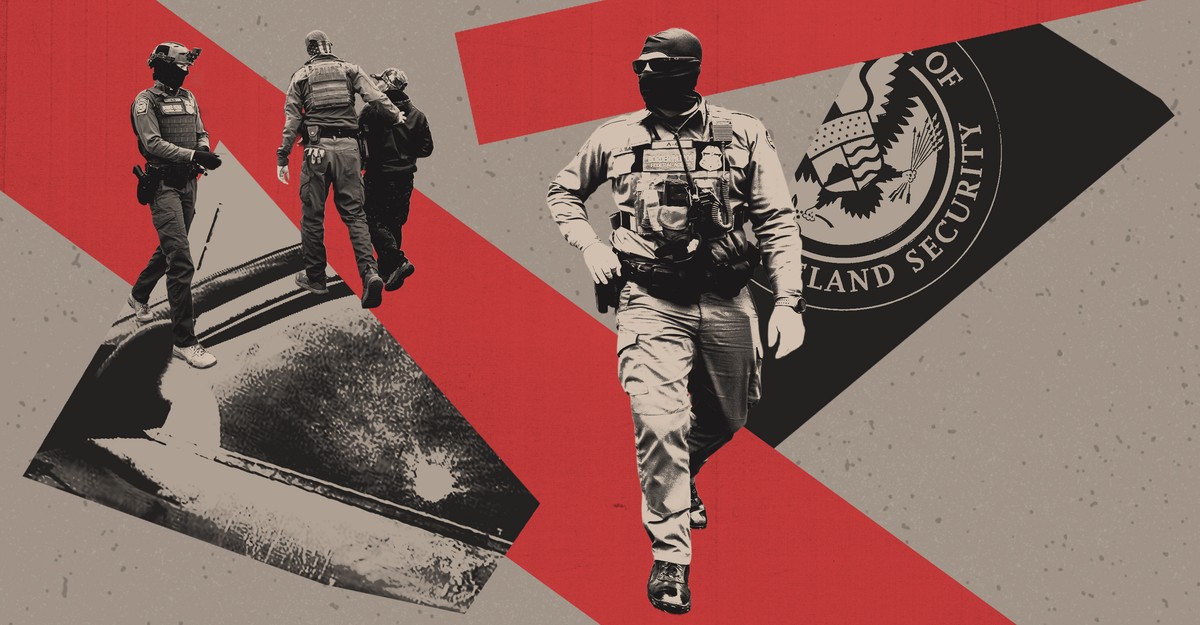
A Systemic Breakdown: Diminished Oversight and Rising Violence at ICE
the recent shooting death of Renee Nicole Good by an ICE officer in Minneapolis has ignited a fresh wave of scrutiny over the agency’s practices and,critically,the erosion of accountability mechanisms designed to prevent such tragedies. as investigations unfold, a disturbing picture emerges: a deliberate dismantling of oversight bodies, a surge in ICE’s budget and authority, and a climate where aggressive enforcement appears to supersede safety and due process. This article examines the factors contributing to this escalating crisis, drawing on expert testimony, official reports, and recent events.
The Disappearance of Accountability
Following the shooting, julie Plavsic, a former senior policy advisor at the Department of Homeland Security’s (DHS) Office for Civil Rights and Civil liberties (CRCL), promptly recognized a critical gap. Had the CRCL been functioning at its previous capacity, an inquiry into the incident – focusing on policies, training, and oversight – would have been initiated without delay. However, the office is now largely dormant. Plavsic and her colleagues where sidelined in March and subsequently dismissed,part of a broader pattern of dismantling oversight within DHS.
The CRCL wasn’t alone. The Citizenship and Immigration Services Ombudsman and the Immigration Detention Ombudsman – both established by Congress to protect against misconduct – were also effectively gutted, initially under the guise of eliminating redundancy. Despite lawsuits from nonprofit groups arguing the need for *more* oversight given DHS’s vast reach (interacting with 3-4 million citizens annually), these offices were reopened with minimal staffing and, according to former officials, are largely ineffective. This systematic weakening of internal checks and balances has created a vacuum where abuses can occur with diminished fear of outcome.
A Dramatic Shift in Power and Resources
The changes within DHS aren’t simply about personnel or restructuring; they represent a fundamental shift in priorities. The current administration has overseen a massive infusion of funds into ICE,more than tripling its budget as reported by The Atlantic. This unprecedented financial backing has come without any corresponding increase in oversight requirements, effectively granting ICE broad latitude in its operations.
This surge in resources is coupled with a rhetorical shift. The President, his advisors, and DHS officials have consistently employed language that celebrates aggressive deportation tactics, fostering a culture where “anything goes.” This messaging, according to Plavsic, has permeated the agency, creating an habitat where officers feel emboldened to act with impunity.
The Role of Autonomous Oversight – and its Absence
The offices dismantled by the administration – CRCL, the Citizenship and Immigration Services Ombudsman, and the Immigration detention Ombudsman – played crucial, albeit non-enforcement, roles.The CRCL investigated practices like the use of whole-body restraints and the risky practice of corralling migrants under bridges due to detention space shortages. The Immigration Detention Ombudsman conducted regular visits to detention centers, identifying violations of health and safety standards. The Citizenship and Immigration Services Ombudsman handled over 20,000 complaints annually regarding the visa application process. These offices provided critical feedback loops and opportunities for policy correction, now largely absent.
The Minneapolis Shooting and a Pattern of force
The shooting of Renee Nicole Good is not an isolated incident. Eleven people have been shot by immigration enforcement officers since the current administration took office,with two additional shootings occurring in Portland,Oregon,just days after the minneapolis incident. ICE was involved in three shootings in 2023 and five in 2022, according to The New York Times. alarmingly, none of the officers involved in these shootings over the past year have faced disciplinary action as reported by CBS News.
initial reports surrounding the Minneapolis shooting were immediately contested. While Trump publicly claimed Good “ran over the ICE Officer,” video evidence suggests otherwise, showing her SUV briefly moving toward the officer before turning away. Homeland Security Secretary Kirsti Noem labeled the incident “domestic terrorism,” a characterization used to justify broader crackdowns on political opponents. Even a DHS spokesperson initially blamed “rioters,” despite the lack of evidence supporting such a claim. This swift and inaccurate framing of the event underscores the administration’s willingness to prioritize narrative control over factual investigation.
Expert Analysis: A Breakdown in Protocol
Jim Rielly, a retired ICE officer with 23 years of experience, reviewed the Minneapolis shooting and identified critically important concerns. He noted the officer’s aggressive approach – rushing toward Good’s vehicle and attempting to force open the door – as immediately problematic. Rielly stated he would have prioritized de-escalation, calmly instructing Good to turn off the car and exit. He further emphasized that ICE policy permits the use of deadly force only when there is a “reasonable belief” of imminent death or bodily harm, a threshold he believes was not met in this case.
Rielly pointed out that the officer,Jonathan Ross,could have avoided the situation by simply stepping aside. He also highlighted the officer’s training – specializing in tactical arrests, not traffic stops – and the violation of standard law enforcement protocol regarding approaching moving vehicles. The agency’s own policy explicitly instructs officers to avoid placing themselves in situations where deadly force becomes the only option.
A Concerning Trend in Recruitment and Training
the current climate within ICE is further exacerbated by a rapid influx of new recruits coupled with reduced training time. Former officers express concern that manny new hires lack the experience and composure necessary for effective and safe public interaction. This concern is echoed by a former colleague of Rielly’s, who reportedly texted him, “You should see the guys they’re hiring now.” The combination of inexperienced personnel and a lack of robust training creates a dangerous environment, increasing the likelihood of future incidents.
Looking Ahead: Restoring Accountability and Ensuring Safety
The situation at ICE represents a critical juncture. The dismantling of oversight mechanisms, the surge in funding without accountability, and the erosion of professional standards have created a system ripe for abuse. Restoring public trust requires a comprehensive overhaul, including:
- Reinstating and fully funding independent oversight bodies like the CRCL, the Citizenship and Immigration Services Ombudsman, and the Immigration Detention Ombudsman.
- Implementing rigorous training programs that emphasize de-escalation techniques, cultural sensitivity, and adherence to legal protocols.
- Establishing clear and transparent accountability measures for officers who use force, including independent investigations and disciplinary action when warranted.
- Re-evaluating the agency’s budget and ensuring that funding is allocated responsibly, with a focus on due process and humane treatment.
Without these critical reforms, the cycle of violence and impunity at ICE is highly likely to continue, jeopardizing both the safety of the public and the integrity of the agency itself. The case of Renee Nicole Good serves as a stark warning: a lack of accountability has devastating consequences.
