How Ecuador’s Shrimp Boom is Destroying Mangrove Forests
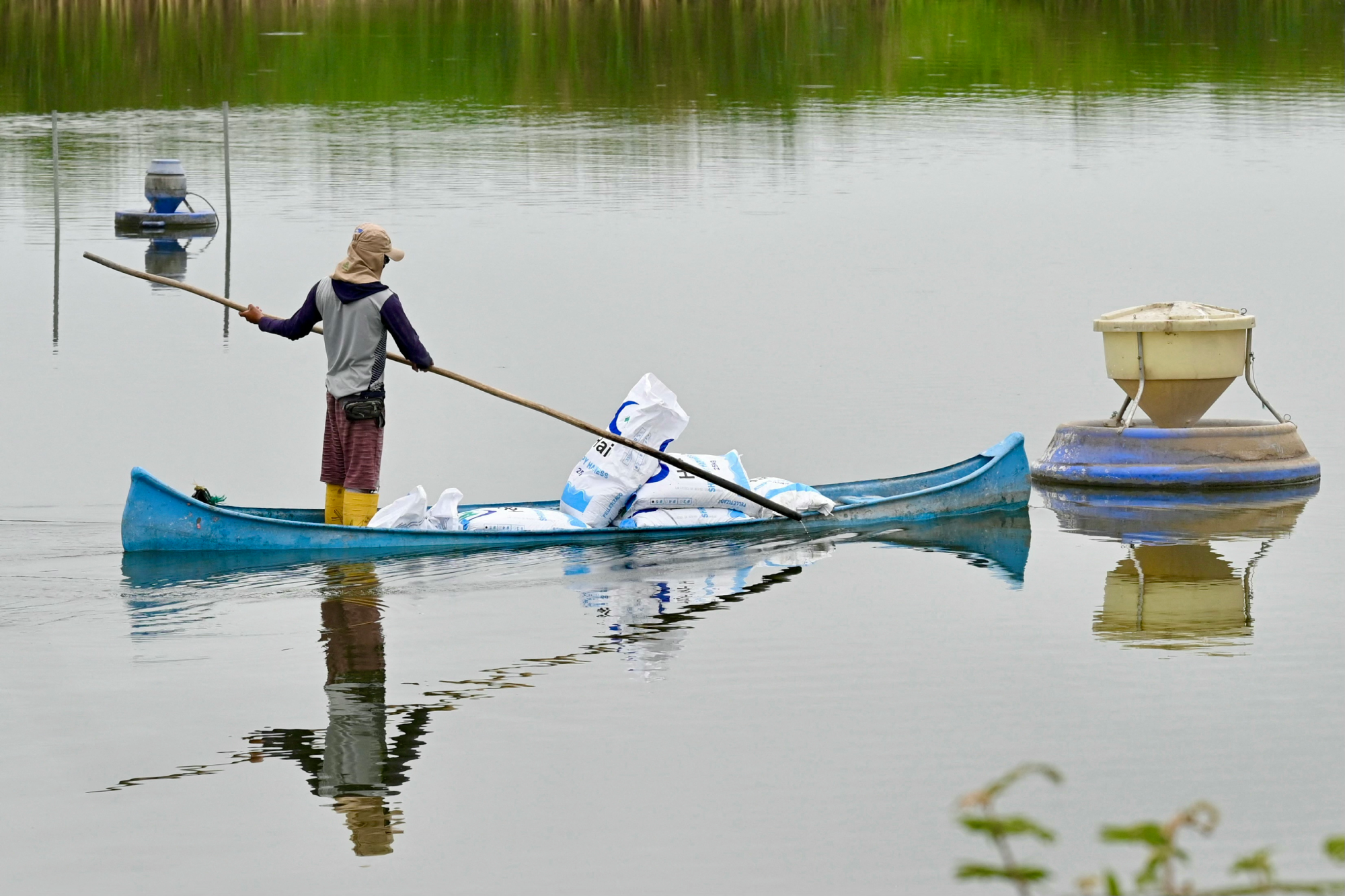
Rapidly expanding shrimp farming driven by surging international exports has severely degraded Ecuador’s mangrove ecosystems, destroying vital habitats for edible mollusks and threatening traditional harvesting livelihoods, according to local researchers, fishermen, and environmental assessments.
When the tide recedes across Isla Costa Rica within Ecuador’s Jambelí archipelago, 32-year-old Johana Carolina Cruz Potes wades into the mud with a bucket and a small metal hook. She searches the mangrove roots for the concha negra, an edible mollusk living beneath the sediment. Cruz Potes began this work at age nine, following her father into the mud. In recent years, however, securing a livelihood from mollusk harvesting has grown increasingly difficult as available harvesting zones and animal populations dwindle.
Cruz Potes points directly to nearby commercial operations. “Ever since the shrimp farms arrived, they cut down the trees to build the pools,” she states, explaining that the mollusks rely entirely on the root systems to survive. “And without roots, the conchas disappear too.”
Export Growth and Deforestation Pressures
Over the past decade, Ecuador’s shrimp production has nearly quadrupled, overtaking petroleum as the country’s primary export product. The vast majority of these crustaceans head to China, the United States, and Europe, with export volumes climbing further following the elimination of customs tariffs. This production boom has pushed farming operations deeper into fragile coastal territories.
Historical data shows that between 1969 and 1999, Ecuador lost up to 43 percent of its mangrove forests. Today, shrimp farms occupy a surface area one and a half times larger than the remaining mangrove forests. Although contemporary Ecuadorian law explicitly bans the clearing of mangroves, and industry representatives maintain that land conversion for farming has ceased, local residents and scientific researchers argue that destruction of the ecosystem continues.
“People think that the destruction of these trees only happened in the past,” notes Eduardo Rebolledo Monsalve, a researcher at the Catholic University of Esmeraldas. “But that is not the case.”
Data compiled by Trase, a supply-chain transparency initiative, indicates that between 2014 and 2019, approximately 427 hectares of mangroves were converted into shrimp ponds, primarily concentrated in Guayas Province, the nation’s core production hub. Remote-sensing research reveals that an additional 2,900 hectares of mangroves vanished over the subsequent four-year period, with nearly half of that loss occurring inside officially protected areas. In January 2024, a naval operation located a ten-hectare clearing inside Manglares Don Goyo, a wetland of international importance located within the inner Gulf of Guayaquil under the Ramsar Convention.
Methods of Encroachment and Tidal Disruption
Fishermen across Ecuador’s coast report that industrial operators bypass strict prohibitions through incremental expansion. Luis Ángel Flores Ramírez, a crab fisherman in southern El Oro Province where commercial shrimp farming originated, observes that operators frequently clear smaller plots under the guise of pruning plants or excavating essential canals and dikes. Further north, Pablo Roberto Demera, leader of the Asopesanjocha fishing association, describes a similar pattern. “Every time they repair a pond’s embankment, they expand by a couple of meters, then another two, and so on,” Demera explains.
Beyond direct clearing, shrimp farming infrastructure alters the natural hydrology necessary for mangrove survival. Dikes, canals, and pond walls obstruct regular tidal flows that keep the soil moist and oxygenated. When these barriers block tidal exchange, the mud dries and hardens, salinity fluctuates abnormally, and surviving trees experience slow deterioration.
Water Quality and Effluent Concerns
Environmental degradation also stems from wastewater discharge. While Ecuadorian law prohibits the release of untreated effluents containing organic matter, feed residues, excrement, and fertilizers, monitoring studies reveal high contamination levels near production sites. A 2023 study detected ammonium and phosphorus levels two and a half times higher than normal in mangroves surrounding Esmeraldas shrimp farms. A Seafood Watch assessment estimated that more than half of all waste generated by these operations entered the environment directly.
An ex-worker from a shrimp farm in La Libertad confirms that waste flows directly into local estuaries, leaving the water coated in white foam. Chemical additives such as sodium metabisulfite, used extensively to prevent harvested shrimp from spoiling, heighten local pollution concerns. Mauricio Cruz, a fisherman from Huaquillas, reports that the presence of these substances frequently coincides with observations of dead fish floating in the local estuaries.
As regulatory agencies and independent researchers continue to document habitat loss and chemical runoff, affected coastal communities face ongoing economic and ecological strain.