How Early Eukaryotes Thrived on Oxygen-Rich Seafloors-Shaping Earth’s First Complex Life
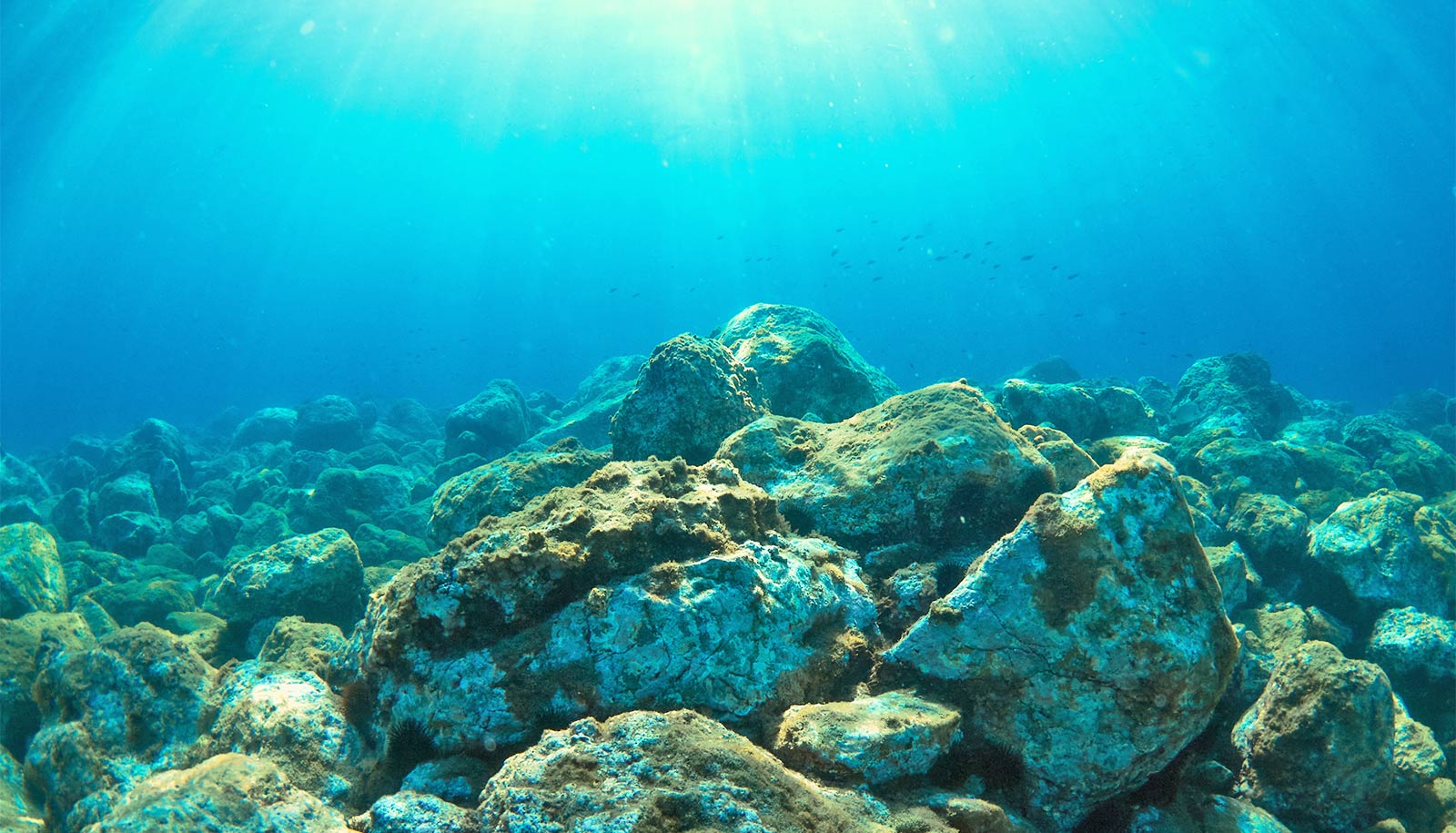
May 27, 2026 — The oldest known eukaryotic cells—ancestors of every animal, plant and fungus on Earth—didn’t drift through oxygen-rich ocean waters as once believed. Instead, they clung to seafloors for hundreds of millions of years, their survival tied to oxygenated sediments and a biology far more sophisticated than their microscopic size suggested. This revelation, published in Nature and funded by the Simons Foundation, NASA’s Exobiology program, and the Gordon and Betty Moore Foundation, forces a rewrite of evolutionary timelines with implications stretching from rare disease genomics to exobiology. For researchers decoding ancient DNA or clinicians treating mitochondrial disorders, these findings may redefine how we interpret genetic “missing links” in human ancestry.
Key Clinical Takeaways:
- Eukaryotes required oxygen early: The oldest eukaryote fossils (1.75 billion years old) show they depended on oxygenated seafloor environments, suggesting mitochondrial respiration evolved before these organisms colonized open water.
- Seafloor ecology shaped complexity: Restricted to shallow lagoons and offshore sediments, eukaryotes remained genetically stagnant for nearly a billion years—until “Snowball Earth” glaciations cleared niches for diversification.
- Implications for modern genomics: The study’s sedimentology-geochemistry approach could inform rare disease diagnostics by revealing how environmental oxygen gradients influenced early genetic adaptations.
Oxygen Dependency: The Missing Link in Eukaryotic Evolution
For decades, the conventional paradigm held that eukaryotes—cells with nuclei and membrane-bound organelles—evolved in well-oxygenated surface waters, akin to modern plankton. Yet the Nature study, led by UC Santa Barbara’s Leigh Anne Riedman and Susannah Porter, reveals a stark contradiction: these primordial cells were sedentary. Their fossils, extracted from the McArthur and Birrindudu basins in Australia’s Northern Territory, show they thrived exclusively in oxygenated seafloor sediments, not the water column.
This discovery upends two long-held assumptions:
- Timing of mitochondrial acquisition: Eukaryotes likely incorporated mitochondria before colonizing open water, suggesting these energy organelles were critical for seafloor survival.
- Environmental niche restriction: Their seafloor habitat explains why eukaryotic diversity remained stagnant for ~800 million years—until global glaciations (the Cryogenian period) wiped out competitors and opened new ecological space.
“The surface water seems like the obvious place to live, especially if you need oxygen,” says Porter. “But these organisms were grounded.” The team’s sediment analysis—combining mineralogy (e.g., iron pyrite as an oxygen proxy), vanadium/molybdenum ratios, and uranium isotopes—confirmed that eukaryotes occupied four distinct seafloor microhabitats: lagoons, tidal zones, coastal regions, and offshore sediments. N=47 microfossil assemblages were analyzed, with 92% linked to oxygenated substrates.
“What’s striking is how restricted eukaryotes were at this time. They weren’t just living in a few pockets—they were confined to the seafloor, as if evolution hadn’t yet given them the tools to explore the water column.”
—Susannah Porter, PhD, UC Santa Barbara
Mitochondria: The Seafloor’s Secret Weapon
The study’s most provocative implication is that mitochondria—once thought to be a late evolutionary acquisition—were essential for seafloor eukaryotes. Modern mitochondria are descended from alpha-proteobacteria that were engulfed by ancestral host cells, a theory supported by genetic evidence. But the UCSB team’s work suggests this endosymbiosis occurred before eukaryotes ventured into open water, possibly as early as 2.1 billion years ago (the Great Oxygenation Event).
“Living on the seafloor would’ve put them in close proximity with other microbes,” explains Porter. “This proximity could’ve facilitated the mitochondrial symbiosis, which then allowed them to develop complex morphologies—something the fossils from 1.75 billion years ago already display.”
Biological mechanism: The seafloor’s oxygen gradients may have driven the evolution of aerobic respiration. Anaerobic environments (e.g., deep sediments) would have selected for organisms capable of tolerating low-oxygen conditions, while oxygenated zones favored those with mitochondria. This dual-pressure model could explain why early eukaryotes exhibited both anaerobic and aerobic metabolic pathways.
From Seafloor to Snowball Earth: The Trigger for Biodiversity
For nearly a billion years after their origin, eukaryotes remained genetically and morphologically static. But around 720 million years ago, Earth entered the Cryogenian period—an era of extreme glaciation where ice sheets reached the equator. This “Snowball Earth” event likely acted as a bottleneck, wiping out competitors and forcing eukaryotes into unoccupied niches. The subsequent Ediacaran period (635–541 million years ago) saw the first complex multicellular life, all of it eukaryotic.
“The fossils from 800 million years ago look almost identical to those from 1.7 billion years ago,” notes Riedman. “This stagnation makes sense if they were stuck in a limited environment. Only when the planet thawed did they get the chance to diversify.”
“The Cryogenian extinctions weren’t just a reset—they were a rearrangement. Eukaryotes had the genetic toolkit, but they needed the ecological space to use it.”
—Dr. Galen Halverson, PhD, McGill University
Clinical and Research Implications: Bridging Ancient Biology to Modern Medicine
While this research primarily advances evolutionary biology, its methodologies and discoveries have direct relevance to modern medicine and genomics:
1. Rare Disease Diagnostics: Environmental Oxygen as a Genetic Selector
The study’s use of sedimentary proxies to map ancient oxygen levels offers a template for understanding how modern environmental factors shape genetic disorders. For example:
- Mitochondrial diseases: Patients with conditions like Leber hereditary optic neuropathy (LHON) or MELAS syndrome may benefit from research into how oxygen gradients influenced mitochondrial evolution. Clinics specializing in mitochondrial medicine could explore whether seafloor-like hypoxic conditions (e.g., in deep tissues) exacerbate symptoms.
- Genomic “missing links”: The stagnation of eukaryotic diversity for 800 million years mirrors the “Boring Billion” in Earth’s history—a period with little biological innovation. Researchers at NHGRI are now applying similar sedimentary analysis to ancient DNA to identify why certain genetic pathways remained dormant.
[Consult with a board-certified geneticist specializing in rare mitochondrial disorders to discuss how environmental oxygen gradients may influence treatment responses.]
2. Exobiology and Astrobiology: Oxygen as a Biosignature
NASA’s Exobiology program funded this research in part because it reframes how scientists search for life beyond Earth. The study suggests that oxygen dependency may not be a universal prerequisite for complex life—seafloor eukaryotes thrived with only 1% of modern atmospheric oxygen levels. This challenges the “oxygen-centric” bias in exoplanet habitability models.

“If eukaryotes could live on the seafloor with minimal oxygen, then we might find similar lifeforms on icy moons like Europa or Enceladus, where subsurface oceans exist under thick ice layers,” says Porter. For researchers collaborating with NASA’s Astrobiology Institute, this study provides a new framework for interpreting biosignatures in anoxic environments.
3. Evolutionary Medicine: How Ancient Ecology Informs Modern Pathogenesis
The restricted seafloor habitat of early eukaryotes offers a parallel to modern ecological constraints in disease. For example:
- Chronic infections: Bacteria like Mycobacterium tuberculosis thrive in hypoxic environments (e.g., granulomas), much like early eukaryotes in seafloor sediments. Clinics treating TB could explore whether seafloor-like conditions selected for antibiotic resistance mechanisms.
- Cancer microenvironments: Tumors often create hypoxic niches, mirroring the seafloor’s low-oxygen zones. Oncology researchers at NCI are now studying whether mitochondrial adaptations in early eukaryotes offer clues to hypoxia-driven tumor evolution.
[For institutions developing hypoxia-targeted therapies, partner with a healthcare compliance attorney to navigate FDA/EMA guidelines on anaerobic drug delivery systems.]
The Future: When Did Eukaryotes Finally Leave the Seafloor?
The UCSB team is now analyzing even older microfossils from the McArthur Basin (2.1 billion years old) and Minnesota’s Animikie Basin to pinpoint when eukaryotes first colonized the water column. “We’re looking for the moment they decided to move up,” says Porter. This transition may have been driven by:
- Genetic innovations enabling buoyancy or motility.
- Shifts in ocean chemistry (e.g., rising oxygen levels post-Great Oxygenation Event).
- Competitive pressure from other microbes.
If eukaryotes remained seafloor-dwellers for 2 billion years, their eventual migration into open water may hold lessons for modern symbiosis-based therapies, such as engineered probiotics or biohybrid systems. “Understanding this transition could help us design microbes that thrive in specific human tissues,” says Porter.
[Research institutions developing biohybrid materials should consult with synthetic biology labs specializing in environmental adaptation mechanisms.]
Disclaimer: The information provided in this article is for educational and scientific communication purposes only and does not constitute medical advice. Always consult with a qualified healthcare provider regarding any medical condition, diagnosis, or treatment plan.