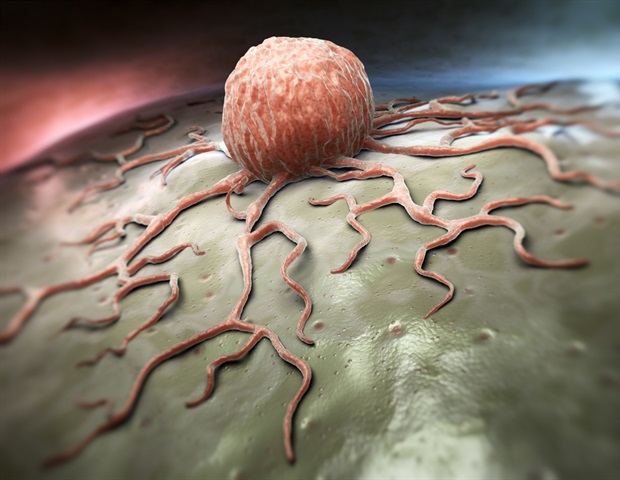
How Chaotic Tumor Environments Trigger Cancer Cell Invasion
Recent investigations into cellular biology reveal that chaotic microenvironments within tumors can directly trigger cancer cell invasion and metastasis, according to a peer-reviewed study published via News-Medical. Researchers examining the physical and chemical anomalies inside solid tumors found that irregular blood vessel formation, fluctuating oxygen levels, and dense extracellular matrices create a hostile milieu that inadvertently activates invasive phenotypes in malignant cells. This mechanical and biochemical stress forces adaptations that allow cancer cells to breach local tissue boundaries and spread through the body.
Key Clinical Takeaways:
- Physical and biochemical fluctuations within chaotic tumor interiors act as primary mechanical catalysts for cancer cell invasion and subsequent metastasis.
- Irregular tissue architectures force malignant cells to undergo phenotypic shifts, enhancing their motility and ability to degrade surrounding extracellular matrices.
- Understanding these microenvironmental triggers opens new pathways for targeted therapies aimed at normalizing tumor vasculature rather than solely attacking cancer cells.
The pathogenesis of cancer invasion relies heavily on the crosstalk between malignant cells and their surrounding stroma. Within disorganized tumor masses, rapid and uncontrolled cellular proliferation outstrips the local blood supply, creating zones of severe hypoxia and acidic pH gradients. According to data highlighted in the study, these hostile conditions prompt cancer cells to upregulate genes associated with epithelial-mesenchymal transition, a process wherein tightly bound epithelial cells lose their cell polarity and cell-cell adhesion, acquiring migratory properties typical of mesenchymal cells. This structural breakdown marks a critical turning point in disease progression, increasing overall morbidity and limiting the efficacy of traditional standard of care treatments.
To address these complex pathological shifts, clinicians and oncologists often rely on sophisticated diagnostic imaging and multidisciplinary staging to evaluate tumor microenvironments. Patients requiring comprehensive evaluations of complex malignancies should consult with board-certified surgical oncologists to determine how local tissue dynamics impact treatment selection. Similarly, managing advanced disease stages frequently necessitates specialized care pathways available through advanced diagnostic oncology centers.
Translating these biological insights into effective clinical interventions requires rigorous evaluation of therapeutic agents in controlled settings. Clinical trials investigating microenvironment-modulating drugs typically operate under strict double-blind placebo-controlled parameters to assess whether normalizing tumor vasculature can successfully reverse or halt invasive phenotypes. Pharmaceutical developers and clinical researchers navigating these trial phases must maintain strict adherence to evolving regulatory frameworks. Ensuring operational compliance during these studies often involves retaining specialized healthcare compliance legal counsel to address regulatory hurdles and secure trial integrity.
Ultimately, decoding the mechanics of chaotic tumor environments shifts the paradigm of cancer treatment from merely eradicating tumor bulk to engineering a hostile microenvironment back into a manageable, stable state. As clinical research progresses toward this objective, bridging basic laboratory discoveries with patient-centered specialized care remains paramount for improving long-term outcomes.
*Disclaimer: The information provided in this article is for educational and scientific communication purposes only and does not constitute medical advice. Always consult with a qualified healthcare provider regarding any medical condition, diagnosis, or treatment plan.*