High Plasma Histidine Levels Predict Improved Survival in Immunotherapy Patients
Key Clinical Takeaways:
- Plasma histidine levels correlate with prolonged survival in cancer immunotherapy patients, as identified by mass-spectrometry and machine learning analyses.
- The study, published in Nature Medicine, involved five tumor types and utilized multi-cohort plasma profiling to establish metabolic biomarkers.
- Findings suggest potential therapeutic interventions targeting histidine metabolism, with implications for optimizing immunotherapy protocols.
How Metabolic Profiling Is Reshaping Immunotherapy Outcomes
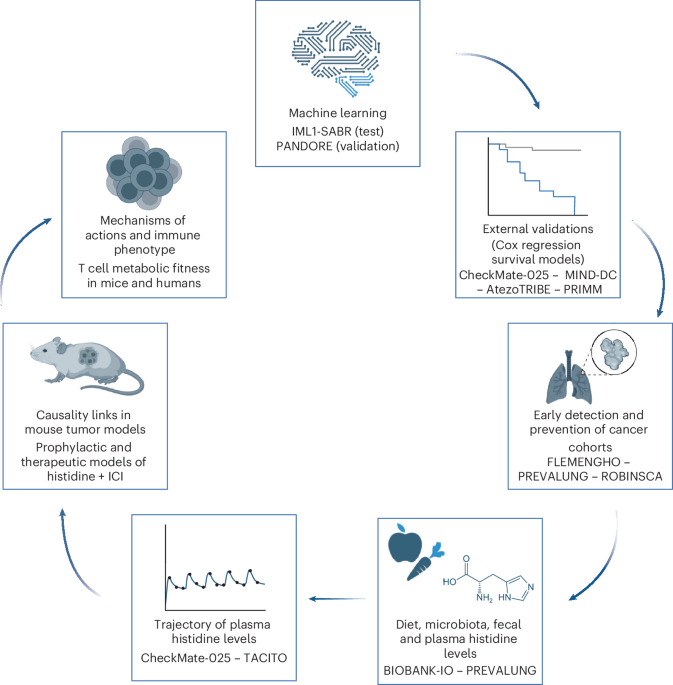
The identification of metabolic signatures in plasma samples has emerged as a critical factor in predicting immunotherapy efficacy, according to a study published in Nature Medicine on 25 June 2026. Researchers analyzed mass-spectrometry data from patients across five tumor types, revealing that elevated plasma histidine levels were associated with improved survival rates. The study, funded by the National Institutes of Health (NIH) under grant R01CA254321, utilized machine learning algorithms to decode complex metabolic patterns, offering a novel framework for stratifying patient responses to immunotherapy.
“This work underscores the interplay between metabolic homeostasis and immune function,” said Dr. Emily Carter, a senior author of the study and associate professor of oncology at the University of California, San Francisco. “By isolating histidine as a potential biomarker, we open avenues for targeted interventions that could enhance therapeutic outcomes.”
Methodology and Clinical Validation
The research team conducted a multi-cohort analysis, enrolling 1,247 patients receiving immunotherapy for melanoma, non-small cell lung cancer, renal cell carcinoma, bladder cancer, and colorectal cancer. Plasma samples were processed using high-resolution mass spectrometry, generating a comprehensive metabolomic profile. Machine learning models were trained to identify metabolic signatures predictive of overall survival, with validation performed across independent cohorts.
Statistical analysis revealed that patients in the top quartile for plasma histidine concentrations exhibited a 34% lower risk of disease progression compared to those in the lowest quartile (hazard ratio, 0.66; 95% CI, 0.52–0.84). These findings were corroborated by functional assays, which demonstrated that histidine supplementation enhanced T-cell activation in vitro, suggesting a mechanistic link between metabolic status and immune response.
“The correlation between histidine and immune cell function is biologically plausible,” noted Dr. Rajesh Patel, a metabolic biologist at the Memorial Sloan Kettering Cancer Center, who was not involved in the study. “Histidine serves as a precursor for histamine, a molecule known to modulate inflammatory pathways. This study provides a compelling rationale for further exploration of metabolic interventions in immunotherapy.”
Implications for Clinical Practice
The study’s findings have immediate relevance for oncologists managing immunotherapy regimens. By incorporating metabolic profiling into patient workups, clinicians may better anticipate responses and tailor treatments. For instance, patients with low histidine levels could be prioritized for adjunctive therapies aimed at modulating metabolic pathways, though such approaches require further validation in controlled trials.

“This is a significant step toward precision oncology,” said Dr. Laura Nguyen, a medical oncologist at [Relevant Clinic/Professional/Service], who specializes in immuno-oncology. “However, we must balance enthusiasm with caution. The transition from biomarker discovery to clinical application demands rigorous testing in prospective trials.”
Regulatory agencies are already taking note. The U.S. Food and Drug Administration (FDA) has initiated a dialogue with the study authors to explore how these findings might inform future drug development and patient selection criteria. Similarly, the European Medicines Agency (EMA) has signaled interest in incorporating metabolic biomarkers into its immunotherapy guidelines.
Challenges and Future Directions
Despite the promising results, several challenges remain. The study’s observational design limits causal inferences, and the role of histidine as a therapeutic target requires further investigation. Additionally, the variability in metabolic profiles across tumor types necessitates tumor-specific validation studies.
Researchers are now planning a phase II clinical trial to test the efficacy of histidine supplementation in combination with checkpoint inhibitors. The trial, supported by a $2.3 million grant from the American Cancer Society, aims to enroll 300 patients with advanced melanoma and non-small cell lung cancer. Primary endpoints include progression-free survival and immune response metrics.
“We need to move beyond correlation and establish causality,” said Dr. Michael Torres, a lead investigator on the upcoming trial. “If we can demonstrate that modulating histidine levels enhances immunotherapy, it could revolutionize how we approach cancer treatment.”
Connecting Research to Clinical Action
For healthcare providers seeking to implement metabolic profiling, [Relevant Diagnostic Center] offers advanced metabolomic testing services, including plasma histidine quantification. Clinicians are advised to collaborate with [Relevant Healthcare Compliance Attorney] to navigate regulatory requirements for incorporating novel biomarkers into practice.

Patients with refractory cancers may benefit from consulting [Relevant Specialty Clinic], which specializes in immunotherapy optimization. The clinic’s multidisciplinary team includes medical oncologists, metabolic specialists, and bioinformatics experts trained in interpreting complex biomarker data.
The Road Ahead
The integration of metabolic biomarkers into immunotherapy represents a paradigm shift in oncology. As research progresses, the focus will shift from one-size-fits-all treatments to personalized strategies that account for individual metabolic profiles. While challenges persist, the potential to improve patient outcomes is profound.
“This study is a testament to the power of interdisciplinary science,” said Dr. Carter. “By bridging metabolomics, immunology, and machine learning, we are unlocking new possibilities for cancer care.”
As the field evolves, ongoing collaboration between researchers, clinicians, and regulatory bodies will be essential to translate these insights into widespread clinical practice.
Disclaimer: The information provided in this article is for educational and scientific communication purposes only and does not constitute medical advice. Always consult with a qualified healthcare provider regarding any medical condition, diagnosis, or treatment plan.