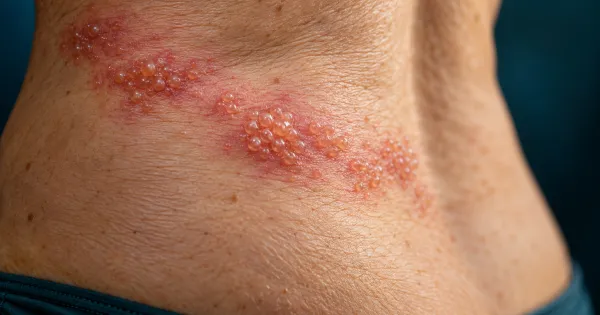
Herpes Zoster: A Rare Case of Critical Rhabdomyolysis
Critical Rhabdomyolysis Diagnosed After Herpes Zoster in China
A 63-year-old woman in China developed extreme muscle fiber breakdown two weeks after contracting shingles in her lumbar region. Physicians at Zhejiang University detailed the case on October 27, 2026, in Frontiers in Medicine, marking an exceptional presentation of severe rhabdomyolysis following a herpes zoster infection.
Key Clinical Takeaways:
- A 63-year-old patient presented with extreme muscle fiber destruction and a creatine kinase level of 186,383 units per liter two weeks after a lumbar shingles outbreak.
- The case involved multiple systemic complications, including acute kidney injury, liver dysfunction, and respiratory failure requiring mechanical ventilation and nine days of continuous renal replacement therapy.
- Study authors noted that while a viral link is plausible, definitive proof of causation remains unestablished, highlighting the need for careful clinical evaluation rather than automatic assumptions.
The patient experienced widespread muscle pain and fever following the initial rash, alongside a sharp decrease in urine output. Blood tests revealed a creatine kinase level reaching 186,383 units per liter. Creatine kinase serves as an alarm signal indicating cellular damage rather than the primary driver of tissue injury, releasing myoglobin and potassium into the bloodstream. Excess myoglobin threatens renal function, while elevated potassium can trigger dangerous cardiac arrhythmias.
The clinical picture rapidly escalated to include acute kidney injury, hepatic dysfunction, and respiratory failure. Treatment required mechanical ventilation alongside nine days of continuous renal replacement therapy. After twelve total days of intensive intervention, the patient stabilized sufficiently to leave the intensive care unit.
Researchers Seek Causal Link Between Virus and Muscle Breakdown
Attributing the severe muscle breakdown directly to the varicella-zoster virus remains tempting given the chronological sequence, but researchers emphasize that a definitive causal demonstration is lacking. Muscle biopsy results revealed extensive fiber necrosis devoid of inflammatory infiltration. Authors of the report pointed toward potential immune alterations linked to the virus alongside hypothyroidism detected in the patient, though the precise biological mechanism requires further clarification.
The varicella-zoster virus remains latent in nerve ganglia following an initial bout of chickenpox and can reactivate later in life. Rhabdomyolysis associated with this reactivation is exceptional, and the single documented case does not establish a broad epidemiological pattern or justify indiscriminate screening for every patient experiencing shingles.
Severe Muscle Pain and Tea-Colored Urine Require Urgent Evaluation
Muscle destruction stems from diverse origins ranging from extreme physical exertion and trauma to specific medications and infections. Evaluating a patient relies on a comprehensive medical history rather than a single presumptive culprit. Persistently severe muscle pain, pronounced weakness, tea-colored urine, or a marked drop in urination demand urgent medical evaluation.
Guidance from the Centers for Disease Control and Prevention indicates that such symptoms can appear individually, making blood tests essential for an accurate diagnosis. Rapid worsening or breathing difficulties require immediate emergency intervention. Patients should inform attending physicians of all recent medications, supplements, unusual physical strains, and prior infections. Early consultation with a primary care provider regarding shingles allows for the timely administration of antiviral medications, which show maximum efficacy when initiated ideally within 72 hours of rash onset. Individuals should also discuss vaccination options with their healthcare provider based on age and specific risk factors.
Disclaimer: The information provided in this article is for educational and scientific communication purposes only and does not constitute medical advice. Always consult with a qualified healthcare provider regarding any medical condition, diagnosis, or treatment plan.