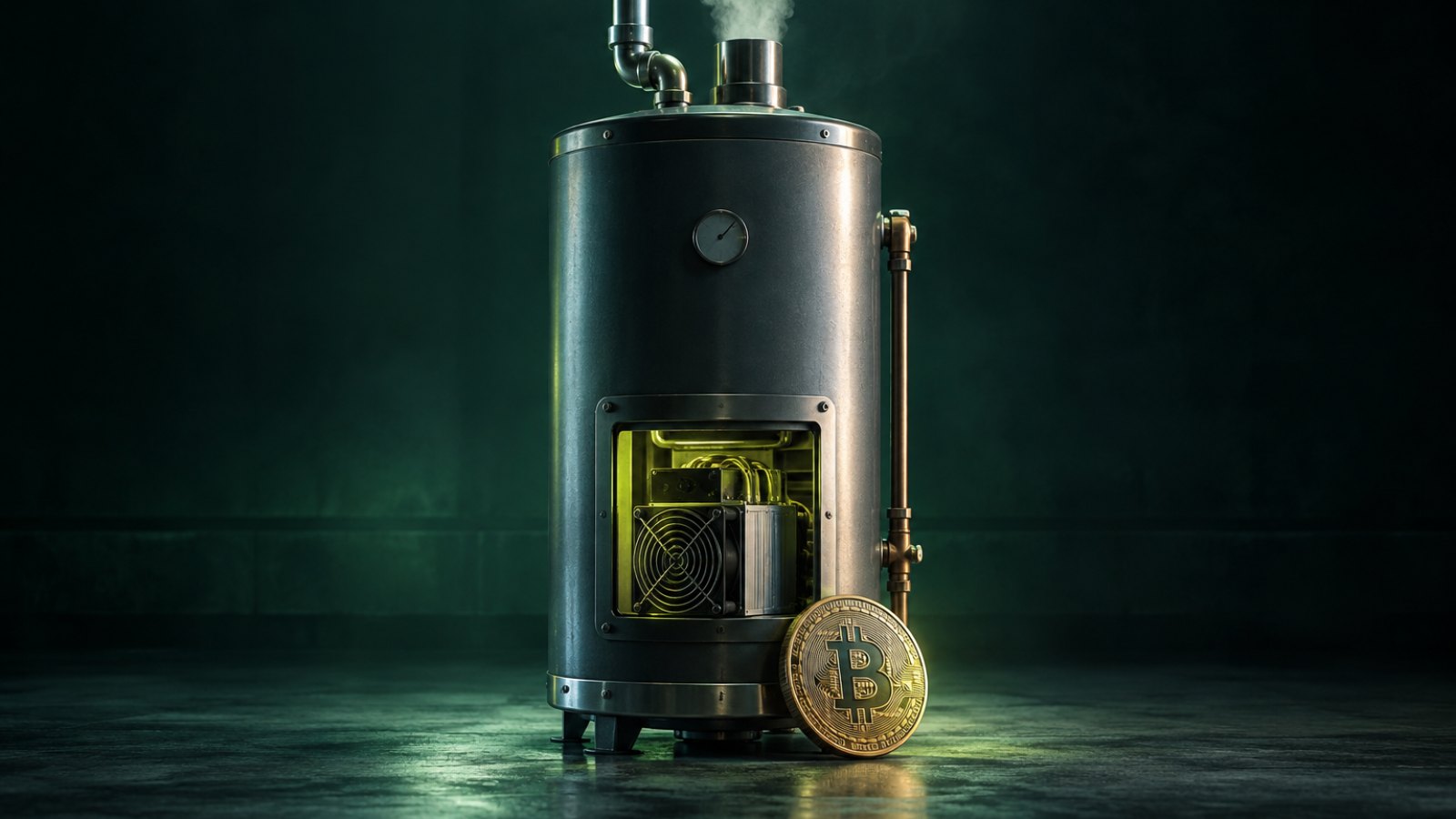
Heatbit Launches Bitwater: The Water Heater That Mines Bitcoin
Delaware-based company Heatbit announced Bitwater, a heating element designed for electric water heaters that uses ASIC chips to mine Bitcoin while warming the water, as reported by Criptoinforme. The device introduces a dual-purpose appliance aimed at residential consumers in the United States and Canada, with shipments scheduled to begin in the first quarter of 2027. Heatbit presented the product in its official post on X as the water heating element that mines bitcoin.
Replacing Standard Resistance With ASIC Chips
Bitwater functions as a direct replacement for the lower heating element in standard electric water tanks rather than operating as a standalone unit. According to Notebookcheck, the device utilizes 20 BM1370 ASIC chips to generate up to 34 terahashes per second of computational power.
The heating element draws up to 600 watts of power during operation. This sits significantly below the 4,500-watt capacity typical of conventional resistance heaters, as detailed by Notebookcheck. Heatbit states that the lower power draw allows the appliance to run continuously for longer periods with a utilization rate of up to 80 percent, providing thermal energy to the water while processing network transactions. Its chips are cooled by the water in the tank itself, eliminating the need for fans, and the device achieves an efficiency of 12 joules per terahash. Heatbit maintains that the user gets the same heat, the same electricity, and bitcoin on top because that energy would be spent heating water anyway.
Introducing Bitwater: the water heater element that mines Bitcoin.It screws into the electric tank you already have.Physically decentralized mining that runs no matter what 🧵Heat water. Mine Bitcoin. Same tank. pic.twitter.com/pRdxPbmpXM
Genesis Tier Devices Integrate with Standard Electric Storage Tanks
The initial batch of devices, designated as the Genesis tier, carries a price tag of $899, with subsequent manufacturing batches scheduled to retail for up to $1,299, according to Criptoinforme. DiarioBitcoin reported that the pre-orders are fully refundable. The hardware is built to integrate with electric storage tanks ranging from 30 to 80 gallons—approximately 114 to 303 liters—that feature a standard 1-inch NPSM threaded port.
O. Smith, Bradford White, GE, Kenmore, Rheem, Richmond, State, and Whirlpool. To mitigate wear, Notebookcheck reported that Bitwater incorporates a titanium anode to prevent corrosion, and the components in direct contact with water comply with the United States Safe Drinking Water Act under NSF/ANSI/CAN 372 standards.

Bitwater Operates in Solo Mining Mode via Heatbit Pool
Bitwater operates by default in solo mining mode through the Heatbit pool, though users retain the option to configure the device for alternative pools. The company also contemplates a group mining mode where the device pools its computational power with other participants and rewards are distributed proportionally among contributors.
To contextualize potential earnings, Hashrate Index recorded a global hashprice of $36.62 per PH/s daily on October 23, 2026. Scaled to Bitwater’s 34 TH/s capacity, that metric yields approximately $1.25 in gross daily revenue under continuous 24-hour operation, dropping to roughly $1 daily at an 80 percent utilization rate before electricity costs are deducted, according to calculations. DiarioBitcoin and Gadget Review noted that actual earnings remain unverified and subject to network difficulty adjustments, electricity pricing, and Bitcoin market volatility.