Heart Attack vs. Cardiac Arrest: Key Differences and Life-Saving Tips
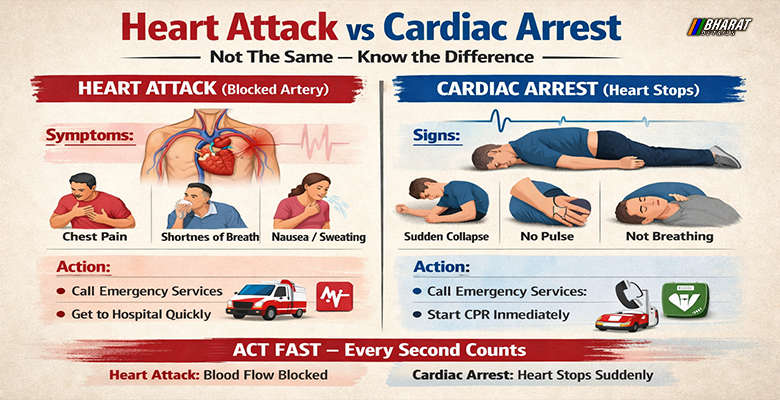
According to analysis published by the American Heart Association (AHA) and detailed in clinical reporting by Dr. Kaushal Kumar Harlalka via Outlook India, a heart attack is fundamentally a circulation problem involving blocked blood flow, whereas cardiac arrest represents an electrical malfunction where the heart suddenly stops beating. More than 417,000 cardiac arrest deaths occur each year in the United States, underscoring the urgent need for widespread public literacy regarding their divergent etiologies and urgent treatment pathways.
- A heart attack is caused by a blockage that stops blood flow, leading to death of heart muscle tissue.
- Cardiac arrest happens when the heart’s electrical system malfunctions, causing it to abruptly stop pumping blood.
- Immediate action—including calling 911 right away, performing CPR, and using an Automated External Defibrillator (AED)—is required for cardiac arrest survival.
Pathological Differences: Circulation Failure Versus Electrical Malfunction
A heart attack occurs when blood flow to the heart is stopped by a blockage. Per AHA data, this loss of blood supply leads directly to the death of heart muscle tissue. By contrast, cardiac arrest is an abrupt loss of heart function resulting from electrical instability. The heart’s lower chambers may enter arrhythmias such as ventricular fibrillation, where the tissue beats chaotically and doesn’t pump blood. In cardiac arrest, death can result quickly if proper steps aren’t taken right away.
While distinct, these two conditions are clinically interconnected. A heart attack can sometimes lead to cardiac arrest. However, cardiac arrest can also occur in individuals who may or may not have been diagnosed with heart disease.
Emergency Triage and the Chain of Survival
Immediate activation of emergency services, prompt delivery of conventional chest compressions, and the deployment of an AED are non-negotiable steps. An AED delivers a controlled electrical shock designed to restore a normal heart rhythm within a few minutes.

Future Trajectories in Resuscitation Science and Clinical Vigilance
*Disclaimer: The information provided in this article is for educational and scientific communication purposes only and does not constitute medical advice. Always consult with a qualified healthcare provider regarding any medical condition, diagnosis, or treatment plan.*