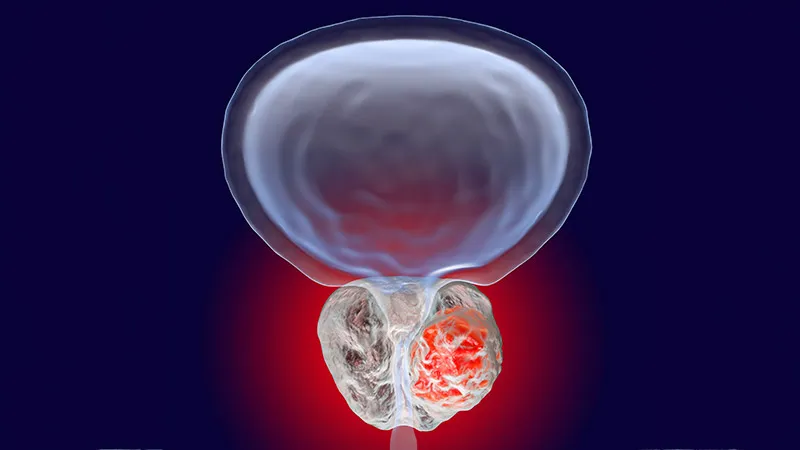
Focal Therapy for Prostate Cancer: New Long-Term Study Sparks Debate Over First-Line Use
A long-term study of 3,477 men treated at 14 UK centers found that only 0.13% died of prostate cancer after 10 years of focal therapy, Medscape reported.
The findings, published in European Urology, suggest that targeting cancerous parts of the prostate with heat or cold could be considered a first-line treatment for well-selected patients. However, the data revealed that 30% of those treated eventually required surgery or radiotherapy, and one third of patients needed additional prostate treatments following their initial sessions.
“probably the strongest evidence out there,” senior author Taimur Shah, MBBS, PhD, a consultant urologist at Imperial College London, said.
Medical specialists remain divided on the clinical utility of the procedure. While the low mortality rate is significant, critics argue the study may suffer from selection bias. According to Medscape, Otis Brawley, MD, an oncologist and epidemiologist at Johns Hopkins University, said that 81% of the patients in the study had lower-grade cancers, which calls into question whether the procedure amounts to overtreatment.
“Many of them probably would have done just fine with active surveillance,” said Tyler Seibert, MD, PhD, section chief for genitourinary cancers in radiation oncology at UC San Diego.
Current clinical guidelines do not recommend focal therapy for routine use. The National Comprehensive Cancer Network classifies it as an investigational therapy most appropriate for use within clinical trials. Joint guidelines from the American Urological Association and the American Society of Clinical Oncology specifically discourage its use for high-risk disease outside of research settings, according to reference.medscape.com.
Despite these guidelines, real-world practice in the United States shows a different trend. An analysis published in JAMA found that while only 1.3% of approximately 1.18 million US men diagnosed with prostate cancer between 2010 and 2023 received focal therapy, over half of those recipients had low- or high-risk disease.
Quoc-Dien Trinh, MD, MBA, chair in the Department of Urology at the University of Pittsburgh School of Medicine, said that about 2% of US men with low-risk cancer received the treatment in each year of the study period.
The debate often centers on how to manage intermediate-risk disease. Seibert questioned the rationale for using focal therapy in cases of unfavorable intermediate-risk disease, where standard care typically involves surgery, radiotherapy, or hormone therapy. “I’m not sure that I understand the rationale for talking about focal therapy there,” he said.
| Risk Category | Proportion of Study Group |
|---|---|
| Favorable intermediate-risk | 48% |
| Unfavorable intermediate-risk | 23% |
Proponents highlight the potential for improved quality of life due to lower side-effect rates. Shah reported an incontinence rate of approximately 1% following focal therapy, calling the difference in side effects compared to other methods “night and day.”
Future research aims to provide more definitive comparisons. A UK trial called PART, led by the University of Oxford, is currently assigning men to either focal therapy or standard treatment. Meanwhile, Seibert expects to open a randomized trial at UC San Diego next year to compare radiotherapy with focal therapy.
Imperial College London, where senior author Taimur Shah serves as a consultant urologist, operates five teaching hospitals across London through its Faculty of Medicine, integrating clinical practice with research.
The university became an independent institution in 2007 after formerly being a constituent college of the University of London, and its graduates and academics include 74 fellows of the Royal Society and 84 fellows of the Royal Academy of Engineering, reflecting its high standing in scientific research.
“We owe it to our patients to run randomized trials to compare,” said Seibert.