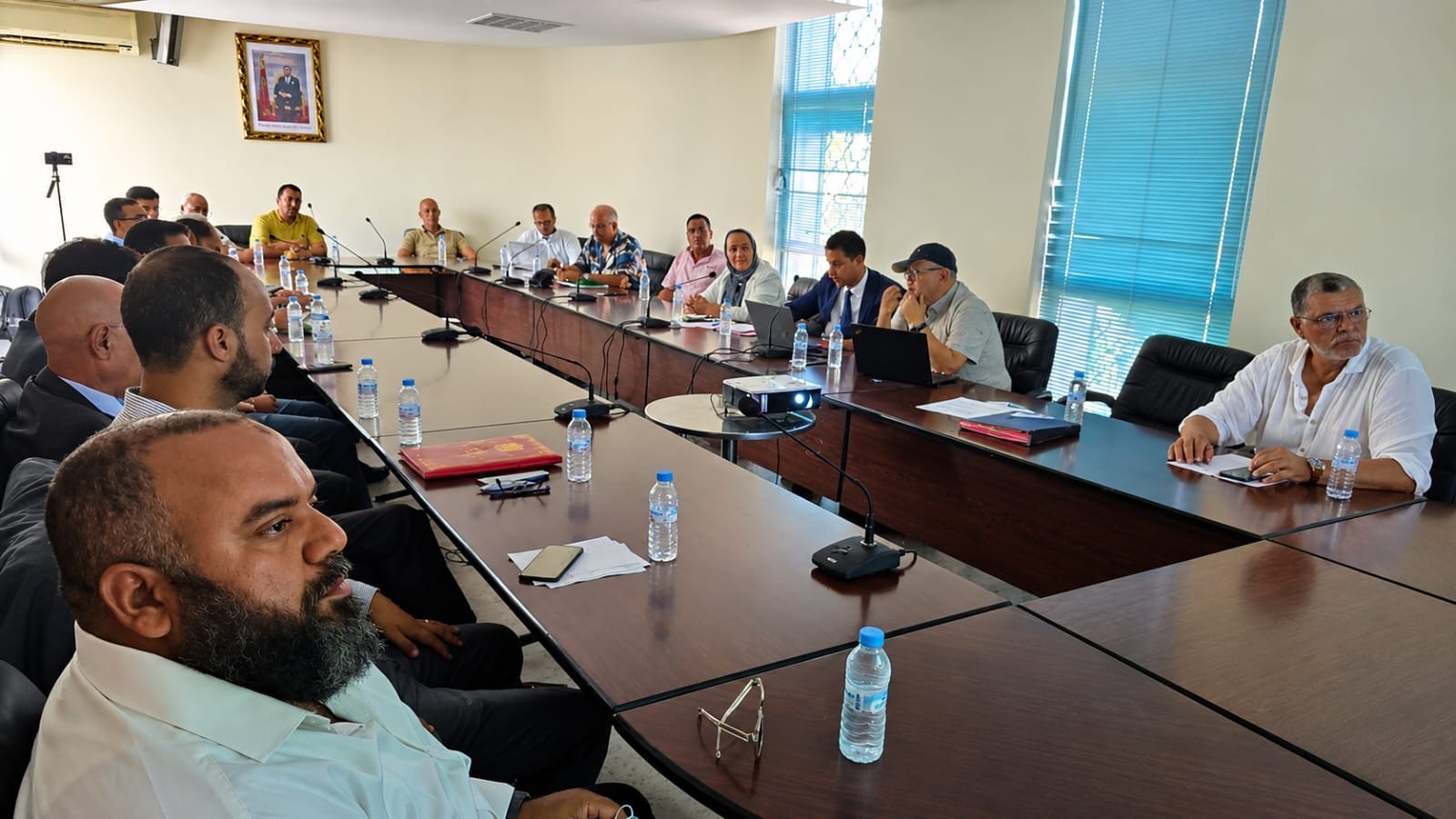
Hawd Assafi Association Calls Morocans Abroad to Boost Regional Development
Association Hawd Assafi is urging Moroccan authorities to integrate the coastal city of Safi into the planned high-speed rail network connecting Marrakech to Agadir, while simultaneously calling on Moroccans living abroad to invest directly in the region’s territorial development, according to reports from lopinion.ma and covering.info.
Pushing for High-Speed Rail Integration in Safi
The debate over regional infrastructure development intensified as members of Association Hawd Assafi formally submitted an official grievance to the governor of the province, according to covering.info. Ahmed Ghaïbi, representing the executive bureau of the association, delivered the document in person to highlight the pressing socio-economic necessity of routing the future High-Speed Train (TGV) through Safi.
According to covering.info, Safi represents a vital industrial, port, and energy hub for the Kingdom. The city is home to roughly one million inhabitants and houses heavy strategic assets, including the 1,300-hectare Safi Phosphate Hub, two international ports, and a thermal power plant that generates 27 percent of national electricity requirements. Additional regional manufacturing includes industrial units specializing in electrical cabling, gypsum processing, and aquaculture.
Proponents of the TGV expansion argue that omitting the city would isolate a crucial economic engine. Linking Safi to the national high-speed rail grid would directly bolster territorial cohesion, improve the competitive edge of the Atlantic littoral, and support national green mobility targets, as noted by covering.info. Furthermore, planners have floated a secondary Safi-Essaouira connector road initiative designed to alleviate severe traffic congestion and build local resilience against adverse climate events.
Economic Projections and Regional Geopolitics
Economic forecasts cited by covering.info suggest that connecting Safi to the high-speed rail line could generate an additional two to three points of national GDP growth. The project is also projected to trigger a major boom in local tourism and yield thousands of direct and indirect employment opportunities.
Advocates stress the deeper geo-economic and identity-based importance of the Atlantic coastline, which serves as the primary driver of Morocco’s blue economy. “Relinking Safi to the TGV is guaranteeing a single-speed Morocco, united and solidary,” Ahmed Ghaïbi stated, according to covering.info.
Mobilizing Moroccans Resident Abroad
Alongside infrastructure advocacy, lopinion.ma reports that Association Hawd Assafi is actively positioning the global Moroccan diaspora as essential partners in local territorial development. By encouraging overseas nationals to channel investments back into their home regions, the association aims to accelerate economic modernization and community resilience in Safi and surrounding areas.
Establishing robust local partnerships helps ensure that diaspora investments translate into long-term municipal growth and sustainable employment.
The convergence of high-speed rail advocacy and diaspora-led investment highlights a pivotal juncture for Safi’s administrative and economic planning.