
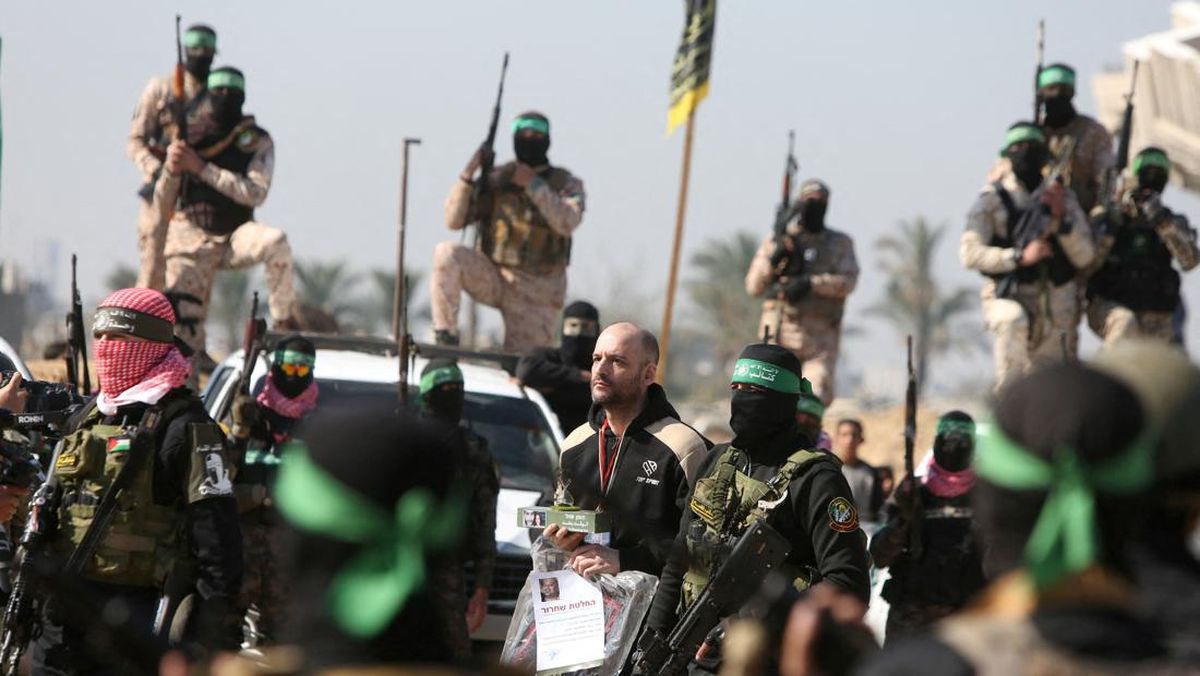
Hamas is now at the center of a structural shift involving the durability of the Israel‑Gaza ceasefire. The immediate implication is a recalibration of regional diplomatic leverage and the risk calculus for future hostilities.
The Strategic Context
Since the October 2023 war, the Israel‑Gaza front has been governed by a U.S.‑mediated ceasefire that separates an initial prisoner‑exchange and limited humanitarian relief (phase 1) from a yet‑unrealized reconstruction and political arrangement (phase 2). The broader Middle‑East environment is defined by a multipolar contest in which regional powers (Qatar, turkey, Egypt) seek to preserve influence thru mediation, while external actors (the United States, European states) aim to contain escalation and maintain strategic stability. The Doha Forum and other diplomatic venues have become arenas for competing narratives about the ceasefire’s viability, reflecting a structural tension between humanitarian imperatives and security concerns.
Core Analysis: Incentives & Constraints
Source Signals: Hamas leader Khaled Meshaal publicly pledged not to launch future attacks on Israel, outlined steps to prevent such attacks, rejected full disarmament as a loss of identity, dismissed any post‑war Gaza authority that excludes Palestinians, and emphasized the need for increased humanitarian aid to enable phase 2 of the ceasefire. He also noted opposition to Tony Blair’s participation in a proposed “Peace Council” and highlighted concerns from Qatar, Turkey, and Egypt about ceasefire erosion.
WTN Interpretation: Hamas’s verbal restraint serves multiple strategic purposes. First, it seeks to extract maximal humanitarian assistance and political concessions by positioning itself as a responsible actor, thereby strengthening its bargaining power with mediators. Second, the refusal to disarm preserves internal legitimacy and deters rival factions, ensuring organizational cohesion. Third, rejecting a non‑Palestinian governance model safeguards Hamas’s claim to represent Palestinian sovereignty, limiting external attempts to sideline it. The opposition to the “Peace Council” reflects broader Arab‑Muslim resistance to perceived Western imposition, which hamas can leverage to rally regional support. Constraints include Israel’s control over aid flows, the limited capacity of the United nations and NGOs to meet agreed aid volumes, and the fragile security environment that could trigger violations and undermine Hamas’s credibility.
WTN strategic Insight
“Hamas’s public restraint is less a peace gesture than a calculated pause to lock in humanitarian leverage and preserve its political monopoly.”
Future Outlook: Scenario Paths & Key Indicators
Baseline Path: If Israel continues to honor the humanitarian aid commitments of phase 1, and regional mediators (Qatar, Turkey, Egypt) maintain pressure on both sides, the ceasefire will hold through the next 3‑6 months, allowing Hamas to negotiate incremental concessions for phase 2 while preserving its non‑disarmament stance.
Risk Path: If aid deliveries fall considerably short of agreed levels,or if Israel resumes large‑scale operations that trigger civilian casualties,internal pressure on Hamas could force a return to armed resistance,destabilizing the ceasefire and prompting a broader regional escalation.
- Indicator 1: Monthly reports from UNRWA and the World Food Program on the volume of humanitarian aid entering Gaza versus the target set in the ceasefire agreement.
- Indicator 2: Statements and diplomatic activity from Qatar’s prime minister and the foreign ministers of Turkey and Egypt at the next Doha Forum or similar regional summit, especially any shifts in tone regarding “critical moment” language.
