
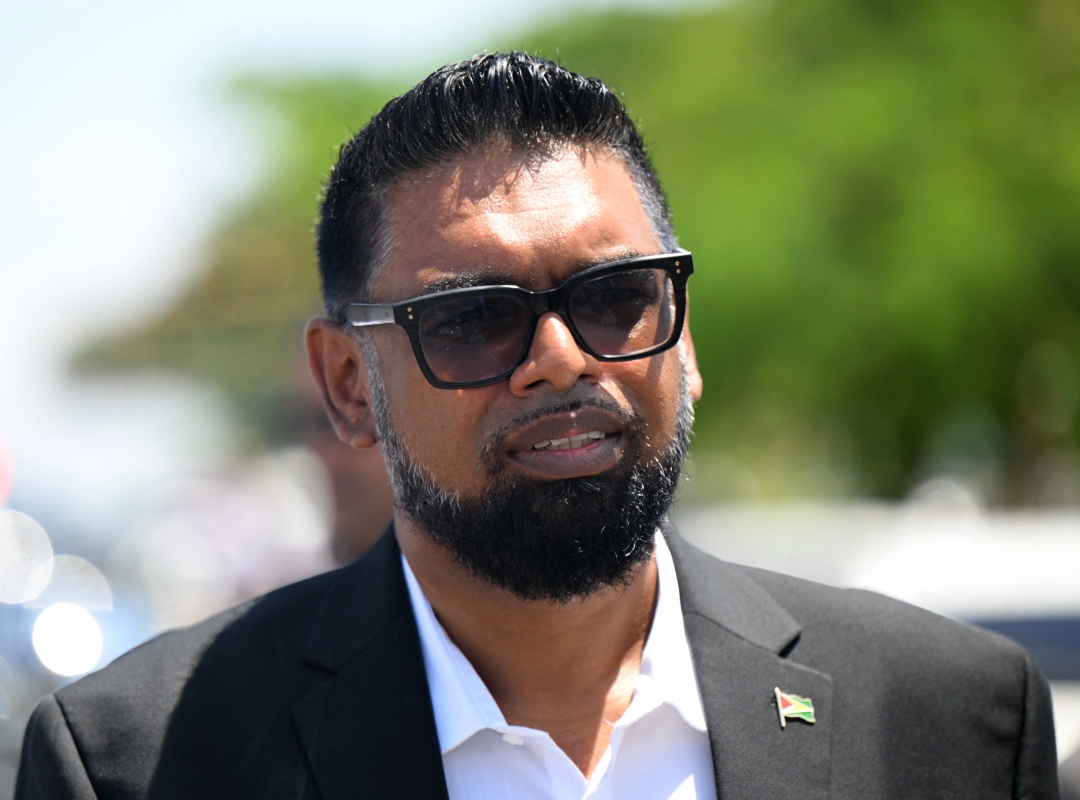
Irfaan Ali Secures Second Term as President of Guyana
Guyana’s President Irfaan ali has been re-elected for a second consecutive term, confirmed by the first official bulletin released by the electoral authority five days after the elections on Saturday. According to the official results, Ali’s Progressive Party/Civic (PPP/C) garnered 242,497 valid votes, representing 55% of the total electorate.
Ali had preemptively declared victory on Wednesday in statements to AFP. The 45-year-old center-left leader pledged to utilize Guyana’s burgeoning oil wealth to lift the nation’s 850,000 inhabitants out of poverty. He also faces the challenge of navigating the ongoing dispute over the Esequibo region, a territory rich in oil and minerals claimed by neighboring Venezuela.
The official Gazette confirmed the result,stating the Guyana Electoral Commission (GECOM) “told the presidential candidate of the PPP/C,Dr. Mohamed Irfaan Ali, elected president.”
The newly formed “Win” party, founded by businessman Azruddin Mohamed (nicknamed the “guyanese Trump”), came in second place with 24.8% of the vote. the conventional APNU, representing the Afro-descendant population, secured third place with 17.7% of the suffrage.
Ali, representing the majority indian-origin community, will begin a second five-year term amidst escalating tensions with the Venezuelan government of Nicolás Maduro, which asserts sovereignty over the Esequibo region and held contested elections there in May appointing authorities to the area. The United States currently offers support to guyana,coinciding with heightened tensions between the US and Venezuela following the deployment of warships in the caribbean for anti-drug operations.
The dispute over Esequibo dates back centuries but intensified in 2015 following the discovery of important oil reserves. Guyana currently possesses the largest per capita oil reserves globally, with oil exploitation beginning in 2019. Production is projected to reach one million barrels per day (b/d) by 2030, up from the current 650,000 b/d.
This petroleum wealth has quadrupled Guyana’s state budget to $6.7 billion in 2025 within five years, driving the highest economic growth in Latin America at 43.6% in 2024, with further increases anticipated.”We have a large majority and we are ready to move forward with the country,” Ali stated in a brief telephone conversation with AFP.
In terms of parliamentary portrayal, the PPP/C secured 36 seats in the National Assembly, while “Win” obtained 16 seats. The Alliance for the National Unity (APNU) won 12 seats, and the Guyana Forward Movement (FGM) secured one seat.Guyana initially appealed to the International Court of Justice (ICJ) in 2018 to validate an 1899 award establishing the current borders.Though, Venezuela rejects the ICJ’s jurisdiction, advocating for the 1966 Geneva Agreement as a basis for a negotiated resolution.
The electoral process in Guyana is logistically complex and time-consuming due to the country’s challenging terrain, with over 95% of its territory covered by tropical jungle.
