Gut Microbiome Changes Predict Parkinson’s Disease Risk and Progression
The landscape of neurodegenerative medicine is undergoing a paradigm shift as clinicians move beyond reactive symptom management toward proactive, biological risk stratification. New evidence published in Nature Medicine confirms that the gut microbiome serves as a critical, non-invasive biomarker for Parkinson’s disease, potentially allowing for the identification of at-risk individuals years before the onset of motor impairment.
Key Clinical Takeaways:
- Microbial signatures in the gut change in a consistent, coherent pattern that tracks from healthy individuals to those with genetic predisposition and finally to symptomatic Parkinson’s patients.
- Dietary diversity demonstrates an inverse association with pathogenic microbiome alterations, suggesting that nutritional intervention may serve as a modifiable factor in disease risk management.
- Extracellular vesicles in the blood provide a real-time, non-invasive mechanism for tracking the gut-brain axis, offering a pathway for monitoring therapeutic efficacy in future clinical trials.
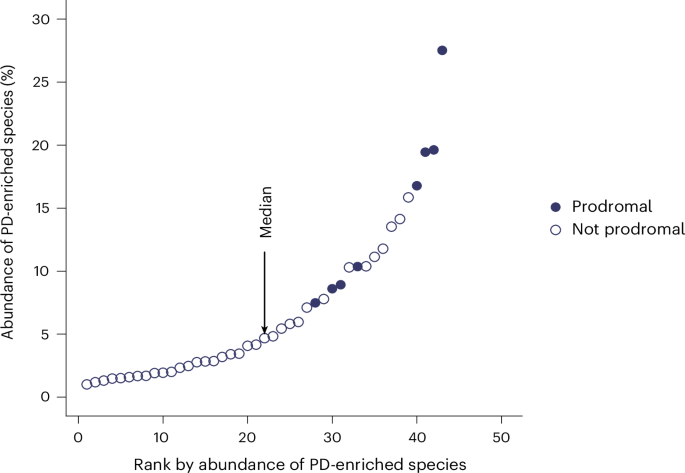
Parkinson’s disease pathogenesis has long been linked to the gut-brain axis, yet the ability to quantify this relationship in a clinical setting has remained elusive. The study, led by researchers at University College London, utilized a multi-cohort observational approach to analyze fecal samples from 271 patients with established Parkinson’s, 43 asymptomatic carriers of the GBA1 variant—a genetic marker associated with a significantly elevated risk of disease—and 150 healthy controls. The findings were validated across an international cohort of over 1,400 participants, reinforcing the consistency of these microbial signatures across diverse dietary and cultural demographics.
The biological mechanism underlying this discovery involves the systemic communication between the digestive tract and the central nervous system. Extracellular vesicles, slight particles that carry proteins and genetic material, appear to act as messengers that cross the blood-brain barrier. By measuring these vesicles, researchers can observe how the body responds to prebiotic interventions in real-time, effectively creating a “snapshot” of patient health that bypasses the need for invasive diagnostic procedures. This development is essential for the future of precision neurology, as it allows for the evaluation of new therapies in a controlled clinical research environment.
This research, which received support from institutional research grants, emphasizes the importance of early diagnostic vigilance. For individuals with a family history of movement disorders or those carrying genetic variants linked to neurological decline, the current standard of care is rapidly evolving. It is imperative that patients at risk seek comprehensive evaluations from board-certified neurologists who specialize in early-stage neurodegenerative screening. Early detection remains the most effective tool in mitigating long-term morbidity and preserving quality of life.
Evaluating the Gut-Brain Axis in Clinical Practice
The data suggests that the gut microbiome does not merely reflect the presence of disease; it actively participates in the progression of the pathogenesis. The observation that asymptomatic GBA1 carriers exhibit microbial patterns resembling an “intermediate” stage of Parkinson’s disease provides a window of opportunity for early intervention. While large-scale, double-blind, placebo-controlled trials are required to determine the long-term impact of microbiota-modulating therapies, the current evidence base supports a shift toward integrated, multi-disciplinary care.

Healthcare providers should consider the following diagnostic and therapeutic considerations when managing patients with suspected neurodegenerative risk:
| Diagnostic Focus | Clinical Utility | Actionable Step |
|---|---|---|
| Microbiome Profiling | Identifies dysbiosis linked to neurodegeneration | Consult specialized diagnostic laboratories |
| Extracellular Vesicle Analysis | Tracks real-time gut-brain signaling | Monitor via biotech research centers |
| Nutritional Counseling | Mitigates risk through dietary diversity | Refer to registered clinical nutritionists |
The integration of these diagnostic capabilities into routine practice is not without regulatory and logistical hurdles. As the medical community adopts these biomarkers, healthcare compliance consultants play a vital role in ensuring that diagnostic centers meet the rigorous standards required for longitudinal patient tracking. Ensuring that these high-tech screenings are delivered within a framework of evidence-based medicine protects patients from unsubstantiated claims and ensures that diagnostic data is translated into meaningful clinical outcomes.
Looking toward the horizon, the ability to modulate the microbiome through targeted prebiotic intervention may eventually become a cornerstone of preventative neurology. However, the complexity of the human microbiome requires a measured, scientific approach. As we continue to bridge the gap between bench research and bedside care, the focus must remain on validated, peer-reviewed diagnostic tools. Patients and providers are encouraged to engage with established academic medical centers to access the most current protocols for neurodegenerative risk assessment, and management.
Disclaimer: The information provided in this article is for educational and scientific communication purposes only and does not constitute medical advice. Always consult with a qualified healthcare provider regarding any medical condition, diagnosis, or treatment plan.