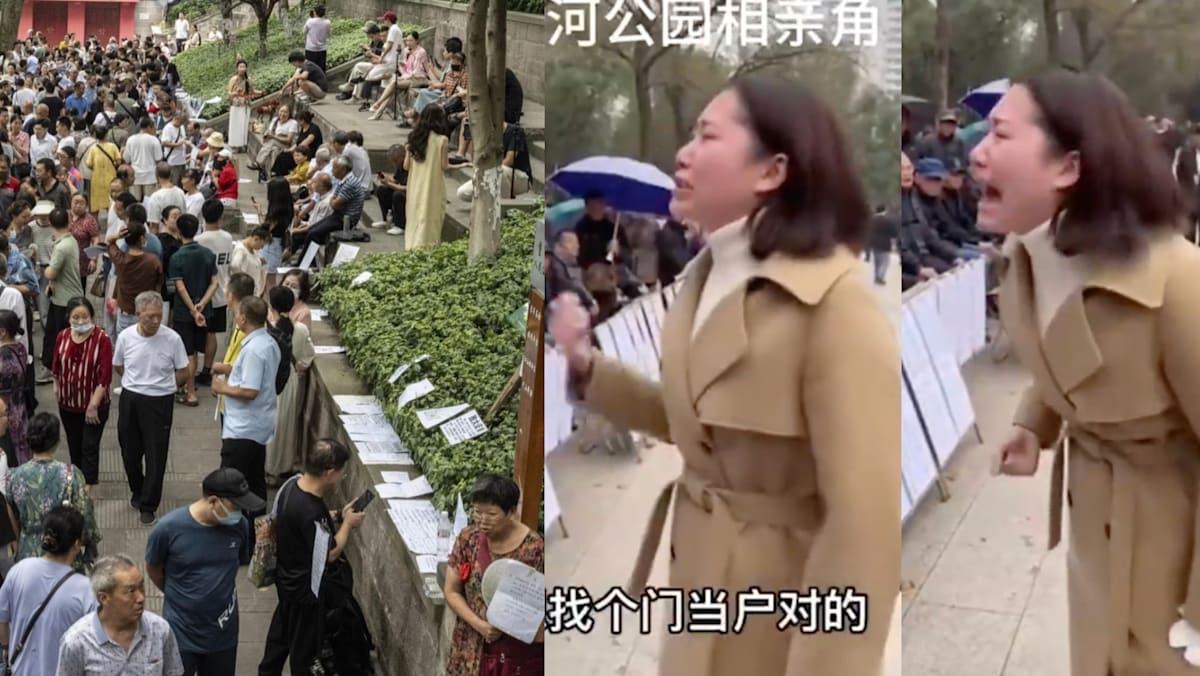
Guangzhou Woman’s High Socail Status Dented by Age
A 38-year-old woman in Guangzhou publicly collapsed in tears at a high-profile matchmaking event after being rejected by multiple potential partners, exposing deep-seated ageism in China’s marriage market. The incident, captured on video and widely shared, has reignited debates over gender equality and economic pressures on unmarried women in their late 30s. Local officials confirm the event was organized by a state-approved matchmaking agency, while marriage experts warn of a growing “marriage gap” between men and women over 35.
Why Did This Meltdown Happen—and What Does It Reveal About China’s Marriage Crisis?
The woman, whose identity has been withheld by local media, was described by organizers as a “top-tier” match—educated, financially stable, and physically fit. Yet her age became an insurmountable barrier. “In Guangzhou’s matchmaking circles, a woman over 35 is often seen as a liability,” said Dr. Li Wei, a sociologist at Sun Yat-sen University. “The pressure to marry by 30 is intense, but the reality is that many men in their late 30s are still prioritizing career or waiting for a ‘perfect’ match—while women face social stigma for being single past that age.”
“The marriage market is a brutal meritocracy where women’s value drops sharply after 35. This isn’t just about personal failure—it’s a systemic issue tied to China’s economic policies and gender imbalances.”
The incident occurred at the Guangzhou Municipal Bureau of Civil Affairs-approved “Golden Match” event, where over 500 singles gathered on June 18, 2026. Organizers told World Today News that the woman had been introduced to three potential partners before her emotional breakdown, all of whom cited her age as a dealbreaker. “We don’t discriminate, but the reality is that many men in this age group are looking for younger partners,” said Zhang Mei, a matchmaker at the event. “It’s a cultural issue, not a policy one.”
How Bad Is the “Marriage Gap” in China—and Who’s Most Affected?
China’s gender imbalance is well-documented: the country has 30-40 million more men than women due to decades of sex-selective abortions and a historical preference for sons. But the consequences for women over 35 are acute. According to the National Bureau of Statistics, the divorce rate for women aged 35-39 surged 22% in 2025, while the number of women over 40 registering for marriage dropped 18% year-over-year.
| Age Group | Marriage Registration Rate (2025) | Divorce Rate (2025) |
|---|---|---|
| 25-29 | 68.4% | 12.1% |
| 30-34 | 52.7% | 18.3% |
| 35-39 | 35.6% | 22.0% |
| 40+ | 17.2% | 25.8% |
The data paints a stark picture: women in their late 30s are caught between societal expectations and economic realities. Guangzhou, as a financial hub, exacerbates the problem. The city’s 2026 Gender Equality Report notes that 42% of single women aged 35-40 report feeling “invisible” in the marriage market, while 68% of men in the same age group admit to prioritizing younger partners.
What Legal and Social Safeguards Exist—for Those Who Need Them?
China’s Marriage Law of 2001 (last amended in 2020) prohibits discrimination based on age, but enforcement is rare. “The law is clear, but cultural norms override it,” said Attorney Chen Jing, a family law specialist in Guangzhou. “Women in this situation often face harassment from matchmakers or even their own families, who pressure them to ‘settle’ before it’s too late.”
“We see cases where women are denied housing loans or job promotions because of their marital status. The legal system isn’t equipped to handle this intersection of gender and age discrimination.”
For those navigating this crisis, specialized family law attorneys are becoming essential. Many are now offering pro bono consultations for women facing matchmaking discrimination, while counseling services report a 40% increase in clients over 35 seeking support for “marriage anxiety.” The Guangzhou Women’s Federation has also launched a hotline for single women over 35, though capacity remains limited.
How Is Guangzhou Responding—and What’s Next?
Local authorities have framed the incident as an “isolated case,” but marriage experts argue it’s symptomatic of a broader crisis. The Guangzhou Municipal Government announced a new “Marriage Support Initiative” on June 19, 2026, aimed at reducing ageism in matchmaking. Key measures include:

- Mandatory age-neutral training for matchmakers, with penalties for discriminatory behavior.
- Expanded government-subsidized counseling for singles over 35.
- A pilot program pairing women over 35 with men who explicitly seek “life partners” over younger dates.
However, critics question whether these steps go far enough. “The problem isn’t just matchmakers—it’s the entire ecosystem,” said Dr. Wang Hua, a gender studies professor at Peking University. “We need systemic change, not just PR campaigns.”
What This Means for Women—and the Professionals Helping Them
The Guangzhou meltdown is more than a viral moment—it’s a flashpoint for a demographic time bomb. As China’s working-age population shrinks, the pressure on women to conform to outdated marriage timelines will only intensify. For those affected, the path forward requires:
- Legal recourse: Women denied matches due to age can file complaints with the Guangzhou Civil Affairs Bureau or seek representation from anti-discrimination law firms.
- Financial planning: With marriage often tied to housing and social security benefits, certified financial planners specializing in single women’s asset protection are in high demand.
- Community support: Organizations like Guangzhou’s Single Women’s Network provide networking, legal aid, and emotional support for those navigating the marriage market alone.
The incident also underscores a harsh reality: in a society where marriage is still the default life goal, ageism isn’t just personal—it’s economic. For women in their late 30s, the stakes couldn’t be higher. And for the professionals equipped to help them, the opportunity to lead this change has never been clearer.
Editorial Kicker: The woman in Guangzhou didn’t just lose a match—she exposed a system. The question now isn’t whether this will change, but how quickly. For those already grappling with the fallout, the answer lies in the verified professionals who can turn rejection into resilience.