
2026/01/11 22:36:10
## Greenland Rejects Trump’s Advances: A Nation Steadfast to Chart It’s Own Course
The prospect of a U.S. takeover of Greenland, once again raised by former President Trump, is meeting with staunch resistance from the island’s residents. despite renewed interest from Washington, fueled by strategic concerns and resource acquisition, the people of Greenland are making it clear: they want to determine their own future, and it does not involve becoming part of the United States.This article delves into the history of these ambitions, the current situation, and the unwavering determination of the Greenlandic people to maintain their autonomy.### A History of Interest: From 1867 to the Present Day
The idea of the United States acquiring Greenland is not new. As early as 1867, the U.S. explored the possibility of purchasing the island from Denmark . A secret offer was even made in 1946, revealed decades later, demonstrating a long-held, albeit intermittent, American interest. Though, it was during the trump administration that this ambition resurfaced with particular intensity.
In 2019, Trump publicly expressed his desire to buy Greenland, describing it as a “large real estate deal” . While the initial offer was rebuffed by Denmark, the idea has persisted, resurfacing in recent weeks with discussions of potential financial incentives to sway public opinion.According to a recent report by Reuters, the White House has considered offering Greenlandic residents between $10,000 and $100,000 each , potentially totaling $5.7 billion for the entire population of approximately 57,000.
### Strategic Importance and Resource Potential
The renewed U.S.interest in Greenland is driven by a combination of strategic and economic factors. Geopolitically, Greenland’s location is of increasing importance. Trump voiced concerns about Russian and Chinese activity in the region,highlighting the need for a stronger U.S.presence .
Beyond its strategic location,Greenland is rich in critical minerals,including rare earth elements essential for modern technology and defense industries . Access to these resources would be a significant boon for the United States,reducing its reliance on other nations for these vital materials. The potential expansion of U.S.territory by 2.16 million square kilometers – surpassing even the Louisiana Purchase – also holds symbolic appeal for some.
### “We Want to Be Free”: The Greenlandic Response
Despite the potential financial incentives and strategic considerations, the Greenlandic people are overwhelmingly opposed to being acquired by the United States. A poll conducted a year ago revealed that 85% of Greenlanders do not want to become part of the U.S. , with only 6% expressing support.
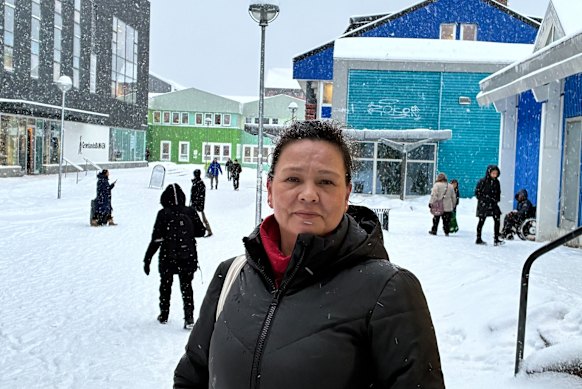
This sentiment is echoed in everyday conversations across the island. “He should take care of his own people,” says Søholm, a resident of Nuuk, reflecting a common feeling that Trump’s attention would be better focused on domestic issues. Aviaq Fontain Markussen,an 18-year-old grocery store worker,expresses a more direct sentiment: “I hate Trump with my whole being… We all hate this. we don’t want him to buy Greenland or be our president.”
The desire for self-determination is palpable. Carl Petersen, a retiree in Nuuk, succinctly states the prevailing attitude: “Even if you offer $500,000 each, or $1 million, we don’t want their money. We want to be free.” This strong sense of national identity, rooted in their Inuit heritage and a growing desire for independence, is proving to be a formidable obstacle to any potential U.S. acquisition.
### A Nation Forging Its Own Path
greenland is not simply a vacant territory awaiting a buyer. It is indeed a self-governing territory within the Kingdom of Denmark, with its own parliament and government. The five political parties represented in the Greenlandic parliament have issued a joint statement, reaffirming their commitment to cooperation with the U.S. and Western nations, but firmly requesting that the U.S. “end its disrespect” for their country .
their message is clear: “We will not be Americans, we will not be danes, we are greenlanders.” This declaration underscores the growing movement towards full independence, a goal shared by many Greenlanders, as expressed by Susan Bech, who hopes “we’ll be autonomous one day.”
### The Future of Greenland: Independence and International Relations
While talks continue between U.S. and Danish officials,with Secretary of State Marco Rubio scheduled to meet with his Danish counterpart,the current situation suggests that American control of Greenland remains highly unlikely. The unwavering opposition of the Greenlandic people, coupled with the Danish government’s stance, presents a significant barrier to any potential acquisition.
The future of Greenland appears to lie in strengthening its self-governance and pursuing a path towards full independence. This will require navigating complex political and economic challenges, but the determination of the Greenlandic people suggests they are prepared to chart their own course, free from external interference. The international community, including the United States, will need to respect this aspiration and engage with Greenland as a sovereign entity, recognizing its right to self-determination.
