
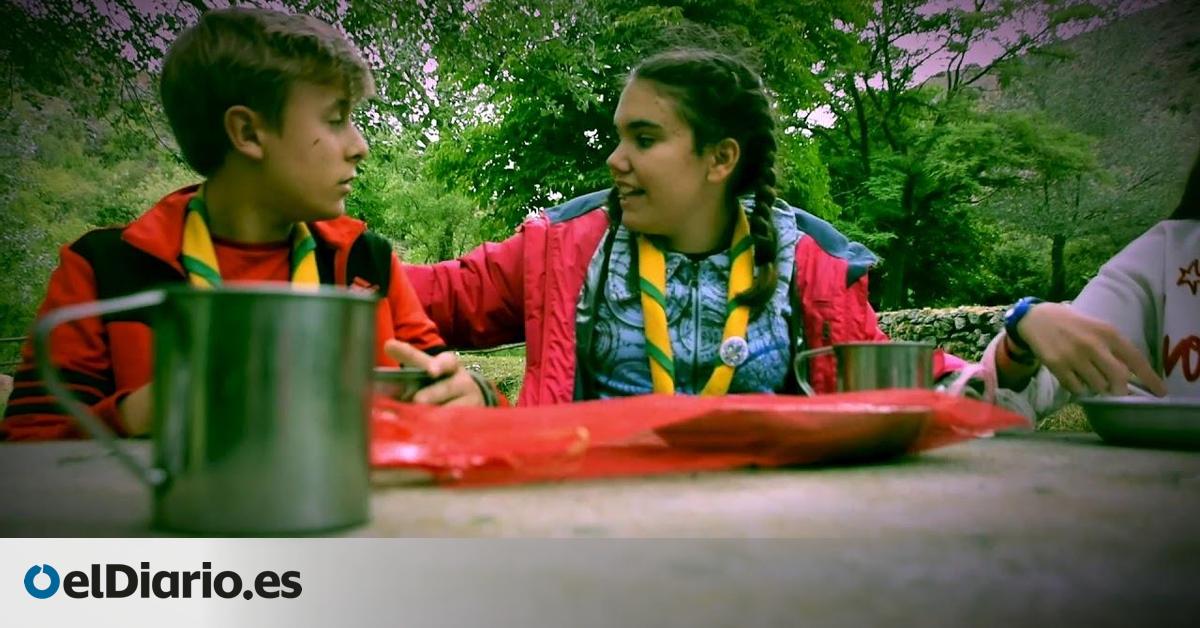
A group of young scouts in Valareña, a small town in the province of Zaragoza, Spain, recently reclaimed the local sacristy, a space traditionally used for religious objects and vestments. The act, reported locally, highlights a continuing, if often overlooked, global presence of scouting organizations and their evolving role in communities worldwide.
The origins of these groups can be traced to the dawn of the 20th century, with the emergence of the modern scouting movement. In 1907, British military officer Robert Baden-Powell organized an experimental camp on Brownsea Island, England. This experience, and the subsequent publication of his book, Scouting for Boys, laid the groundwork for a youth movement centered on outdoor life, discipline, camaraderie, and the development of core values.
The movement quickly gained traction, but initially catered exclusively to boys. This exclusion proved short-lived. During a large scout gathering in London in 1909, a group of girls appeared in uniform, requesting participation. This wasn’t merely a symbolic gesture; it was a direct challenge to the existing structure. The pressure led to the creation of a parallel organization for girls, spearheaded by Agnes Baden-Powell, Robert’s sister, resulting in the formation of the Girl Guides in the United Kingdom.
The concept rapidly spread across the Atlantic. In 1912, Juliette Gordon Low founded the first American troop in Savannah, Georgia. Though modest in size—initially comprising just eighteen girls—this marked the beginning of what would become the Girl Scouts of the USA, one of the most influential youth organizations in the world.
While often associated with cookie sales—a practice that historically served as a significant fundraising and entrepreneurial learning tool—the movement’s scope extends far beyond. From its inception, the Girl Scouts championed what was, for the era, a revolutionary approach: empowering girls through leadership training, financial literacy, decision-making skills, and community service.
At a time when societal norms largely confined women to domestic roles, the Girl Scouts were learning essential skills like first aid, wilderness navigation, and teamwork. This represented a substantial departure from traditional expectations.
Over time, the movement expanded internationally, culminating in the establishment of a World Association of Girl Guides and Girl Scouts, uniting female scouting organizations from over 150 countries. While names vary—Girl Guides, Girl Scouts, guides, and explorers—the underlying principles remain consistent: values-based education, autonomy, and social engagement.
February 22nd holds particular significance for both scouting movements. It marks the birthday of Robert Baden-Powell and is celebrated globally as World Scout Day. Simultaneously, it is recognized by Girl Guides and Girl Scouts worldwide as World Thinking Day, a day dedicated to strengthening the global connection among members.
The recent reclamation of the sacristy in Valareña, is not an isolated incident. It is part of a continuing narrative—a legacy of over a century of history, of girls who sought their own space within a movement initially designed for boys, and who ultimately reshaped it entirely.
As demonstrated by the Girl Scouts, this wasn’t simply an adjunct to the original scouting movement. It was—and remains—a quiet revolution in green uniform.
