
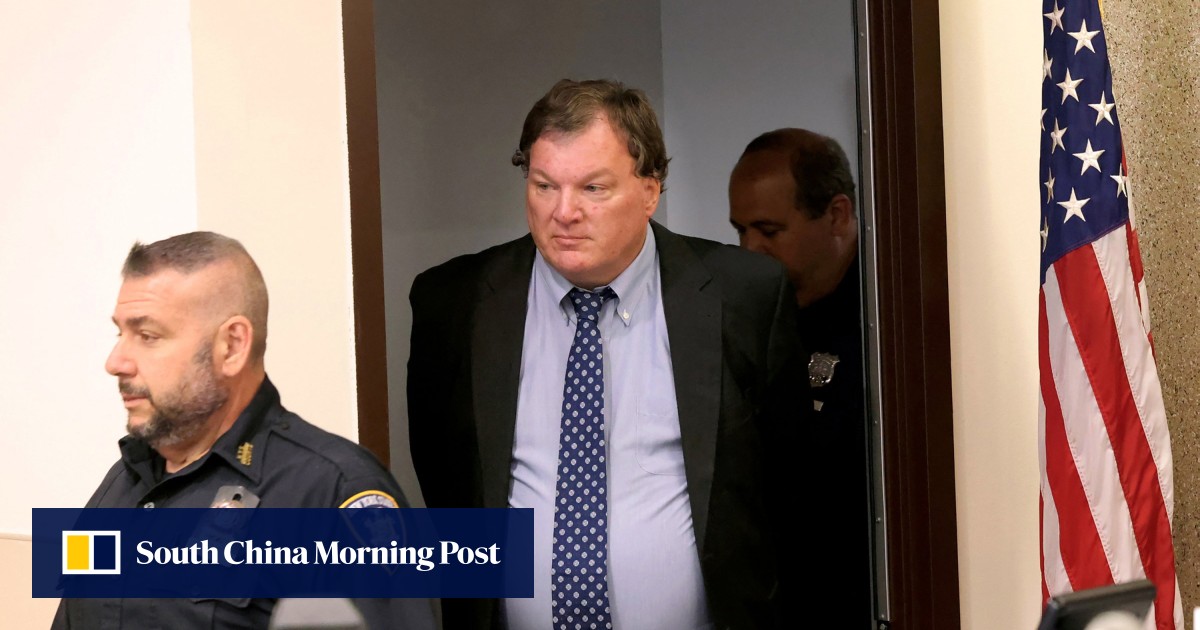
Gilgo Beach Serial Killer Rex Heuermann Pleads Guilty to Eight Murders
Rex Heuermann, a 62-year-old architect, pleaded guilty on April 8, 2026, to the murder of seven women and admitted to killing an eighth in the Gilgo Beach serial killings. The Long Island resident will face life without parole for crimes spanning from 1993 to 2010 in Suffolk County, New York.
The courtroom was a pressure cooker of emotion on Wednesday. For the families of the victims, the day represented a collision of agonizing grief and long-awaited resolution. As Heuermann entered his pleas, the room—packed with reporters, law enforcement, and weeping relatives—witnessed the final collapse of a facade maintained for decades. Heuermann, a resident of Massapequa Park who worked as an architect in Manhattan, had successfully bifurcated his existence: one side a professional citizen, the other a predator who hunted in the shadows of Long Island.
This case is not merely a legal victory. it is the closing of a chapter on one of the most haunting periods in New York’s criminal history. The sheer duration of the crimes—spanning nearly two decades—highlights a systemic failure to protect vulnerable populations. For those left behind, the legal resolution is only the first step in a lifelong process of healing. Navigating the aftermath of such profound trauma often requires the guidance of specialized mental health professionals and grief counselors who understand the unique complexities of serial crime victimization.
The Geography of Terror: Ocean Parkway
The horror of the Gilgo Beach killings is inextricably linked to the landscape of southern Suffolk County. The primary crime scene was not a single location, but a stretch of the Ocean Parkway, a transport route characterized by remote shrubbery, marshes, and dense trees. It was here that the remains of ten victims were discovered, buried in a manner that suggested a calculated attempt to hide them in plain sight.
The discovery process was a slow, agonizing revelation. In December 2010, police found the remains of four women—Melissa Barthelemy, Maureen Brainard-Barnes, Megan Waterman, and Amber Lynn Costello. Known as “The Gilgo Four,” these women were found within a quarter of a mile of each other, concentrated near the beach town of Gilgo. This cluster of bodies pointed to a killer who felt a territorial comfort with the area.
The investigation expanded in March and April 2011, when six additional sets of remains were uncovered across both Suffolk and Nassau counties. These victims were believed to have been murdered prior to the Gilgo Four, extending the timeline of the killer’s activity back to 1993.
The legal resolution establishes a definitive end to the mystery of the Gilgo Beach killings, but the geographical scars on the Long Island community remain.
The catalyst for these discoveries was the May 2010 disappearance of Shannan Gilbert in Oak Beach. While Gilbert’s remains were found approximately nine miles northeast of the other victims, her disappearance prompted the police search that eventually uncovered the mass graves along the parkway. Gilbert, like many of the other victims, engaged in sex work and advertised her services on Craigslist, a detail that became a critical thread in the profiling of the perpetrator.
The Architect’s Double Life
Rex Heuermann’s conviction exposes the terrifying reality of the “hidden” predator. To his colleagues in Manhattan and his neighbors in Massapequa Park, he was an architect—a profession defined by structure, precision, and planning. This same meticulous nature was mirrored in his crimes. Heuermann did not just kill; he curated a dumping ground, returning to the same stretch of shoreline for years.
The legal specifics of his plea reflect the severity of his actions. Heuermann pleaded guilty to a combination of first-degree and second-degree murder. Specifically, the convictions include three counts of first-degree murder and seven counts of second-degree murder, including three lesser included offenses and four individual charges. By admitting to the murder of an eighth woman, Heuermann has provided a grim accounting of his reach.
For the families, the admission of these crimes serves as a formal validation of their loss. However, the process of seeking justice in cases of this magnitude is often a logistical and emotional minefield. Many families in similar positions rely on criminal law attorneys to navigate the complexities of victim impact statements and the intricacies of the sentencing phase to ensure the perpetrator never returns to society.
A Legacy of Vulnerability
The Gilgo Beach killings underscore a recurring tragedy in serial homicide: the targeting of individuals whose societal standing makes them “invisible.” The victims’ reliance on Craigslist for sex work provided the killer with a pool of targets who were less likely to be missed immediately or whose disappearances might be dismissed by authorities.

This pattern of targeting marginalized women has prompted a broader conversation about municipal safety and the protection of sex workers. The failure to connect the dots between these disappearances for nearly twenty years suggests a need for better inter-jurisdictional communication between Nassau and Suffolk counties. To prevent such gaps in the future, regional governments are increasingly investing in civic oversight organizations and integrated police databases to track missing persons across county lines.
The timeline of the killings—from 1993 to 2010—shows a killer who operated with impunity for seventeen years. The fact that he lived a mundane, professional life during this entire period serves as a warning about the nature of sociopathy and the limits of social profiling.
As Rex Heuermann awaits his formal sentencing to life without parole, the residents of Long Island can finally breathe a sigh of relief, though it is a heavy one. The closure provided by a guilty plea cannot restore the lives of the women lost or erase the trauma of the families who spent years wondering if their loved ones were simply gone or something far worse. The Ocean Parkway is no longer a place of mystery, but a monument to the persistence of forensic investigation and the eventual triumph of the law.
For those still seeking answers in other cold cases or requiring professional guidance to handle the legal and emotional fallout of violent crime, finding verified, experienced specialists is the only way forward. The World Today News Directory remains a critical resource for connecting grieving families and affected communities with the legal experts and support services equipped to handle the most challenging chapters of human experience.