
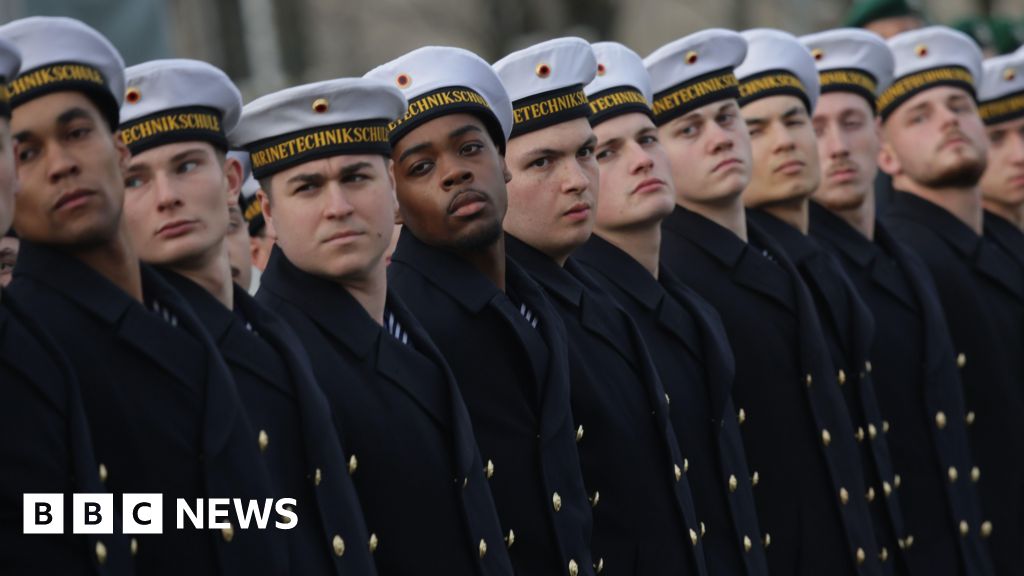
Germany Revives Compulsory Military Service in Response to Rising Security Concerns
BERLIN – Germany’s cabinet approved a plan Wednesday to reintroduce a form of compulsory military or civilian service for young citizens, aiming to bolster troop numbers and address growing national security concerns. The move marks a significant shift for Germany,which suspended conscription in 2011.
The new plan, details of which are still being finalized, will require all German citizens aged 18 to 30 to complete a six-month period of service, encompassing options within the Bundeswehr (armed forces), civil protection, or social work. While details are still being worked out, the government anticipates the program will begin in 2025.
The decision follows a surge in debate over Germany’s defense capabilities, notably in the wake of Russia’s full-scale invasion of Ukraine. Defense Minister Boris Pistorius has sought to reassure the public, stating there is “no cause for concern… no reason for fear,” and emphasizing that a stronger military serves as a deterrent. “The more capable of deterrence and defence our armed forces are, through armament through training and through personnel, the less likely it is indeed that we will become a party to a conflict at all,” Pistorius said.
Though, the plan faces opposition from within Germany’s political left and a significant portion of the younger generation. A recent Forsa survey for Stern magazine revealed that while just over half of all respondents favored compulsory service, opposition rose to 63% among 18- to 29-year-olds.
“I don’t want to go to war as I don’t want to die or I don’t want to be shot at,” said Jimi, a 17-year-old student from Berlin, who participated in an anti-conscription protest. “I also don’t want to shoot people.” He argued the government was using an “unlikely and abstract scenario” to justify ”stealing millions of young people’s right to decide what thay should be doing.”
Conversely, 21-year-old Jason recently enlisted in the Bundeswehr, motivated by the current “security situation.” He expressed a desire “to contribute to defend peace, to defend democracy if the worst happens,” and believed his service woudl “give back to society” while bolstering the army’s deterrent effect “so potential enemies don’t even think about attacking you.”
The move comes after decades of declining defense spending following the end of the Cold War. earlier this year,Friedrich Merz,a leading figure in the Christian Democratic Union,declared that the guiding principle for German defense “now has to be whatever it takes.”
Increased European rearmament efforts have also benefited companies like Rheinmetall,a major defense contractor. Its CEO, Armin Papperger, noted the company’s increased revenue due to “huge demand,” emphasizing the need for growth in areas like vehicles, ammunition, and advanced technologies such as artificial intelligence. Papperger also alluded to a reported Russian assassination plot targeting him last year, stating, ”I feel good, I feel safe.” He acknowledged,”Whatever you call it,it’s not a peaceful time.”
